
Science
Scientists Name First New Cat Species in a Century From Bolivia's Cloud Forest
Scientists have identified a new species of wild cat native to Bolivia's Yungas cloud forest — the first new cat species to be formally described in more than a century — following a genetic analysis published in Current Biology. The cat, named Leopardus tilcayo after the name local communities use for the animal, came to science through a chance encounter: a ten-year-old male arrived at the Senda Verde Wildlife Sanctuary in 2017 after a local family turned him over for care, and he remains the only known individual of the species living in protective captivity. Conservationist Paola Nogales Ascarrunz, a National Geographic Explorer, first met the cat while volunteering at the sanctuary and later led the international research team, which found DNA evidence for at least five distinct tiger cat species previously lumped together as one. The tilcayo cat measures about 45 centimetres and weighs roughly 1.3 kilograms, smaller than the average domestic cat.

Science
Plan to Limit NHS ADHD Diagnoses Attacked as Rationing Ahead of Review
Proposals to limit the number of patients formally diagnosed with attention deficit hyperactivity disorder in England have been attacked as rationing healthcare, ahead of a government review due next week that is expected to recommend patients with ADHD symptoms be triaged and offered support without a formal diagnosis. The independent review, led by UCL professor Peter Fonagy and commissioned by then health secretary Wes Streeting in December, concluded the system forces children and adults to obtain a formal diagnosis to get support. Official figures show 800,000 patients are on NHS waiting lists, complaints about autism and ADHD services have more than tripled in five years, and about 100,000 adults and young people with ADHD are on health-related benefits, with the ADHD taskforce calculating the cost of undiagnosed, untreated ADHD at 17 billion pounds. ADHD UK's chief executive Henry Shelford said there is no mild ADHD and warned patients will be left to self-diagnose via social media.
Science
Climate Crisis Probably Weakened Glacier Behind Deadly Nepal Floods, Study Finds
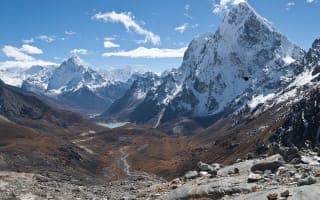
Climate breakdown probably weakened the glacier that collapsed and caused catastrophic floods killing more than 1,300 people in Nepal and Tibet last month, according to the first scientific study of the disaster, led by World Weather Attribution researchers at Imperial College London. A section of overhanging glacier and rock measuring roughly 200,000 square metres fell from Langtang Lirung mountain on August 26, sending 110 million cubic metres of snow and ice into the valley below and triggering flash floods that swept downriver at speeds exceeding 110 mph, leaving more than 5,000 people missing. The study found the region has warmed about 2 degrees Celsius since pre-industrial times, with July and August 2026 the warmest on record locally at 5 degrees above the 30-year average in the days before the collapse. Dr Friederike Otto said communities in Nepal are paying with their lives for a crisis driven by fossil fuel emissions thousands of miles away.

Science
NASA Targets October for SpaceX's 35th Cargo Launch With Final Solar Arrays
NASA and SpaceX are targeting no earlier than October to launch the company's 35th commercial resupply services mission to the International Space Station, with media accreditation opening Thursday for the Falcon 9 launch from Cape Canaveral Space Force Station in Florida. The SpaceX Dragon spacecraft will deliver food, supplies and equipment along with the final sets of International Space Station Roll-Out Solar Arrays, which astronauts will install during future spacewalks to complete the station's power augmentation, including support for its safe and controlled deorbit. The mission also carries hardware to manufacture artificial retinas in microgravity, 3D heart cell models for large-scale drug testing, materials to study how a new type of glass forms in space, and brain organoids that could uncover treatment targets for neurodegenerative diseases like Alzheimer's, Parkinson's and multiple sclerosis. The previous Dragon cargo flight launched on May 15 carrying about 6,500 pounds of science and supplies.
Science
Insilico Medicine Opens Longevity AI Toolkit to World After Landmark Cell Cover Study
Insilico Medicine announced the publication of a landmark study in the journal Cell introducing an openly released artificial intelligence toolkit for aging biology, comprising the LongevityBench benchmark, a family of five compact Longevity-LLMs, and the Longevity Claw agentic research platform. The paper, published open access in Cell volume 189 on September 17, was selected as the cover feature of the issue and conducted with researchers from Liquid AI, the Buck Institute for Research on Aging, and Harvard Medical School and Brigham and Women's Hospital. The benchmark spans 17 tasks across five biodata domains and was used to assess 18 frontier AI systems from six developer teams, with no single model dominating all tasks. The company's compact models, ranging from 0.6 billion to 9 billion parameters, matched or exceeded far larger frontier systems. Deployed across the 14 recognized hallmarks of aging, the platform nominated 328 genes as potential intervention targets, showing enrichment of up to 5.6-fold against an independently published reference set.

Science
Pennsylvania Requests CDC Epi-Aid as Measles Cases Reach 731 and Deaths Hit Four
Pennsylvania has formally begun requesting emergency federal assistance to fight the measles outbreak spreading across the state, while threatening to withdraw the request unless the Centers for Disease Control and Prevention publicly recognizes the four measles-associated deaths reported there. State health secretary Debra Bogen set out the condition in a letter sent Wednesday to CDC director Erica Schwartz, warning that the agency's refusal to acknowledge the deaths undermines the state's response. The outbreak has now reached 731 confirmed cases across 38 counties, the state announced the same day, with four deaths as of Tuesday. The clash unfolds against an escalating dispute between Democratic governor Josh Shapiro and US health secretary Robert F Kennedy Jr, who last month instructed the CDC to exclude Pennsylvania's fatalities from the national measles death count. The outbreak comes as the United States endures its most severe measles resurgence in more than three decades, driven by rising vaccine hesitancy, and as the administration has changed how federal agencies count measles deaths.

Science
EPA Repeals Power Plant Climate Rules as Zeldin Declares Days of Coal Destruction Over
The Environmental Protection Agency has repealed the greenhouse gas limits that required American coal and natural gas power plants to cut their carbon dioxide emissions, in what Administrator Lee Zeldin called the largest deregulatory action in the history of the U.S. power sector. Announcing the change at a press conference in Houston on September 14, where the agency was hosting a G20 Energy Summit on energy policy, Zeldin declared that the days of working to destroy natural gas and coal were over. The repealed standards, finalized in 2024 under President Biden, had obligated existing coal plants and new gas plants to make significant emissions cuts starting in the 2030s. The rollback immediately drew lawsuits from more than a dozen environmental and health groups, and public health advocates warned of rising asthma emergencies. According to federal data, the power sector produces 31 percent of United States carbon emissions from fossil fuel burning, second only to transportation, and the agency itself expects coal production for power use to rise more than tenfold as a result of the change.
Science
Progress 96 Carries Nearly Three Tons of Supplies to Space Station as NASA Slips Crew-13 to October
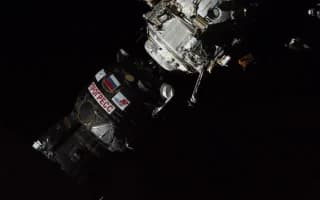
A Progress 96 cargo spacecraft launched at 9:33 a.m. EDT Wednesday carrying nearly three tons of food, fuel and cargo to the International Space Station, with automated docking to the Poisk module set for Saturday at 9:46 a.m. EDT for the seven-member Expedition 75 crew. NASA and SpaceX meanwhile retargeted the Crew-13 launch for as soon as early October after teams replaced an oxidizer valve in Dragon's propulsion system following a leak detected in processing. Aboard the station, astronauts advanced microgravity research from space-based soldering to sleep studies, while commander Jessica Meir described her recent spacewalk ride on Canadarm2 as levitating above Earth.
Science
Stanford Scientists Grow Human Brain Tissue Inside Mice in Landmark Psychiatric Research Step
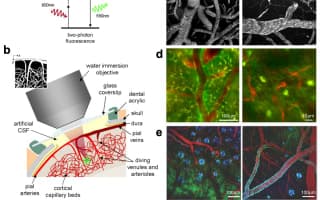
Neuroscientists at Stanford University have created mice whose cerebral cortex is largely composed of living human neural tissue grown from stem cells, a breakthrough published in Nature on September 16, 2026, that could transform drug testing for epilepsy, autism and schizophrenia. The team, led by Professor Sergiu Pașca, genetically engineered mice so their own cortical precursor cells would not survive, then implanted human cortical organoids into animals aged 5 to 17 days. Within two to three months the human tissue expanded roughly 4.7 times in volume, occupying about 92% of the available cortical space, and even generated cell types found only in human and primate brains. Psychiatry has one of the worst clinical trial success rates in medicine, and researchers say the "xenocortical" mice offer a way to test therapies in living human neural tissue for the first time.
Science
WHO Sees Encouraging Signs Against Ebola in Congo as Cases Surge in Another Region
World Health Organization Director-General Tedros Adhanom Ghebreyesus hailed "encouraging signs" in the fight against the Ebola outbreak in Ituri province of eastern Congo, saying transmission is going down there, but warned that "the epidemic continues to grow and continues to kill," with more than 7,200 cases and over 3,500 deaths reported across seven provinces. In North Kivu, weekly cases have nearly doubled in two weeks, from about 100 to more than 200. "We can be cautiously optimistic about what is happening, but I think we need to be realistic about the road that's ahead of us," said Maria Van Kerkhove, WHO's director for epidemic and pandemic management. The outbreak, driven by the rare Bundibugyo virus, is the world's fastest-growing Ebola outbreak on record.
Science
EU to Create Climate Insurance Alliance as Von der Leyen Calls Summer of Extremes Summer of Truth
The European Union will create a "climate insurance alliance" to increase cover for extreme weather events, European Commission President Ursula von der Leyen announced in her state of the union address, describing the summer of 2026 as "the summer of truth." Her speech cited rivers such as the Danube drying up, 12 million tonnes of damaged crops, 660,000 hectares of land burnt and 35,000 additional deaths linked to this year's heatwaves. Only around 25% of catastrophe losses in Europe are covered by private insurance, leaving national budgets as "the insurer of last resort." The alliance will unite insurers, investors, risk modellers and public authorities to raise insurance uptake, and the Commission will announce a new climate resilience framework next month.

Science
NASA's Roman Space Telescope Wakes Up in Space as Fuel Findings Point to Doubled Mission Life
NASA has begun powering on the instruments aboard the Nancy Grace Roman Space Telescope for the first time as the observatory cruises toward its operating post a million miles from Earth, with new analysis suggesting its fuel supply could sustain operations for roughly 22 years, double the mission planners' expectations. The $4.3 billion telescope launched atop a SpaceX Falcon Heavy rocket on August 30, and officials said the booster's picture-perfect performance means Roman will need fewer trajectory corrections than planned. "That's a monumental effort because we know the more accurate the launch vehicle is, the more science we can get," said launch director Denton Gibson. The 300-megapixel observatory will downlink 2,500 terabytes of data over its primary mission and return its first images before the winter holidays.