Science
NASA Targets October for SpaceX's 35th Cargo Launch With Final Solar Arrays
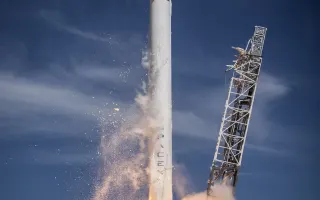
NASA and SpaceX are targeting no earlier than October to launch the company's 35th commercial resupply services mission to the International Space Station, with media accreditation opening Thursday for the Falcon 9 launch from Cape Canaveral Space Force Station in Florida. The SpaceX Dragon spacecraft will deliver food, supplies and equipment along with the final sets of International Space Station Roll-Out Solar Arrays, which astronauts will install during future spacewalks to complete the station's power augmentation, including support for its safe and controlled deorbit. The mission also carries hardware to manufacture artificial retinas in microgravity, 3D heart cell models for large-scale drug testing, materials to study how a new type of glass forms in space, and brain organoids that could uncover treatment targets for neurodegenerative diseases like Alzheimer's, Parkinson's and multiple sclerosis. The previous Dragon cargo flight launched on May 15 carrying about 6,500 pounds of science and supplies.
Science
Progress 96 Carries Nearly Three Tons of Supplies to Space Station as NASA Slips Crew-13 to October
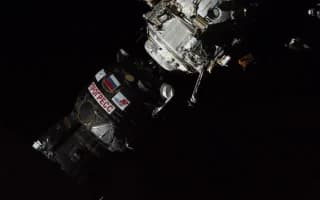
A Progress 96 cargo spacecraft launched at 9:33 a.m. EDT Wednesday carrying nearly three tons of food, fuel and cargo to the International Space Station, with automated docking to the Poisk module set for Saturday at 9:46 a.m. EDT for the seven-member Expedition 75 crew. NASA and SpaceX meanwhile retargeted the Crew-13 launch for as soon as early October after teams replaced an oxidizer valve in Dragon's propulsion system following a leak detected in processing. Aboard the station, astronauts advanced microgravity research from space-based soldering to sleep studies, while commander Jessica Meir described her recent spacewalk ride on Canadarm2 as levitating above Earth.

Science
NASA's Roman Space Telescope Wakes Up in Space as Fuel Findings Point to Doubled Mission Life
NASA has begun powering on the instruments aboard the Nancy Grace Roman Space Telescope for the first time as the observatory cruises toward its operating post a million miles from Earth, with new analysis suggesting its fuel supply could sustain operations for roughly 22 years, double the mission planners' expectations. The $4.3 billion telescope launched atop a SpaceX Falcon Heavy rocket on August 30, and officials said the booster's picture-perfect performance means Roman will need fewer trajectory corrections than planned. "That's a monumental effort because we know the more accurate the launch vehicle is, the more science we can get," said launch director Denton Gibson. The 300-megapixel observatory will downlink 2,500 terabytes of data over its primary mission and return its first images before the winter holidays.
Science
NASA's Roman Space Telescope Launches on Falcon Heavy to Seek Dark Universe
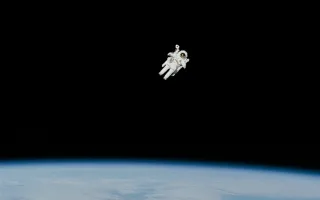
NASA's Nancy Grace Roman Space Telescope launched at 7:26 a.m. EDT on 30 August 2026 aboard a SpaceX Falcon Heavy rocket from Launch Complex 39A at Kennedy Space Center in Florida, beginning a three-month, million-mile journey to its final orbit at the second Sun-Earth Lagrange point. The flagship observatory pairs a large field of view with infrared vision to probe dark matter, dark energy and exoplanets, and is designed to survey the universe a thousand times faster than the Hubble Space Telescope. Roman will send back 1.4 terabytes of data every day, the highest data rate of any NASA astrophysics mission so far. NASA Administrator Jared Isaacman said the mission was delivered ahead of schedule and on budget, while the agency anticipates releasing the telescope's first images by early 2027 after commissioning.

Science
Scientists Discover Hidden Immune Organ Inside the Skull Bone Challenging Assumptions
Researchers discovered lymph node-like immune hubs inside skull bone marrow challenging long-held assumptions about the immune system. The discovery published in September 2026 reveals that the skull contains specialized structures that monitor and respond to threats in the brain. The finding could have significant implications for treating neurological diseases including Alzheimer disease and multiple sclerosis. The research team used advanced imaging techniques to identify the structures which were previously invisible to standard diagnostic methods. The study was conducted over three years and involved analysis of tissue samples from both mice and humans.

Science
SpaceX and NASA Complete Mars Sample Return Mission Preparation as Launch Window Approaches
SpaceX and NASA announced on September 2, 2026, that preparations for the Mars Sample Return mission are 92 percent complete, with the launch targeted for the November 2026 window when Earth and Mars alignment permits optimal fuel efficiency. The mission will retrieve 30 sealed rock and soil sample tubes deposited by the Perseverance rover in Jezero Crater and return them to Earth for analysis. NASA Associate Administrator for the Science Mission Directorate Nicola Fox stated that the sample return capsule is expected to land at the Utah Test and Training Range in September 2028. SpaceX CEO Elon Musk confirmed that a modified Starship vehicle will serve as the Mars Ascent Vehicle, capable of launching the samples into Mars orbit for retrieval.

Science
NASA Thermal Camera Spots Deadly City Heat Islands During Record India Pakistan Heat Wave
NASA's ECOSTRESS instrument captured the brutal disparities between India's sweltering cities and their surrounding countryside during the record heat wave that gripped the Indian subcontinent, revealing urban heat islands that peaked at 102 degrees Fahrenheit while nearby rural fields cooled to about 60 degrees. The findings, published by NASA's Jet Propulsion Laboratory on May 12, show nighttime temperatures in Delhi and nearby villages staying above 95 degrees Fahrenheit, denying residents any relief after sunset. The instrument, mounted on the International Space Station, measures ground temperature at the highest spatial resolution of any satellite in orbit, making it a unique tool for identifying which neighborhoods face the greatest danger during deadly heat events.
Science
SpaceX Starship Completes First Successful Orbital Refueling Test in Low Earth Orbit
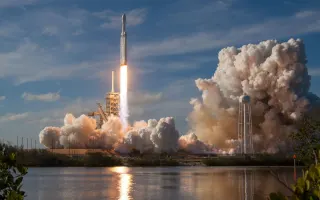
SpaceX successfully completed its first orbital propellant transfer demonstration on September 1, transferring 100 metric tons of liquid oxygen between two Starship vehicles in low Earth orbit at an altitude of 400 kilometers. The test, which lasted 47 minutes, validates a???? required for NASA Artemis lunar landing missions and future Mars missions. CEO Elon Musk confirmed that the company plans to conduct a second transfer test with 200 metric tons in October. The achievement positions SpaceX to meet its 2027 deadline for delivering the Human Landing System to NASA.