Science
Scientists Name First New Cat Species in a Century From Bolivia's Cloud Forest
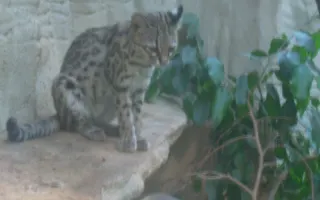
Scientists have identified a new species of wild cat native to Bolivia's Yungas cloud forest — the first new cat species to be formally described in more than a century — following a genetic analysis published in Current Biology. The cat, named Leopardus tilcayo after the name local communities use for the animal, came to science through a chance encounter: a ten-year-old male arrived at the Senda Verde Wildlife Sanctuary in 2017 after a local family turned him over for care, and he remains the only known individual of the species living in protective captivity. Conservationist Paola Nogales Ascarrunz, a National Geographic Explorer, first met the cat while volunteering at the sanctuary and later led the international research team, which found DNA evidence for at least five distinct tiger cat species previously lumped together as one. The tilcayo cat measures about 45 centimetres and weighs roughly 1.3 kilograms, smaller than the average domestic cat.
Science
Insilico Medicine Opens Longevity AI Toolkit to World After Landmark Cell Cover Study
Insilico Medicine announced the publication of a landmark study in the journal Cell introducing an openly released artificial intelligence toolkit for aging biology, comprising the LongevityBench benchmark, a family of five compact Longevity-LLMs, and the Longevity Claw agentic research platform. The paper, published open access in Cell volume 189 on September 17, was selected as the cover feature of the issue and conducted with researchers from Liquid AI, the Buck Institute for Research on Aging, and Harvard Medical School and Brigham and Women's Hospital. The benchmark spans 17 tasks across five biodata domains and was used to assess 18 frontier AI systems from six developer teams, with no single model dominating all tasks. The company's compact models, ranging from 0.6 billion to 9 billion parameters, matched or exceeded far larger frontier systems. Deployed across the 14 recognized hallmarks of aging, the platform nominated 328 genes as potential intervention targets, showing enrichment of up to 5.6-fold against an independently published reference set.
Science
Stanford Scientists Grow Human Brain Tissue Inside Mice in Landmark Psychiatric Research Step
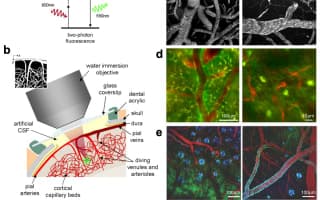
Neuroscientists at Stanford University have created mice whose cerebral cortex is largely composed of living human neural tissue grown from stem cells, a breakthrough published in Nature on September 16, 2026, that could transform drug testing for epilepsy, autism and schizophrenia. The team, led by Professor Sergiu Pașca, genetically engineered mice so their own cortical precursor cells would not survive, then implanted human cortical organoids into animals aged 5 to 17 days. Within two to three months the human tissue expanded roughly 4.7 times in volume, occupying about 92% of the available cortical space, and even generated cell types found only in human and primate brains. Psychiatry has one of the worst clinical trial success rates in medicine, and researchers say the "xenocortical" mice offer a way to test therapies in living human neural tissue for the first time.

Science
Quantum Computers Model Fusion Fuel Material for First Time in US Research Push
Scientists from Oak Ridge National Laboratory, Cleveland Clinic and IBM have calculated nine molecular configurations of a promising material for producing fusion fuel, the first-known instance of such computations on quantum computers, according to a paper published on arXiv and announced on 6 July 2026. The work targets tritium, an extremely rare material necessary for fusion energy in most proposed machines, whose supply has long been a barrier to realizing fusion power. The team applied quantum-centric supercomputing to FLiBe, a liquid salt containing fluorine, lithium and beryllium, computing how strongly its atomic configurations bind tritium. The effort supports the Department of Energy's Genesis Mission and brings together seven DOE national labs, four universities and three industry partners. IBM executives said the results add to mounting evidence that quantum-centric supercomputing is now a practical scientific tool.

Science
Loss of Kelp Forests Reverberates Down to Microbial Level in Ocean Ecosystems
The loss of kelp forests is reverberating down to the microbial level in ocean ecosystems according to research published in September 2026. Kelp forests are among the most productive ecosystems on Earth supporting thousands of marine species. The study found that when kelp disappears the microbial communities that depend on kelp-derived nutrients undergo dramatic shifts. These changes can cascade through the food web affecting everything from fish populations to carbon cycling. The research highlights the interconnectedness of marine ecosystems and the far-reaching consequences of habitat loss. The study was conducted along the California coast where kelp forests have declined significantly.
Science
European Nuclear Fusion Experiment Achieves Net Energy Gain for 30 Consecutive Minutes
The Joint European Torus facility in Oxfordshire, United Kingdom, announced on September 2, 2026, that its upgraded tokamak reactor achieved sustained net energy gain for 30 consecutive minutes, producing 1.8 gigajoules of energy from 1.2 gigajoules of input energy. The experiment maintained a plasma temperature of 150 million degrees Celsius, sustained by 25 superconducting magnets cooled to negative 269 degrees Celsius. ITER Director-General Dr. Pietro Barabaschi called the achievement the most significant milestone in fusion energy history. The result brings commercial fusion power significantly closer to reality, with industry analysts projecting the first grid-connected fusion power plant by 2035.
Science
Scientists Discover New Class of Antibiotics Effective Against Drug-Resistant Bacteria
Researchers at MIT and Harvard University identified a new class of synthetic antibiotics effective against methicillin-resistant Staphylococcus aureus and other drug-resistant bacteria. The compounds called lasanocids attack bacterial cell membranes through a mechanism that bacteria have not developed resistance to in laboratory settings. The study published in Nature on September 1 demonstrated that lasanocids killed 99.9 percent of MRSA bacteria in mouse infection models within 24 hours. The World Health Organization estimates that antimicrobial resistance caused 1.27 million deaths globally in 2024.