Climate Crisis Probably Weakened Glacier Behind Deadly Nepal Floods, Study Finds
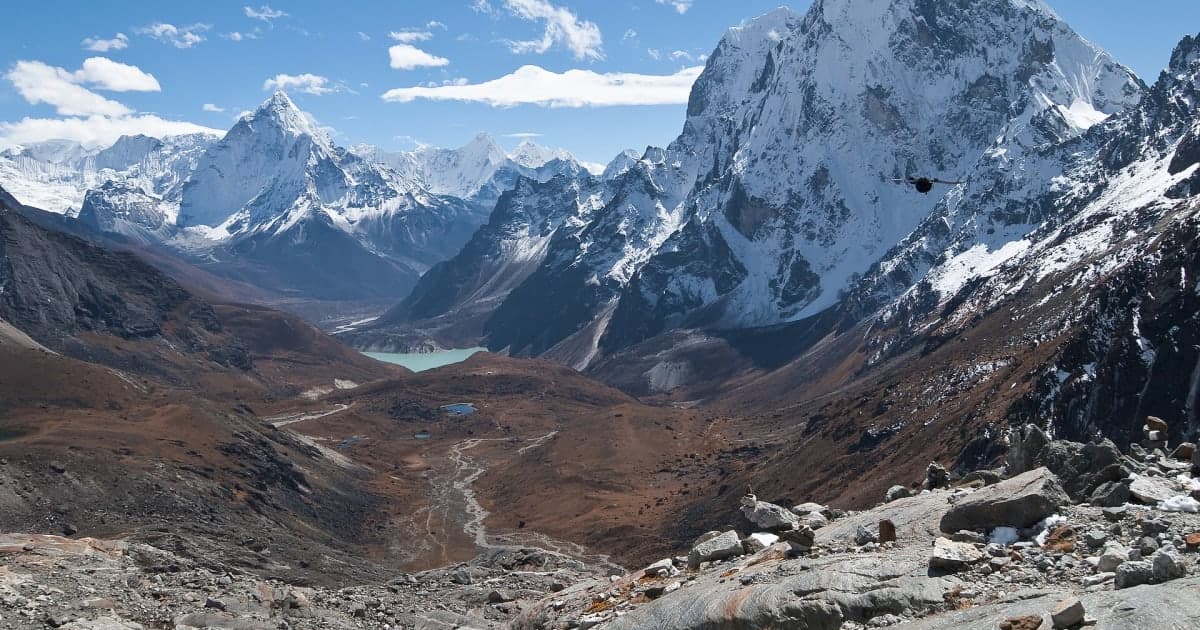
Climate breakdown probably weakened the glacier that collapsed causing catastrophic floods and killing over a thousand people in Nepal and Tibet last month, the first scientific study of the disaster has found.
Researchers identified unusually warm conditions before the glacier's collapse, which sent an avalanche of 110 million cubic metres of snow and ice into the valley below. The collapse triggered flash floods on an almost unprecedented scale, hitting communities downstream without warning.
"Communities in Nepal are paying with their lives for a crisis driven by fossil fuel emissions thousands of miles away," said Dr Friederike Otto, a climate science professor at Imperial College London, which carried out the study.
"When warming destabilises the roof of the world, no amount of local adaptation can fully shield vulnerable people downstream from this scale of destruction. Without much faster action to transition to zero fossil fuel emissions we will inevitably see more disasters of this scale occurring in the years to come," Otto said.
## A Mountain Falling at 110 MPH
More than 1,300 people were killed and more than 5,000 remain missing after a massive section of overhanging glacier and rock measuring roughly 200,000 square metres fell from Langtang Lirung mountain on August 26.
The mass dropped about 1,400 metres, slamming into the valley floor with such intensity that it registered as an earthquake, liquidising ice and sparking a freezing flood that careened downriver at speeds exceeding 110 mph. The flood of water, ice, rock and sediment swept away families, homes, settlements, roads and bridges, leaving survivors stranded and cut off.
"Rock avalanches of this size are rare, with annual frequency estimates of approximately one event this size every 1,000-10,000 years," the study said. "This event shows that limits to adaptation are already being reached."
## What the Study Found
The research was unlike previous studies by Otto's team at World Weather Attribution — a collaborative project between Imperial and other climate specialists worldwide — in that the role of climate breakdown could not be ascribed to one particular weather event. Instead, researchers found the disaster resulted from a compound crisis, with multiple factors made worse by decades of atmospheric heating from greenhouse gas pollution.
Among the study's key findings: climate breakdown has caused about 2 degrees Celsius of warming in the region since pre-industrial times, and about 1.5 degrees in July and August specifically. July and August 2026 were the warmest on record locally, reaching 5 degrees above the 30-year average in the days before the collapse.
The freezing threshold in the Himalayas has risen by about 100 metres per decade since the 1980s, with higher and longer thaw temperatures weakening mountain slopes shaped by permafrost. The warming had already driven substantial glacier recession, removing stabilising ice from around the collapse site and contributing meltwater. A 7.8 magnitude earthquake in 2015 further contributed to slope failure, though its specific contribution to the August disaster could not be confirmed.
Dr Ben Clarke, who researches extreme weather and climate change at Imperial, said the "fingerprints of climate change" were clear in the long-term changes around the glacier before its catastrophic collapse. "We found that climate change is transforming the high mountain environment, influencing many of the possible drivers of this collapse," Clarke said.
## The Compensation Question
Otto, Clarke and the WWA team said their study did not directly ascribe climate breakdown as the fundamental cause of the catastrophe — it is best understood as a destabilising factor on the existing geology.
That distinction now carries financial weight. Nepal has filed a formal request with the UN loss and damage fund for financial support to address the destruction, a process that requires proof of a link to the climate crisis. The country's foreign minister, Shisir Khanal, has also demanded that top emitting nations such as China and India "wake up" and accept shared responsibility for the disaster.
Madhab Uprety, senior technical advisor for the Red Cross Red Crescent Climate Centre, which is part of WWA, said only aggressive cuts to global emissions could begin to address the losses and damages faced by vulnerable frontline communities.
"In addition to the human tragedy on an unimaginable scale, the cost of recovery for this disaster is substantial," Uprety said. "For a nation that's done virtually nothing to contribute to this problem, it underlines the need to find fairness in helping climate vulnerable nations cope with the problems they have not unleashed."
The study lands as the loss and damage fund — created to channel money from major emitters to disaster-hit developing nations — has yet to make a payment to any country. Nepal's claim, backed by the first attribution science for a glacial collapse of this kind, will test whether compound disasters like August's can clear the evidentiary bar the fund requires, and whether the Himalayan nation's own 0.1 percent share of global emissions strengthens the moral and legal case that someone else should pay.
Discussion
Recommended for you
More science
Climate
EPA Repeals Power Plant Climate Rules as Zeldin Declares Days of Coal Destruction Over
9/17/2026
Climate
EU to Create Climate Insurance Alliance as Von der Leyen Calls Summer of Extremes Summer of Truth
9/16/2026
Climate
Earth's Hottest August on Record Pushes 2026 Toward Warmest Year Ever
9/16/2026
Climate