

Trending Now
See all →
Formula 1
2026 Formula 1 Season Enters Final Stretch With Verstappen Leading Championship

Culture
Louvre Museum Opens Largest Digital Art Wing Featuring Immersive AI-Generated Installations

Software
Vue 3.6 Enters Release Candidate Phase With Vapor Mode Feature Set Complete

Cricket
India Wins Cricket World Cup Semifinal Against Australia by 6 Wickets
Latest News
Browse all →
Artificial Intelligence
Anthropic Says AI Now Leads 26 Percent of Its Own Research as It Proposes Public Progress Metrics
Anthropic has published a set of proposed public metrics for tracking the pace of frontier AI development, revealing that as of August 2026 its Claude model leads 26 percent of the company's AI research and development work, with more than 90 percent of tasks involving AI collaboration. The proposal, laid out in a company post, covers three areas: how much AI builds the next version of itself, how well humans can oversee AI agents, and how compute is allocated. The company disclosed roughly 30,000 agents working on its systems, monitors that blocked 0.002 percent of over a billion agent decisions, and about 6 percent of research compute devoted to safety. CEO Dario Amodei has called for coordinated pacing of the frontier, and the metrics are designed to let the public verify any slowdown.

Finance
Ten Year Treasury Yield Hits 5.04 Percent Highest Since 2007 as Bond Sell-off Deepens
The yield on the benchmark 10-year US Treasury note rose to 5.04 percent in early trading on Tuesday, its highest level since July 2007, signaling higher borrowing costs across the American economy as a global bond sell-off deepened. Higher oil prices, persistent inflation and expectations of further Federal Reserve hikes have driven the surge, which has persisted despite interventions by Treasury Secretary Scott Bessent to contain long-dated yields. Traders priced a 92 percent probability of a quarter-point Fed increase, which the central bank delivered on Wednesday. Barclays strategists warned the 5 percent threshold marks a historically important inflection point beyond which rates have typically become a more persistent headwind for equities, while BlackRock maintained its pro-risk stance.

Companies
Amazon Offers Employees 20 Percent Grocery Discount as SNAP Reliance Data Fuels Wage Scrutiny
Amazon has begun offering its US employees discounts of up to 20 percent on groceries as food costs climb, a benefit that arrives while the retailer faces political scrutiny over the number of its workers who rely on federal food assistance. A Government Accountability Office report released in July found that Amazon workers enrolled in the Supplemental Nutrition Assistance Program had nearly tripled since 2020, reaching 12,346 in the eleven states studied, even as the company prepared to spend roughly 200 billion dollars on capital projects this year. Senator Bernie Sanders called the findings taxpayer subsidies for starvation wages, while Amazon said eligibility reflects part-time options and pointed to a one billion dollar pay investment lifting average base rates above 23 dollars an hour.
Politics
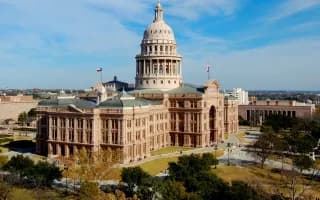
Texas Senate Race Dead Heat as Talarico Holds One Point Lead Over Paxton in New Poll
A new Emerson College poll of 1,000 likely Texas voters shows the state's pivotal US Senate race in a dead heat, with Democrat James Talarico leading Republican Attorney General Ken Paxton 47 percent to 46 percent, within the survey's three-point margin of error. The poll, conducted September 12 to 14, also found the two parties' voters agree on the top issue facing the state: the economy, cited by 38 percent of Republicans and 37 percent of Democrats. Earlier Emerson polling from August showed Paxton ahead by one point, while recent surveys from AARP Texas and Univision gave Talarico leads of four and five points. The findings arrive less than seven weeks before an election that could help decide Senate control.

Africa
Bodies of Eight Women Found Near Johannesburg Airport Fuel Anger Over South Africa Femicide Crisis
The discovery of the bodies of eight women around Johannesburg's OR Tambo international airport, five of them in a single week, has unleashed fear and fury across South Africa and forced the government to confront a femicide crisis it declared a national emergency last year. Police confirmed four bodies found since 15 July in Kempton Park, all half-naked with visible bruising, before four more discoveries in nearby towns. South African women are killed at a rate of 12.2 per 100,000 people, nearly six times the global average, according to UN figures. Acting police minister Firoz Cachalia added another case to the investigation on Wednesday, while President Cyril Ramaphosa has directed police to prioritise the murder investigations.

Middle East
United States Denies Visas to Palestinian Officials Ahead of UN General Assembly for Second Year
The US state department has again denied entry visas to Palestinian officials ahead of next week's United Nations general assembly in New York, barring the Palestinian delegation from attending in person for the second consecutive year. In a statement, the department said the Palestinian Authority and the Palestine Liberation Organization had failed to live up to their commitments, accusing them of working to internationalize the Israeli-Palestinian conflict through the international courts and of glorifying terrorism. The Palestinian foreign ministry rejected the allegations as an unjustified measure that undermines peace efforts. Among those barred is Palestinian president Mahmoud Abbas, whom the general assembly voted on Thursday to allow to address the gathering by video when the general debate begins on 22 September.
Editor's Picks

business
Rising Bond Yields and Geopolitical Tensions Weigh on Global Market Sentiment
Rising bond yields and renewed geopolitical tensions weighed on market sentiment to begin September 2026 with US equity markets closing lower on Tuesday. The 10-year Treasury yield climbed to 4.8 percent its highest level since October 2025 as investors reassessed Federal Reserve rate expectations. The yield increase was driven by stronger than expected economic data and concerns about government borrowing. Global markets faced additional pressure from the escalating US-Iran conflict and its impact on oil prices. European and Asian markets followed Wall Street lower in overnight trading. The Federal Reserve next meets in mid-September with markets expecting the central bank to hold rates steady.

sports
USA Overcome 14-Point Deficit to Beat France for Fifth Straight Basketball World Cup Gold
The United States women's basketball team overcame a 14-point first-half deficit to beat France 97-79 in Berlin on Sunday, 13 September 2026, winning a fifth consecutive FIBA Women's World Cup title and stretching an unbeaten run at the Olympics and World Cups to 20 years. Captain Breanna Stewart scored 22 points and was named tournament MVP, while Caitlin Clark added 12, including a buzzer-beating three-pointer that swung the halftime momentum. France, chasing revenge for their one-point loss in the Paris 2024 Olympic final, took silver in their best-ever finish after the USA outscored them 30-12 in the third quarter. The Americans have now won 12 World Cup titles in total, and the final drew about 1.2 million viewers on TNT.

sports
Taylor Townsend Withdraws From Guadalajara Open After Emergency Surgery Following Career Grand Slam Triumph
American tennis player Taylor Townsend has withdrawn from the Guadalajara Open after undergoing emergency surgery, days after completing a career Grand Slam in women's doubles at the US Open. The 30-year-old won her first-round match against Tatjana Maria on Monday, recovering from a set down, before pulling out of Wednesday's Round of 16 and handing Marta Kostyuk a walkover. Townsend announced the surgery through a statement released on the tournament's channels, saying the decision breaks her heart, and confirmed on social media that she would update fans soon. The withdrawal ends a rapid Mexican swing that began immediately after her New York triumph with Katerina Siniakova.

science
Pennsylvania Requests CDC Epi-Aid as Measles Cases Reach 731 and Deaths Hit Four
Pennsylvania has formally begun requesting emergency federal assistance to fight the measles outbreak spreading across the state, while threatening to withdraw the request unless the Centers for Disease Control and Prevention publicly recognizes the four measles-associated deaths reported there. State health secretary Debra Bogen set out the condition in a letter sent Wednesday to CDC director Erica Schwartz, warning that the agency's refusal to acknowledge the deaths undermines the state's response. The outbreak has now reached 731 confirmed cases across 38 counties, the state announced the same day, with four deaths as of Tuesday. The clash unfolds against an escalating dispute between Democratic governor Josh Shapiro and US health secretary Robert F Kennedy Jr, who last month instructed the CDC to exclude Pennsylvania's fatalities from the national measles death count. The outbreak comes as the United States endures its most severe measles resurgence in more than three decades, driven by rising vaccine hesitancy, and as the administration has changed how federal agencies count measles deaths.
The Newshub Brief
Stay ahead of the story.
Get the most important stories of the day delivered to your inbox every morning.
Free, daily, no spam. Unsubscribe anytime.