Scientists Name First New Cat Species in a Century From Bolivia's Cloud Forest
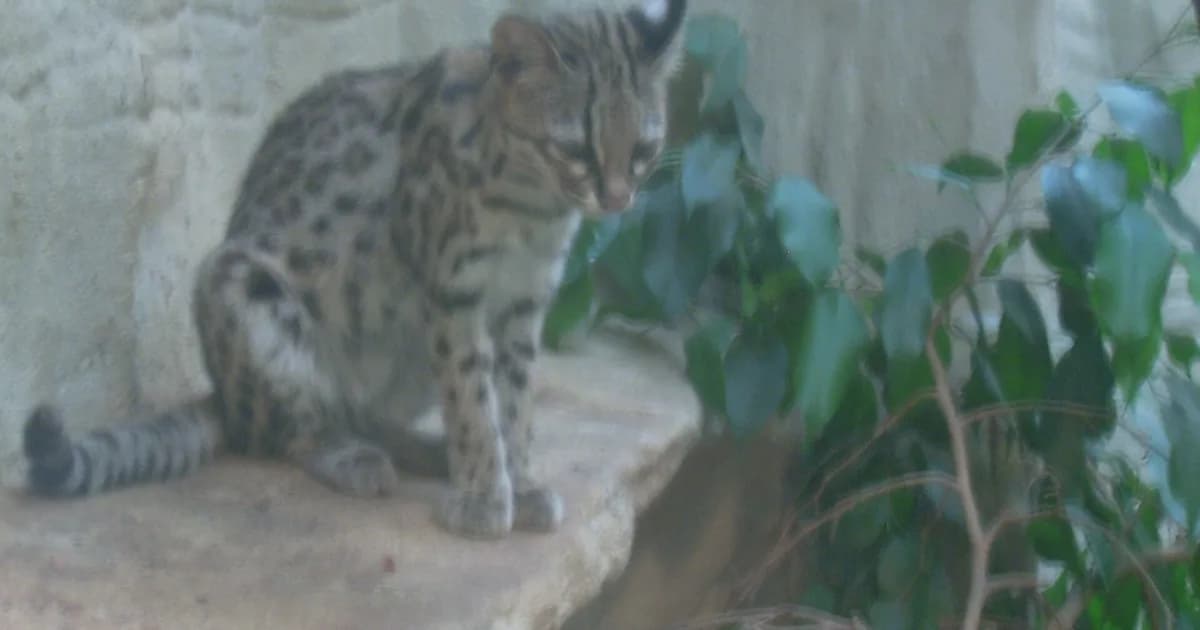
A new species of wild cat native to Bolivia has been identified by scientists — the first to be described in more than 100 years.
Leopardus tilcayo, commonly known as the tilcayo cat, is native to the Bolivian Yungas cloud forest, a region within the Andes-Amazon basin that is one of the least-studied areas in the Neotropical realm yet contains a vast number of species found nowhere else on Earth.
The discovery was made after a chance encounter with the cat in a wildlife sanctuary. In 2017, the cat arrived at the Senda Verde Wildlife Sanctuary after the local family keeping him turned him over for care. Paola Nogales Ascarrunz, a wild cat conservationist and National Geographic Explorer, first met the cat while volunteering at the sanctuary and later led the research that would identify it as a new species.
## Decades of Enigma Resolved by DNA
"Tiger cats have been enigmatic for decades," explained Eduardo Eizirik, a professor at Brazil's Pontifícia Universidade Católica do Rio Grande do Sul who collaborated with Ascarrunz as part of an international team. The cats were once thought to be a single species, Leopardus tigrinus, based on their similar appearance.
When the researchers analysed DNA from museum specimens and living animals, they found evidence for at least five distinct wild cat species — each with its own unique evolutionary history, according to Eizirik.
The resulting paper, published in the journal Current Biology, formally describes four other species: L. guttulus, L. emiliae, L. pardinoides and L. tigrinus, including a new Peruvian subspecies, L. tigrinus antisuyo.
"We chose to name the [newly described] species 'Tilcayo' — the name local communities use to describe the cat," Ascarrunz said. "It's our way of honouring their ancestral knowledge and connection to this animal."
## Smaller Than a House Cat, Harder to Find
The tilcayo cat measures approximately 18 inches (45 centimetres) from its head to the end of its body and weighs three pounds (1.3 kilograms), making it smaller than the average domestic cat.
It is differentiated from the oncilla — known as the northern tiger cat — by its larger spot markings, a larger, more slender tail and a muted fur colour.
The animal now living at the sanctuary, a ten-year-old male, is the only known individual of the species living in protective captivity. The full range of L. tilcayo is not currently known, because tiger cats are often misidentified as oncillas or margays on camera-trap surveys — a data problem that has likely concealed the species from science for generations. Camera-trap misidentification runs in both directions: surveys designed to count oncillas or margays may have recorded tilcayos without anyone knowing, meaning the raw data needed to map the species may already exist on hard drives across South America, waiting for a reclassification that only became possible with this week's paper.
Ascarrunz is installing camera traps in the Yungas forests to try to document the species in the wild, work that would help researchers understand more about it and inform conservation efforts.
## What the Discovery Means for the Yungas
"Describing a new cat species after more than 100 years shows how much we still have to learn about the biodiversity around us," Ascarrunz said. "But it also reminds us that we need to protect the Yungas forests, which are home to so many species — including some we are only beginning to understand."
The taxonomic overhaul carries conservation consequences beyond the new name. When several distinct species are counted as one, each individual population appears more numerous than it is; splitting them means the true population of each — including the newly named tilcayo — is smaller than previously assumed, and each now requires its own assessment against extinction risk.
The genetic analysis also redrew the map of where each species lives, replacing a single range spanning much of South America with several narrower ranges, each tied to specific forest habitats. For the Yungas — cloud forests that "rain" horizontally along Andean slopes — the tilcayo's formal description gives conservationists a flagship species for a region whose biodiversity remains among the least documented in the Neotropics. Whether the species survives may depend on camera traps now being installed, and on protecting a forest that science, after a century without a new cat, has only just begun to properly count.
The research trail to the announcement is itself a study in how species are actually found. The tilcayo's path ran through a sanctuary rather than an expedition: a family handing over a cat they had kept, a volunteering conservationist who noticed the animal differed from the textbooks, and then years of genetic comparison against museum specimens collected decades ago. It underlines the role of living specimens in sanctuary care — animals rescued from the wildlife trade or surrendered by households — as an underused source of taxonomic discovery, and it shows museum collections retaining scientific value generations after the collectors died, once the tools exist to read their DNA.
Discussion
Recommended for you
More science
Research
Insilico Medicine Opens Longevity AI Toolkit to World After Landmark Cell Cover Study
9/17/2026
Research
Stanford Scientists Grow Human Brain Tissue Inside Mice in Landmark Psychiatric Research Step
9/16/2026
Research
Quantum Computers Model Fusion Fuel Material for First Time in US Research Push
9/16/2026
Research