
Science
Plan to Limit NHS ADHD Diagnoses Attacked as Rationing Ahead of Review
Proposals to limit the number of patients formally diagnosed with attention deficit hyperactivity disorder in England have been attacked as rationing healthcare, ahead of a government review due next week that is expected to recommend patients with ADHD symptoms be triaged and offered support without a formal diagnosis. The independent review, led by UCL professor Peter Fonagy and commissioned by then health secretary Wes Streeting in December, concluded the system forces children and adults to obtain a formal diagnosis to get support. Official figures show 800,000 patients are on NHS waiting lists, complaints about autism and ADHD services have more than tripled in five years, and about 100,000 adults and young people with ADHD are on health-related benefits, with the ADHD taskforce calculating the cost of undiagnosed, untreated ADHD at 17 billion pounds. ADHD UK's chief executive Henry Shelford said there is no mild ADHD and warned patients will be left to self-diagnose via social media.
Science
Pennsylvania Requests CDC Epi-Aid as Measles Cases Reach 731 and Deaths Hit Four
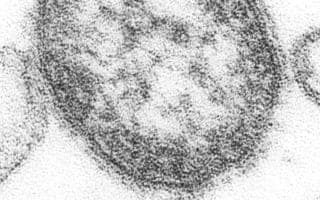
Pennsylvania has formally begun requesting emergency federal assistance to fight the measles outbreak spreading across the state, while threatening to withdraw the request unless the Centers for Disease Control and Prevention publicly recognizes the four measles-associated deaths reported there. State health secretary Debra Bogen set out the condition in a letter sent Wednesday to CDC director Erica Schwartz, warning that the agency's refusal to acknowledge the deaths undermines the state's response. The outbreak has now reached 731 confirmed cases across 38 counties, the state announced the same day, with four deaths as of Tuesday. The clash unfolds against an escalating dispute between Democratic governor Josh Shapiro and US health secretary Robert F Kennedy Jr, who last month instructed the CDC to exclude Pennsylvania's fatalities from the national measles death count. The outbreak comes as the United States endures its most severe measles resurgence in more than three decades, driven by rising vaccine hesitancy, and as the administration has changed how federal agencies count measles deaths.

Science
WHO Sees Encouraging Signs Against Ebola in Congo as Cases Surge in Another Region
World Health Organization Director-General Tedros Adhanom Ghebreyesus hailed "encouraging signs" in the fight against the Ebola outbreak in Ituri province of eastern Congo, saying transmission is going down there, but warned that "the epidemic continues to grow and continues to kill," with more than 7,200 cases and over 3,500 deaths reported across seven provinces. In North Kivu, weekly cases have nearly doubled in two weeks, from about 100 to more than 200. "We can be cautiously optimistic about what is happening, but I think we need to be realistic about the road that's ahead of us," said Maria Van Kerkhove, WHO's director for epidemic and pandemic management. The outbreak, driven by the rare Bundibugyo virus, is the world's fastest-growing Ebola outbreak on record.
Science
Merck and Moderna's Personalized mRNA Cancer Vaccine Succeeds in Phase 3 Trial
Merck and Moderna have announced positive topline results from the Phase 3 INTerpath-001 trial, in which intismeran autogene, an individualized mRNA-based cancer therapy, combined with KEYTRUDA met its primary endpoint of recurrence-free survival and a key secondary endpoint of distant metastasis-free survival in patients with resected stage IIB-IV melanoma. The randomized trial enrolled 1,137 patients, and the result marks the first positive Phase 3 readout for both an individualized neoantigen therapy and an mRNA-based cancer therapy. Professor Georgina Long, the study's principal investigator, called it a landmark moment for adjuvant melanoma treatment. Moderna chief executive Stéphane Bancel said the field is turning a decades-old vision into reality. The companies will present the data at an upcoming international medical meeting and engage regulators on filings.

Science
Brain Cells Once Thought Protective May Actually Drive Cognitive Decline With Age
Age-related oligodendrocyte dysfunction may contribute to cognitive decline by disrupting myelin and large nerve fibers according to research published on August 30, 2026. Oligodendrocytes are brain cells that produce myelin the protective coating around nerve fibers that enables rapid signal transmission. The study found that as people age these cells become dysfunctional and begin to damage the myelin they produce. The discovery challenges the long-held belief that oligodendrocytes are purely protective and suggests they may play a more complex role in brain aging. The research team used single-cell RNA sequencing to analyze oligodendrocytes from both young and elderly human brain tissue.

Science
Breakthrough Gene Therapy Cures Sickle Cell Disease in 97 Percent of Patients in Phase 3 Trial
Vertex Pharmaceuticals and CRISPR Therapeutics announced on September 2, 2026, that their gene therapy Casgevy achieved a 97 percent cure rate for sickle cell disease in a Phase 3 clinical trial involving 450 patients across 18 countries. The therapy, which uses CRISPR-Cas9 gene editing to reactivate fetal hemoglobin production, eliminated vaso-occlusive crises in 94 percent of treated patients during a median follow-up period of 24 months. Vertex CEO Reshma Kewalramani stated that the results confirm Casgevy as the first functional cure for sickle cell disease. The treatment costs 2.2 million dollars per patient, though Vertex announced tiered pricing for low-income countries ranging from 100,000 to 500,000 dollars.

Science
WHO Approves First Malaria Vaccine for Widespread Use Across Sub-Saharan Africa
The World Health Organization approved the R21 malaria vaccine for widespread distribution across 18 sub-Saharan African countries on September 1, following clinical trial results showing 77 percent efficacy in children aged 5 to 17 months. The vaccine, developed by Oxford University and manufactured by Serum Institute of India, will be available at a cost of $2 per dose, making it the most affordable malaria vaccine in history. WHO Director-General Tedros Adhanom Ghebreyesus called the approval a historic moment that could save tens of thousands of lives annually.