Ten Year Treasury Yield Hits 5.04 Percent Highest Since 2007 as Bond Sell-off Deepens
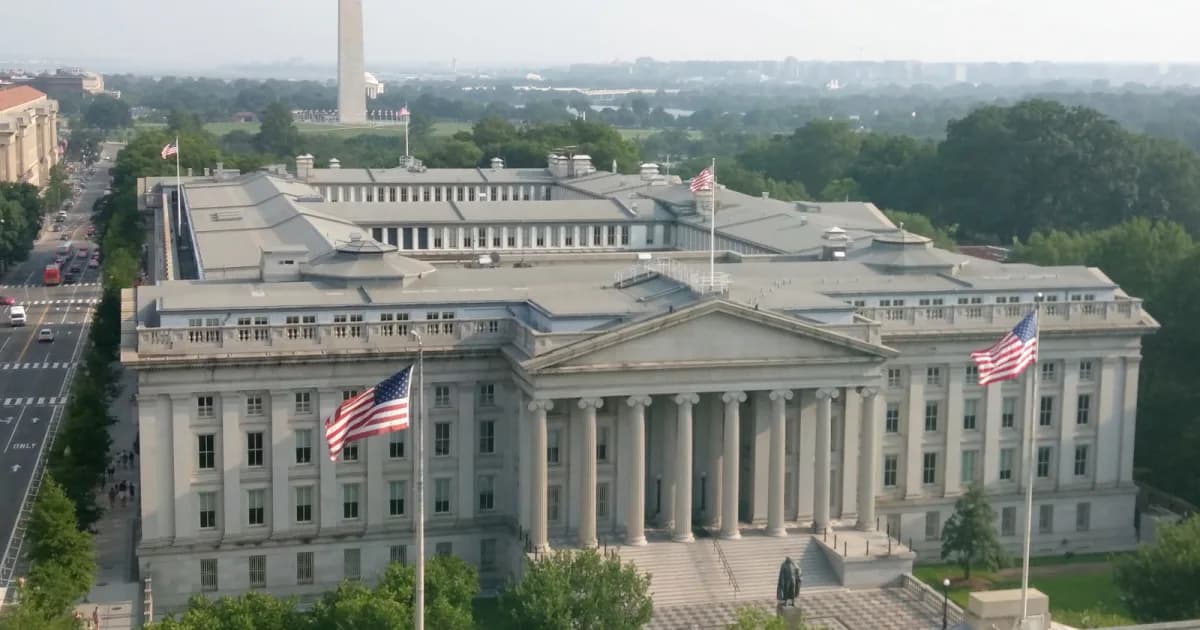
The yield on the benchmark 10-year US Treasury note rose to 5.04 percent in early trading on Tuesday, the highest level since July 2007, a milestone in a global bond sell-off that is steadily raising the price of money across the American economy and beyond.
The relentless upward march in yields translates directly into heavier financial burdens for consumers buying homes, financing vehicles or taking out personal loans, while simultaneously lifting the cost of capital for businesses and increasing the debt-servicing bill for the US government itself.
## Why Yields Keep Climbing
Investors are grappling with a dense set of macroeconomic headwinds: surging energy prices, mounting uncertainty surrounding the war against Iran, unchecked US government spending, and expectations of further monetary tightening by the Federal Reserve. The bond market, anchored by a Treasury market that has swollen to nearly 32 trillion dollars, has absorbed each shock by demanding higher returns.
The surge has come despite concerted efforts by the Treasury Department to stabilize the market. Treasury Secretary Scott Bessent has orchestrated interventions in recent weeks to contain the rise in longer-dated yields. So far, those efforts have yielded little success.
The timing sharpened the stakes. The spike arrived just ahead of the Fed's monetary policy decision, with traders pricing a 92 percent probability of a 25 basis point increase. The central bank delivered exactly that on Wednesday, its first hike in three years, and flagged more to come.
"The bond market has been signaling for weeks that higher rates are warranted," said Carol Schleif, chief market strategist at BMO Wealth Management, ahead of the decision. Citing hot inflation data, strong corporate earnings, a resilient labor market and severe geopolitical disruptions, she cautioned that elevated yields "could be here to stay for some time."
## Wall Street Divided On The Fallout
Stock market strategists are split on how damaging the rate regime will be. In a Tuesday morning note, Barclays strategists warned that higher rates have already pressured valuations and are increasingly putting equity portfolios at risk. "While earnings have so far offset the drag, the approaching 5 percent threshold in 10-year yields marks a historically important inflection point, beyond which rates have typically become a more persistent headwind for equities," they wrote, adding that the risk of a sharper repricing would grow if yields moved materially above current levels.
The BlackRock Investment Institute took the opposite view in its own Tuesday note, telling clients that rising global interest rates "have not knocked us off our pro-risk stance." US stocks nonetheless posted significant losses in Tuesday morning trading, a taste of what the Barclays scenario would extend.
The weight of history hangs over the 5 percent line. The last time the benchmark yield sustained such levels, in 2007, the Treasury market was a fraction of its current size; it has grown roughly sevenfold since, amplifying both the market's signal and the government's interest bill.
For policymakers, the sell-off creates an uncomfortable loop: the Fed hikes to fight war-driven inflation, the hike validates the bond market's demands, and the resulting yields tighten financial conditions further, doing some of the Fed's work while adding to the deficit spending that helped provoke the repricing in the first place.
For households and companies, the message from the world's most important interest rate is simpler. Whatever the Fed decides next, five percent ten-year money, the highest in nineteen years, is now the benchmark against which every car loan, mortgage and corporate bond in America is priced, and the interventions designed to prevent that outcome have so far failed to stop it.
## The Mechanics Of A Milestone
The 10-year yield matters because everything references it. Mortgage lenders price 30-year loans off long-dated Treasuries plus a spread; corporate treasurers roll debt at benchmarks tied to the same curve; and Washington's own interest bill is recalculated every time the market re-prices the government's promise to pay. A move from four percent to five percent on the benchmark, spread across a 32 trillion dollar market, is among the largest transfers of wealth from borrowers to lenders in the financial system's recent history.
The interventions that failed to stop it are instructive. Treasury buybacks and changes to the auction calendar can smooth supply around the edges, but they cannot conjure demand for bonds at a moment when inflation is above target, the central bank is selling nothing and promising to raise its own rate, and the fiscal path implies trillions more in issuance. The market read Bessent's operations as confirmation of the supply problem rather than a solution to it.
For the Fed, Wednesday's hike was framed as an inflation decision, but it was also a credibility decision: with the bond market having pushed long rates to 2007 levels on its own, the central bank needed to show it was not the last institution in Washington to notice.
Discussion
Recommended for you
More business
Finance
NYC Pension Funds Commit 300 Million Dollars to Union-Built Housing in Record Allocation
9/17/2026
Finance
CLARITY Act Fails Senate Cloture Vote as Crypto Market Structure Push Turns to Lame-Duck Hail Mary
9/17/2026
Finance
ECB Raises Interest Rates to 2.5% for Second Time This Year as Middle East War Fuels Inflation
9/16/2026
Finance