SpaceX Starship Completes First Successful Orbital Refueling Test in Low Earth Orbit
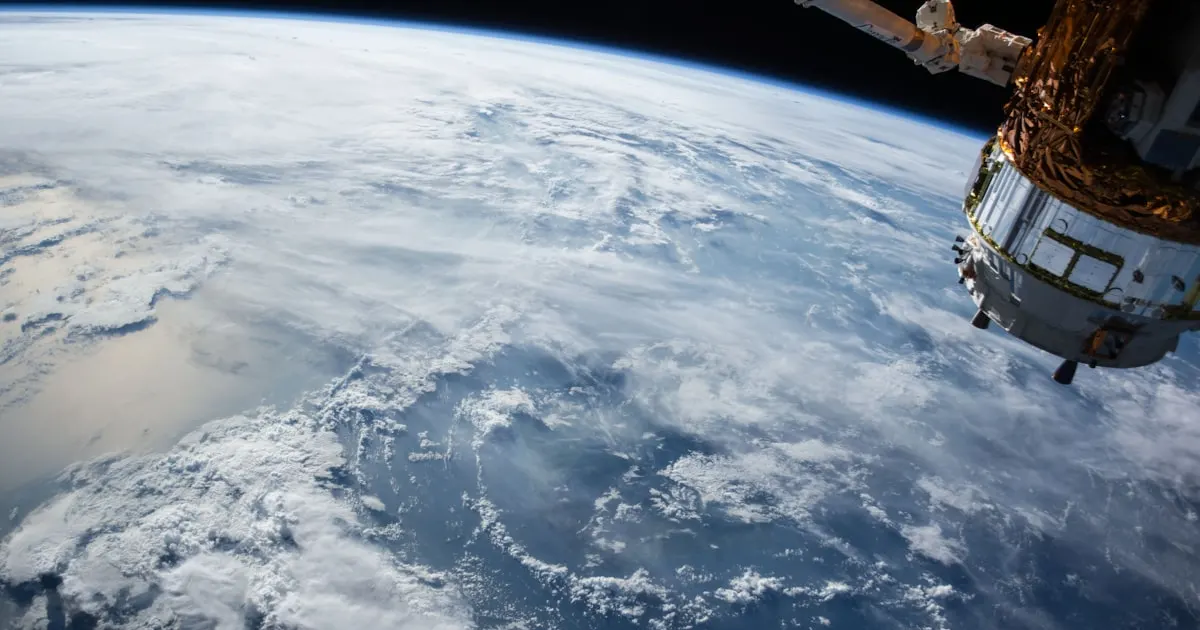
SpaceX successfully completed its first orbital propellant transfer demonstration on September 1, transferring 100 metric tons of liquid oxygen between two Starship vehicles in low Earth orbit at an altitude of 400 kilometers.
The test, which lasted 47 minutes, validates a???? required for NASA Artemis lunar landing missions and future Mars missions. The transfer used a headers-to-header configuration, moving propellant from the header tanks of the donor vehicle to the receiving vehicle through a connecting umbilical system.
"This is one of the hardest engineering challenges in spaceflight," said SpaceX VP of Build and Flight Reliability Bill Riley. "Orbital refueling is the key that unlocks the solar system for human exploration."
## Test Details and Results
The two Starship vehicles, designated S-33 and S-34, launched together on a Super Heavy booster from SpaceX Starbase facility in Boca Chica, Texas, on August 28. After achieving orbit, the vehicles separated and rendezvoused using autonomous navigation systems developed in-house.
Transfer operations began at 14:22 UTC on September 1. The system pumped liquid oxygen at a rate of approximately 2.1 metric tons per minute through a common bulkhead transfer system. Liquid methane was not transferred during this test, as the primary objective was to validate the fluid dynamics of cryogenic propellant transfer in microgravity conditions.
"We monitored tank pressures, temperatures, and flow rates throughout the transfer," said Kate Tice, SpaceX quality systems engineering manager. "All parameters remained within nominal ranges. The vehicles maintained stable attitude control throughout the entire operation."
## Implications for Artemis Program
The successful test is a critical milestone for NASA Artemis program, which relies on SpaceX Starship as the Human Landing System for Artemis III and subsequent missions. NASA contracted SpaceX for $2.89 billion in 2021 to develop the lunar lander, which requires orbital refueling to reach the Moon surface from low Earth orbit.
"Orbital refueling was the single biggest technical risk in the Starship HLS architecture," said Jim Free, NASA deputy administrator. "Today result significantly de-risks the Artemis III timeline and mission success probability."
The Artemis III mission, currently scheduled for September 2027, requires approximately 1,000 metric tons of propellant to be transferred in orbit to fuel the Starship vehicle for its trans-lunar injection burn. SpaceX plans to conduct progressive transfer tests, scaling up to 500 metric tons by mid-2027.
## Commercial and Military Applications
Beyond NASA missions, orbital refueling opens commercial opportunities for satellite servicing, orbital debris removal, and deep space exploration. The U.S. Space Force has expressed interest in orbital refueling capabilities for national security missions.
"The ability to refuel in orbit changes the calculus for every military and commercial space mission," said General B. Chance Saltzman, U.S. Space Force Chief of Space Operations. "It extends satellite lifetimes and enables responsive maneuvering in contested environments."
SpaceX plans to begin commercial orbital refueling services in 2028, with pricing estimated at $2,000 per kilogram of propellant delivered to low Earth orbit. The company aims to reduce this cost to $500 per kilogram by 2030 through increased flight cadence and manufacturing scale.
Discussion
Recommended for you
More science
Space
Scientists Discover Hidden Immune Organ Inside the Skull Bone Challenging Assumptions
9/2/2026
Space
SpaceX and NASA Complete Mars Sample Return Mission Preparation as Launch Window Approaches
9/2/2026
Space
SpaceX and NASA Complete Mars Sample Return Mission Preparation as Launch Window Approaches
9/2/2026
Research