SpaceX and NASA Complete Mars Sample Return Mission Preparation as Launch Window Approaches
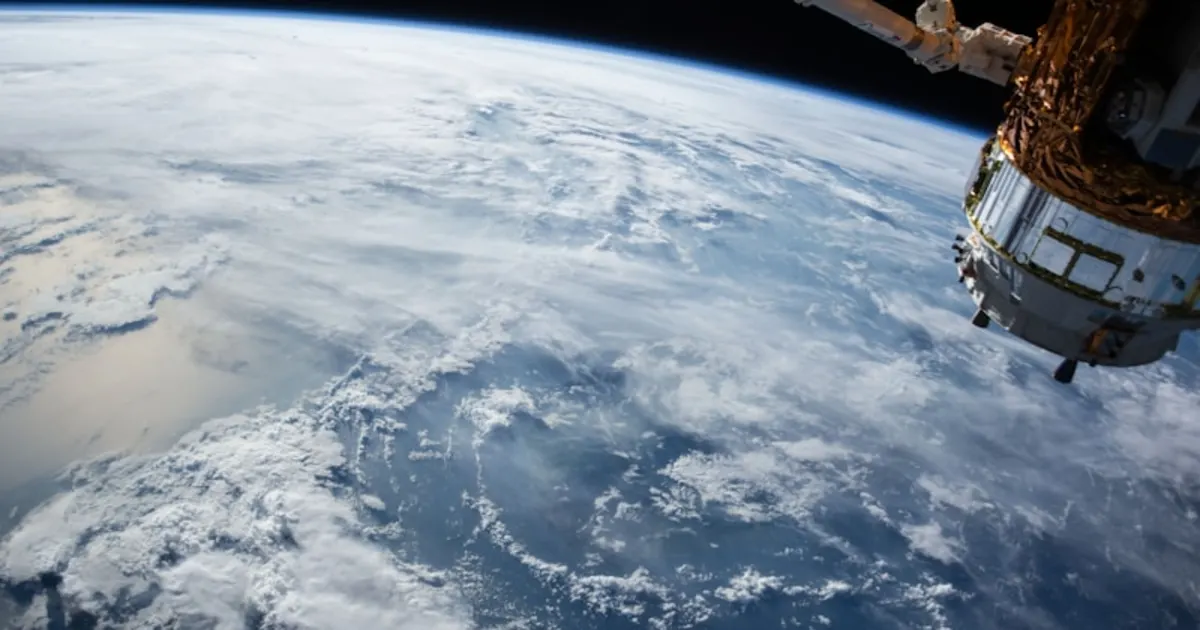
SpaceX and NASA announced on September 2, 2026, that preparations for the Mars Sample Return mission are 92 percent complete, with the launch targeted for the November 2026 window when Earth and Mars alignment permits optimal fuel efficiency.
## Decade-Long Mission Nears Historic Launch
The mission will retrieve 30 sealed rock and soil sample tubes deposited by the Perseverance rover in Jezero Crater and return them to Earth for analysis. NASA Associate Administrator for the Science Mission Directorate Nicola Fox stated that the sample return capsule is expected to land at the Utah Test and Training Range in September 2028.
"This will be the first time humanity has brought material from another planet back to Earth," Dr. Fox said at a press briefing at NASA Jet Propulsion Laboratory in Pasadena, California. "These samples could answer the fundamental question of whether Mars ever supported microbial life."
SpaceX CEO Elon Musk confirmed that a modified Starship vehicle will serve as the Mars Ascent Vehicle, capable of launching the samples into Mars orbit for retrieval. The Starship variant, designated Starship MSR, will be the first SpaceX vehicle designed for interplanetary operations. Musk stated that two Starship vehicles will launch during the November window, with one serving as the return vehicle and the other as a backup.
## Scientific Significance and Sample Analysis Plans
Perseverance has collected samples from diverse geological formations within Jezero Crater, including sedimentary rocks from an ancient river delta that scientists believe may have preserved biosignatures. The 30 sample tubes contain material from igneous rock formations dated to approximately 3.9 billion years old, representing some of the oldest accessible material from a planetary surface.
"We chose these sampling sites based on their astrobiological potential," said Ken Farley, project scientist for the Perseverance mission at Caltech. "The sedimentary rocks in the delta contain clay minerals that on Earth are associated with conditions favorable for microbial life."
The samples will be distributed to 30 laboratories across 15 countries under a framework established by the International Mars Sample Return Steering Committee. The primary receiving facility at NASA Johnson Space Center in Houston has undergone a 340 million dollars renovation to create a Sample Receiving Laboratory capable of handling extraterrestrial material under the most stringent planetary protection protocols.
Dr. Sarah Mazrouei, a planetary geologist at the University of Toronto, emphasized the transformative potential of the samples. "Returning actual Martian rock samples will allow us to apply analytical techniques that are impossible with remote sensing or in-situ measurements," Dr. Mazrouei said. "The precision of laboratory instruments on Earth exceeds anything we can send to Mars by orders of magnitude."
## Mission Architecture and Technical Challenges
The mission architecture involves several unprecedented technical achievements. The Mars Ascent Vehicle must launch from the Martian surface with enough velocity to achieve orbit, a feat never attempted from another planet. The Earth Return Orbiter, built by Airbus Defence and Space, will capture the orbiting sample container and redirect it toward Earth on a ballistic trajectory.
The European Space Agency director general, Josef Aschbacher, confirmed that the Earth Return Orbiter completed its final trajectory correction maneuver on August 28, 2026. "The orbiter is healthy and on course to arrive at Mars orbit by April 2027," Aschbacher said. "ESA is proud to partner with NASA and SpaceX on what may be the most consequential scientific mission of the century."
Budget reports indicate the total mission cost has reached 11.2 billion dollars, making it the most expensive robotic space mission ever undertaken. NASA Inspector General noted in a 2026 audit that costs have exceeded initial projections by 35 percent but affirmed that the scientific returns justify the investment.
Discussion
Recommended for you
More science
Space
Scientists Discover Hidden Immune Organ Inside the Skull Bone Challenging Assumptions
9/2/2026
Space
SpaceX and NASA Complete Mars Sample Return Mission Preparation as Launch Window Approaches
9/2/2026
Space
SpaceX Starship Completes First Successful Orbital Refueling Test in Low Earth Orbit
9/1/2026
Research