World
Bodies of Eight Women Found Near Johannesburg Airport Fuel Anger Over South Africa Femicide Crisis
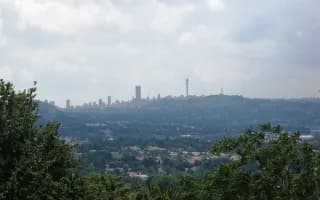
The discovery of the bodies of eight women around Johannesburg's OR Tambo international airport, five of them in a single week, has unleashed fear and fury across South Africa and forced the government to confront a femicide crisis it declared a national emergency last year. Police confirmed four bodies found since 15 July in Kempton Park, all half-naked with visible bruising, before four more discoveries in nearby towns. South African women are killed at a rate of 12.2 per 100,000 people, nearly six times the global average, according to UN figures. Acting police minister Firoz Cachalia added another case to the investigation on Wednesday, while President Cyril Ramaphosa has directed police to prioritise the murder investigations.
World
Three Wild Dog Brothers Complete Africa's Longest Recorded Mammal Journey Across Zambia
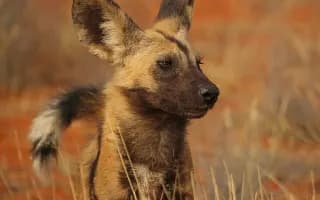
Three endangered African wild dog brothers have completed the longest-ever recorded single journey of any mammal on the African continent, travelling more than 2,500 miles (4,100km) over eight months across Zambia in search of new territory, scientists report in the journal Ecology. The brothers set out from Kafue national park in western Zambia and finished in the Luangwa valley in the east, covering a record 340 miles point-to-point. Researchers from the Zambian Carnivore Programme tracked 19 groups of wild dogs with GPS collars and found the species can still survive in human-dominated landscapes, though two sisters of the travelling brothers died, probably in bushmeat snares, during their own less successful dispersal. Only around 6,600 adults remain across 39 populations of a species classified as endangered on the IUCN red list, and scientists say the findings reinforce the case for investing in connected landscapes rather than relying solely on fenced protected areas.
World
Ethiopia Plants Toward 50 Billion Trees as Citizens Lead a Green Revival Against Deforestation
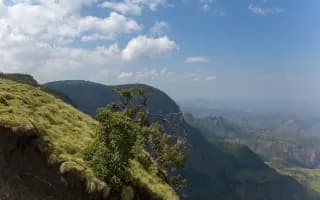
Ethiopia is pressing ahead with its bid to plant 50 billion trees by 2030, as ordinary citizens like Oromia farmer Halima Kedir transform degraded land into thriving groves under the government's Green Legacy Initiative. The country lost 560,000 hectares of tree cover between 2000 and 2025, but official figures show the annual deforestation rate fell from 92,000 hectares to 27,703 between 2013 and 2023, while forest cover rose from 15.5 percent to 23.6 percent. Scientists caution that survival rates, not planting totals, will decide success, and Ethiopia's selection to host the COP32 climate summit in Addis Ababa in November 2027 puts its record under global scrutiny.
World
Jihadist Violence in Africa's Sahel Set to Hit Record Levels Twenty-Five Years After 9/11
Islamist extremist violence in Africa's Sahel region is set to reach historic highs, according to new figures from the conflict monitor Acled, as the United States marks 25 years since the September 11 attacks. Incidents involving jihadist groups in Mali, Burkina Faso and Niger have soared from 63 in 2016 to 2,845 in 2025, with 2,145 events already logged this year and an annual total above 3,000 appearing likely. The UN recorded more than 9,000 deaths from security incidents across the three countries in 2025, the Global Peace Index reported. The expansion contrasts sharply with al-Qaida's weakness elsewhere: activity by Yemen's al-Qaida affiliate fell roughly 70% this year, while JNIM has seized strategic cities in Mali and claimed more than 130 attacks in Burkina Faso in 2026.

World
Dangote Refinery IPO Opens in Nigeria Seeking 2.15 Trillion Naira From African Investors
The initial public offering of Dangote Petroleum Refinery opened in Nigeria on September 14, 2026, in what is on course to be the largest share sale ever held in Africa. Nigeria's Securities and Exchange Commission cleared an offer of 4.1 billion ordinary shares at 525 naira each, worth about 2.15 trillion naira, roughly 1.63 billion dollars, if fully subscribed. The listing values the 650,000 barrel-per-day Lekki complex at about 65.2 trillion naira, nearly 49 billion dollars, close to 40 percent of the value of Nigeria's entire equity market. Aliko Dangote, who holds 92.3 percent of the company before dilution, told CNN the IPO is designed to give Nigerians and other Africans an opportunity to own a stake in the refinery, with proceeds earmarked for an expansion toward 1.4 million barrels per day. The dollar-dividend structure remains a proposal pending the final prospectus.

World
Google Announces Major AI Research Center Expansion Across Africa
Google announced a significant expansion of its AI research centers across Africa on September 1, 2026, with new facilities planned in Kenya, Nigeria, and South Africa. The expansion represents a 500 million dollar investment in African AI talent and infrastructure. Google CEO Sundar Pichai stated that the initiative aims to train 100,000 African developers in AI and machine learning over the next three years. The announcement comes as technology companies compete for talent in emerging markets with growing digital economies. African governments have welcomed the investment as a catalyst for local innovation and economic development. The African Development Bank has endorsed the initiative noting that AI adoption could add 1.2 trillion dollars to the African economy by 2030.
World
Nigeria Launches Continental Largest Solar Power Grid to Electrify 40 Million Homes
Nigerian President Bola Tinubu inaugurated the Sahel Solar Initiative on September 2, 2026, a 25 gigawatt solar power network spanning six West African nations that will provide electricity to an estimated 40 million households currently without reliable power access. The 34 billion dollar project, funded by the African Development Bank and a consortium of European and Asian investors, includes construction of 15 massive solar farms across Nigeria, Niger, Mali, Burkina Faso, Senegal, and Guinea. Nigeria Minister of Power Adebayo Adelabu stated that the first phase covering 8 gigawatts will be operational by December 2027. The World Bank estimates that reliable electricity access could boost West African GDP by 4.2 percent annually.
World
Kenya Launches Africa First National Digital Identity System Covering 52 Million Citizens
Kenya activated its national digital identity system on September 1, becoming the first African country to issue biometric digital IDs to all eligible citizens over age 18. The system, built by NEC Corporation of Japan and supervised by the National Registration Bureau, has enrolled 52.3 million people since the pilot phase began in January 2025. President William Ruto said the digital ID will streamline access to government services, reduce fraud, and enable financial inclusion for the estimated 11 million Kenyans who currently lack formal identification documents.