World
RFK Jr Tells Anti-Vaccine Activists They Have a Friend at the White House Amid Measles Outbreak
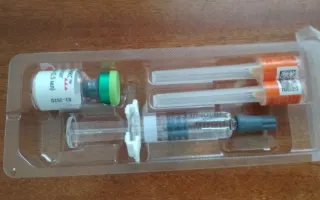
US Health Secretary Robert F Kennedy Jr told anti-vaccine activists in Washington DC that they have a strong and steadfast friend at the White House, speaking for nearly an hour and a half at the conference of Children's Health Defense, the organization he led for almost two decades. The pledge came as the death toll from the worst measles outbreak in decades rose to four in Pennsylvania, following three deaths in Texas and Arizona last year. Kennedy urged patience, saying he would have made sweeping changes on day one but had to follow the law to make permanent change. Recent polling suggests one quarter of Americans now doubt the measles, mumps and rubella vaccine, while a majority disapprove of the administration's handling of the outbreak.

World
Lawsuit Demands Epstein Estate Identify Survivors Depicted in Seized Abuse Material
Two women have filed a lawsuit against Jeffrey Epstein's estate alleging the financier possessed child sexual abuse material of them, and asking a federal judge to order a program to identify and notify every individual whose images were in Epstein's collection. The complaint, filed this week in the US district court for the southern district of New York against co-executors Darren Indyke and Richard Kahn, claims Epstein spent more than two decades possessing, producing and distributing material depicting countless children, including a modeling book of sexualized images kept in a locked safe in his New York home beginning in the 1990s. One plaintiff, identified as Jane Doe, says she was around 12 years old when Epstein stole partly nude photographs of her, and that despite contemporaneous reports to law enforcement no one investigated. The suit argues many depicted in the collection have never been identified through the national victim-identification program, with one lawyer citing a report finding 15 or more hits of known series and stating that to their knowledge none of those victims have ever received notice.
World
Canada Moves to Become EU's First Associate Member as Carney Pledges Deeper Ties With Europe
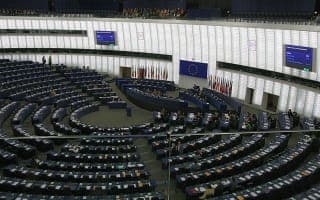
Canadian Prime Minister Mark Carney has embraced the European Union's unprecedented offer to make Canada the bloc's first associate member, telling the European Parliament that deeper integration would ensure no country can control Canada's markets or undermine its sovereignty. The proposal, unveiled by European Commission President Ursula von der Leyen on Wednesday, does not yet exist in EU treaties and must be created, with a summit in Montreal on October 29-30 set to define it. Donald Trump has called the arrangement a possible hostile act and threatened heavy tariffs on Europe, while Canada sends roughly 70 percent of its exports to the United States and seeks to reduce that dependence.
World
UN Experts Say Venezuela's Repression Machinery Remains Intact Despite Maduro's Removal From Power
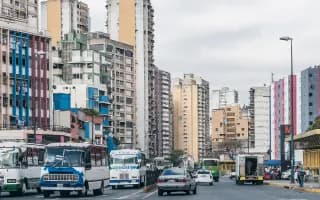
A United Nations-mandated fact-finding mission told the Human Rights Council in Geneva on Wednesday that Venezuela's apparatus of repression remains largely intact despite President Nicolas Maduro's removal from power in January, warning that political liberalization measures remain "partial, conditional and reversible at best." The report credited interim President Delcy Rodriguez with prisoner releases, an amnesty law and the closure of the El Helicoide detention facility, but found hundreds of political detainees still held, torture allegations at two maximum-security prisons and no meaningful reform of the security agencies used to restrict dissent. The mission also described the U.S. intervention that removed Maduro as a breach of international law.

World
Canada Investment Summit Opens in Toronto With 1 Trillion Dollar Target and Bank Pledges
Canada's first-ever national investment summit opened in Toronto on September 14, 2026, as Prime Minister Mark Carney seeks to attract 1 trillion dollars in new investment over the next five years. Hundreds of executives and global asset managers from countries including Kuwait, Malaysia, the Netherlands, Singapore, Qatar, Norway, Japan and Australia attended the opening day, which produced billion-dollar announcements and federal tax policy changes. TD Bank committed 150 billion dollars over five years to accelerate investment in Canada, while Scotiabank announced more than 100 billion dollars in financing, underwriting and investment. Saskatchewan Premier Scott Moe and Bell Canada CEO Mirko Bibic unveiled an AI data centre expansion estimated at more than 50 billion dollars, and investors placing 1 billion dollars or more will now receive priority access to binding Canada Revenue Agency tax rulings.

World
Trump Administration Touts Venezuela Oil Deal as Greatest in the World
President Trump has touted his agreement with Venezuela as the greatest oil deal in the world. The deal announced in September 2026 aims to increase Venezuelan oil exports to the United States under new terms negotiated between the two governments. The agreement comes as US energy officials seek to diversify oil supply sources amid ongoing geopolitical tensions in the Middle East. Questions remain about the company behind the deal and its ability to meet production targets. The deal represents a significant shift in US-Venezuela relations following years of sanctions and diplomatic isolation. Venezuela holds the largest proven oil reserves in the world at approximately 303 billion barrels. Energy analysts project the deal could increase exports by several hundred thousand barrels per day within two years.
World
Colombia Reports 33 Percent Drop in Amazon Deforestation After Crackdown on Environmental Crime
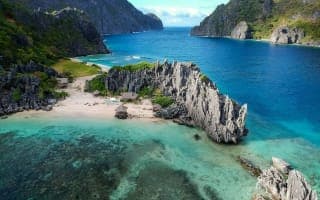
Colombia's environment ministry announced a 33 percent drop in deforestation in the first quarter of 2025 compared with the same period last year, attributing the decline to stronger community coordination and a crackdown on environmental crime. Official figures show forest loss fell from 40,219 hectares in early 2024 to 27,000 hectares this year, with deforestation inside Amazon national parks dropping 54 percent. Environment Minister Lena Estrada Añokazi said the government identified 18 active deforestation hot spots, 13 of them in the Amazon, and credited joint operations with the defense ministry and attorney general's office. The Amazon still accounts for 69 percent of the country's forest loss, and Colombia's inspector general warned that pressure on protected areas remains intense.

World
Canada and Mexico Form Joint Trade Alliance to Counter US Tariff Policies
Canadian Prime Minister Mark Carney and Mexican President Claudia Sheinbaum signed a bilateral trade cooperation agreement on September 2, 2026, establishing the North American Trade Partnership Alliance in response to continued US tariff increases on Canadian and Mexican goods. The agreement eliminates tariffs on 85 percent of goods traded between the two nations and creates a joint 15 billion dollar infrastructure fund for cross-border supply chain development. Carney stated that bilateral trade between Canada and Mexico reached 89 billion dollars in the first half of 2026, a 34 percent increase from the same period last year. The alliance includes provisions for coordinated semiconductor manufacturing, critical minerals processing, and electric vehicle battery production across both countries.
World
Brazil Amazon Deforestation Drops 28 Percent Under New Enforcement Regime
Deforestation in the Brazilian Amazon fell 28 percent in the first eight months of 2026 compared with the same period last year, according to data from the National Institute for Space Research. The decline follows the implementation of a new enforcement regime under President Luiz Inacio Lula da Silva that increased fines for illegal logging by 300 percent and deployed 4,500 additional environmental agents to the region. The results mark the third consecutive quarterly decline and bring deforestation to its lowest level since 2019. However, satellite data shows fires in the Cerrado savanna region increased 15 percent, raising concerns about displacement of illegal activity.