Three Wild Dog Brothers Complete Africa's Longest Recorded Mammal Journey Across Zambia
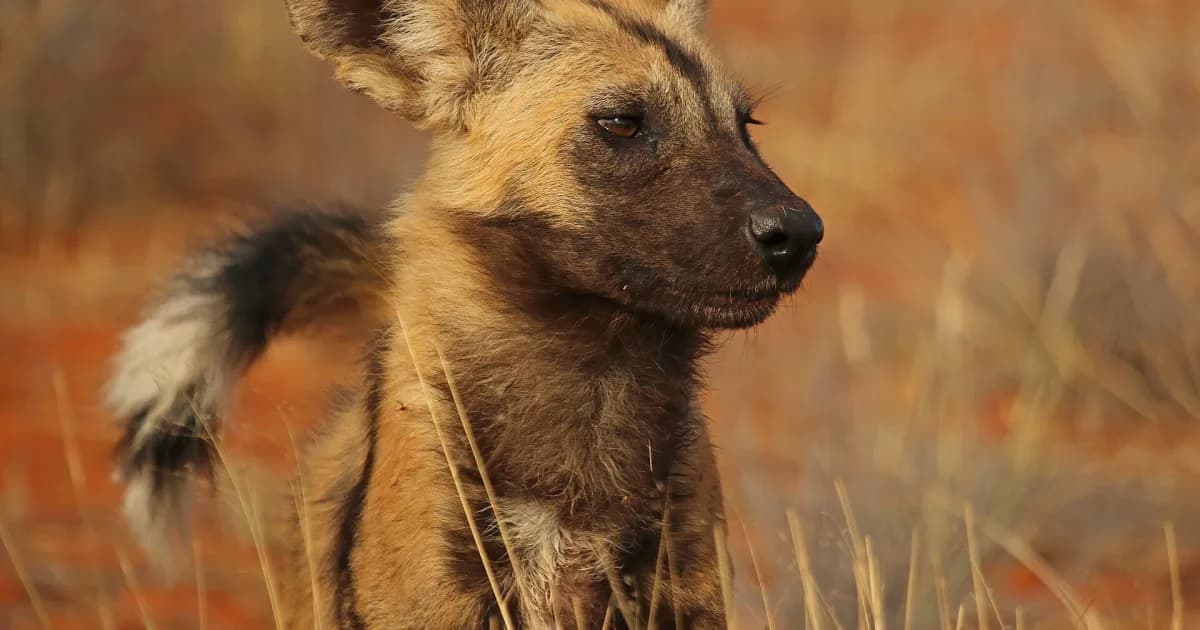
Three endangered African wild dog brothers have completed the longest-ever recorded single journey of any mammal on the African continent, travelling more than 2,500 miles (4,100km) over eight months across Zambia in search of new territory, scientists report.
The brothers began their dispersal in Kafue national park in western Zambia and ended it in the Luangwa valley in the east of the country, according to researchers at the Zambian Carnivore Programme, whose findings are published in the journal Ecology. Measured point-to-point, the route covered 340 miles (546km) — itself a record for the species.
The epic journey is almost equivalent to travelling the length of Chile on foot, and farther than the famous wildebeest and zebra migration across the Serengeti in east Africa. The previous record of 2,418 miles was also set by African wild dogs, which moved between Loliondo in northern Tanzania's Ngorongoro district and Tsavo West national park in southern Kenya in 2012.
## A Record Run Through Dangerous Country
A dispersal is the period when a young wild dog comes of age and must leave its family pack to establish new territory, find a mate and start a family of its own. Related dogs do not form new family packs, so young animals typically have to travel long distances through the landscape to find prospective mates outside their bloodline.
The three brothers dodged cars and hunters as they crossed a human-dominated landscape, navigating bushmeat snares and fragmented habitat before reaching their new haven on the African savannah.
Dr Matt Becker, chief executive of the Zambian Carnivore Programme, whose scientists were monitoring the animals, said the journeys reveal both hope and hazard. "These extraordinary journeys show that natural connections between Africa's wildlife strongholds still exist. But they also reveal how difficult and dangerous those journeys have become," he said.
"Rather than relying solely on fenced protected areas, these findings reinforce the value of investing in connected landscapes. The dogs are showing us that connectivity still works; now we need to do more to protect and strengthen it," Becker said.
## Sisters Lost Along the Way
The researchers tracked 19 separate groups of wild dogs to monitor their dispersals, including a group of sisters to the three brothers who were far less successful at finding a new range. Two of the sisters died, probably caught in snares set by bushmeat hunters, but not before a final encounter with their siblings.
Two months into the journey, the brothers and sisters came across each other deep in Zambia's copper-belt mining region, spending a day together before going their separate ways again — a meeting researchers described as touching, and one that underlines the stakes of every dispersal.
African wild dogs have been endangered for decades. Only around 6,600 adults remain across 39 distinct populations on the continent, and the species is classified as endangered on the International Union for Conservation of Nature's red list. Habitat loss, declining numbers of natural prey, bushmeat hunters' snares and conflict with humans are among the biggest threats to their survival.
## Why Connectivity Decides Survival
Despite the enormous challenges, researchers say the brothers' journey demonstrates that wild dogs can still survive in landscapes shaped by people — provided the connections between protected areas hold.
"These long-term studies provide key evidence that connectivity between large landscapes is still there," said Dr Nyambe Nyambe, director of the Kavango-Zambezi transfrontier area secretariat, a conservation region spanning five countries including Zambia, where governments are working to keep space for wildlife to move.
"If we conserve and continue to improve these connections — spanning the range of national parks, community areas, nations and regions — a lot of species like wild dogs can make the rest happen," Nyambe said.
The Zambian Carnivore Programme's GPS-collar study tracked 19 groups to reach its conclusions, giving conservationists rare hard data on how far the species must travel and how lethal the journey has become. Alongside African savannah elephants, whose ancient migration routes are increasingly blocked by human development, wild dogs depend on long-distance movement to find new homes and mates.
For conservation planners, the message from the record-setting brothers is direct: protecting corridors between Kafue, the copper belt and the Luangwa valley is no longer abstract theory but the difference between breeding packs and dead dispersers. The findings arrive as governments across the Kavango-Zambezi region weigh how much land to keep open for wildlife against mining, farming and infrastructure pressure, with the Ecology study offering the clearest evidence yet of what is at stake along routes like the one the three brothers walked.
The Guardian's reporting, drawing on the researchers' field observations, also noted the wider significance for other wide-ranging carnivores: wherever corridors between Kafue, the Luangwa valley and neighbouring protected landscapes remain open, dispersal is possible; where roads, farms and snares cut them, the next record journey may simply never begin. The Ecology study now stands as both a milestone and a warning, documenting a record that scientists say should be celebrated as proof the landscape still works — and protected before it stops working.
Discussion
Recommended for you
More world
Africa
Ethiopia Plants Toward 50 Billion Trees as Citizens Lead a Green Revival Against Deforestation
9/17/2026
Africa
Jihadist Violence in Africa's Sahel Set to Hit Record Levels Twenty-Five Years After 9/11
9/16/2026
Africa
Dangote Refinery IPO Opens in Nigeria Seeking 2.15 Trillion Naira From African Investors
9/15/2026
Africa