
World
Buckingham Palace Rebuffs Earl Spencer Claim That King Charles Said We'll Forget Diana Soon Enough
Buckingham Palace has issued an unusually swift rebuttal to claims in a forthcoming memoir by Earl Spencer that King Charles, then Prince of Wales, told him days after Diana's death: rest assured, we'll forget her soon enough. Charles Spencer's book Swan Song: Diana, My Sister, due worldwide next Tuesday from Penguin Michael Joseph, alleges the remark came during a heated argument over whether the princess's sons should walk in her 1997 funeral procession. The Palace, which does not comment on books as a matter of principle, responded that His Majesty is mindful the pain of fraternal grief can cloud reason and colour memory. Diana died aged 36 in a Paris car crash in 1997, and next year marks the 30th anniversary of her death.
World
EU Unveils KIDS Act Banning Under-13s From Social Media With 6% Revenue Penalties
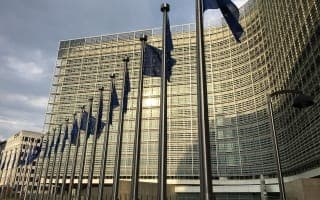
The European Commission has formally unveiled the EU KIDS Act, a proposed regulation that would impose a blanket ban on children under 13 creating social media accounts, a day after President Ursula von der Leyen teased the plan in her State of the Union address to the European Parliament. Under the proposal, 13 and 14-year-olds could hold only limited accounts accessible through a parent's own account, with full accounts permitted from age 15. Very large online platforms would have to prove their services are safe by design, ban addictive design features, profiling-based recommender feeds, infinite scrolling and push notifications during sleeping hours, and implement privacy-preserving age assurance — with investigations fast-tracked to conclude within 90 days and penalties up to 6 percent of global annual revenue. Von der Leyen said the act reverses the burden of proof so platforms must show they are safe, but consumer and industry critics warned that age verification at scale raises serious privacy risks of its own.

World
Scotland Suspends AI Datacentre Planning for Up to a Year Pending National Strategy and Environmental Rules
Scotland has voted to freeze planning decisions on all new AI datacentres for up to 12 months while the Scottish government draws up national guidance, in a move that could complicate Britain's AI infrastructure ambitions. MSPs backed a Scottish Labour motion on Wednesday requiring robust environmental impact assessments for future schemes and delaying approvals until rules for hyperscale datacentres are formalised. More than 20 large datacentres have been proposed across Scotland, including a Fife project billed as the second largest in the world. Campaigners celebrating a landmark victory now demand ministers call in applications nearing decision, while the government says mandatory assessments will address water, carbon and energy concerns fueling community protests.

World
Sweden's Election Hangs in Balance as Exit Polls Give Center-Left Slim Lead Over Right
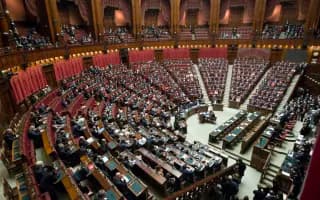
Sweden's parliamentary election remained on a knife-edge after Sunday's vote, with exit polls giving the four-party center-left opposition a narrow lead over Prime Minister Ulf Kristersson's right-wing bloc. Public broadcaster SVT's exit poll put the opposition at 51.3 percent against 46.8 percent for the governing alliance, and a TV4 survey showed a similar gap. With two-thirds of the actual vote counted, however, the two blocs were nearly dead even. A win for the left would return former prime minister Magdalena Andersson to office, while a far-right Sweden Democrats result of 17.2 percent — down 3.3 points from 2022 — left the party reeling. Kristersson's Moderates said the outcome could not be settled until it is clear who can command a parliamentary majority in the 349-seat Riksdag.
World
European Commission Proposes Innovation Act to Unlock 10.2 Billion Euros in Funding
The European Commission proposed a new European Innovation Act on September 9, 2026, designed to help Europe's most innovative ideas be developed, financed and scaled up inside the European Union rather than commercialized elsewhere. The legislation targets two persistent barriers: difficult access to financing for intellectual-property-rich startups, and fragmented public procurement rules across the 27 member states. The Commission estimates the measures could unlock 10.2 billion euros per year in additional IP-backed finance, generate 1 billion euros in annual savings for public buyers and deliver 25.92 billion euros in additional annual profits for companies. Analysis by the Commission's Joint Research Centre projects the reforms could add between 256 billion and 452 billion euros to GDP over ten years and support around 507,000 additional jobs in the higher-impact scenario. A parallel proposal establishes a common EU reference framework for regulatory sandboxes.

World
European Union Finalizes Landmark AI Act Enforcement Rules and Penalties
The European Union finalized the enforcement rules for its landmark AI Act on September 1, 2026, establishing penalties of up to 35 million euros or 7 percent of global annual revenue for companies that violate the regulation. The AI Act classifies artificial intelligence systems into risk categories ranging from unacceptable to minimal risk. High-risk AI systems used in healthcare, law enforcement, and education will face the strictest requirements. The enforcement framework includes provisions for a European AI Office that will oversee compliance and investigate complaints. Companies must begin complying with the most critical provisions by February 2027.

World
Meta Agrees to Pay Up to 16.7 Billion Dollars in Multistate Child Safety Settlement
Meta settled a massive multistate lawsuit over child safety issues this week and has agreed to make substantial changes to its social media platforms. The company will pay up to 16.7 billion dollars to participating US states and territories, with some of the money contingent on competitors adopting the same practices. The settlement represents one of the largest payouts in the history of technology company litigation. State attorneys general from multiple jurisdictions brought the case, alleging that Meta knowingly designed features that harmed children and violated consumer protection laws. The agreement requires Meta to implement enhanced age verification and restrict algorithmic recommendations for minors across Facebook, Instagram, and WhatsApp.

World
Germany Unveils 120 Billion Euro Green Energy Package to Replace Russian Gas Dependence
German Chancellor Friedrich Merz announced on September 2, 2026, a comprehensive 120 billion euro energy transition package aimed at eliminating the country remaining dependence on Russian natural gas by 2028. The plan allocates 45 billion euros for offshore wind farms in the North Sea, 30 billion euros for hydrogen infrastructure, and 25 billion euros for residential solar installations. Energy Minister Robert Habeck stated that Germany has already reduced Russian gas imports from 55 percent of total supply in 2021 to less than 4 percent today. The remaining contracts with Russian energy suppliers will terminate at the end of 2027. Industrial energy costs in Germany currently stand at 340 euros per megawatt-hour, nearly three times the European average.

World
Germany Blames Russia for Drone Attack on Airport as Europe Tightens Air Defenses
Germany attributed a drone attack on Leipzig-Halle Airport to Russian intelligence services on September 1, marking the first time Berlin has directly accused Moscow of targeting civilian aviation infrastructure on German soil. The attack forced a six-hour shutdown of the airport, delaying 47 flights and affecting approximately 12,000 passengers. German Defense Minister Boris Pistorius announced an immediate 2.3 billion euro emergency fund to expand the country layered air defense system. The incident occurred as European Union defense ministers gathered in Brussels to discuss a proposed 150 billion euro joint defense spending initiative.