Merck and Moderna's Personalized mRNA Cancer Vaccine Succeeds in Phase 3 Trial
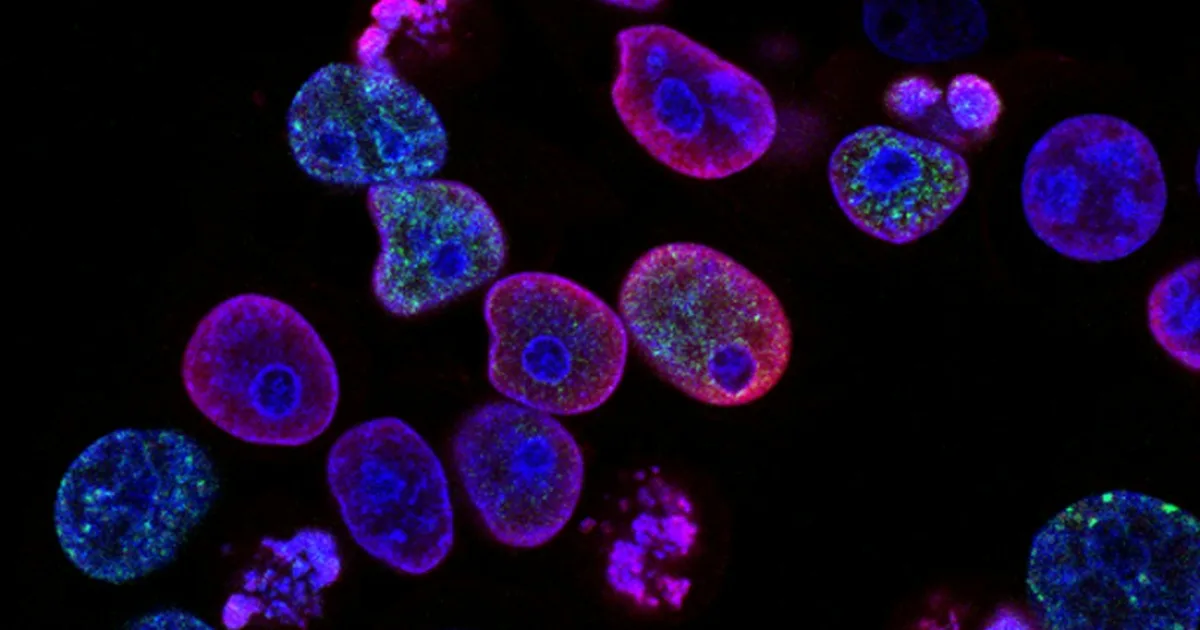
Merck and Moderna have reported a landmark success for personalized cancer medicine: their investigational mRNA-based individualized neoantigen therapy, intismeran autogene, combined with Merck's KEYTRUDA, has met both its primary and a key secondary endpoint in a Phase 3 trial for patients with completely resected stage IIB-IV melanoma.
The announcement, made on 19 August 2026, marks the first positive Phase 3 readout for an individualized neoantigen therapy and for an mRNA-based cancer therapy, as well as the first Phase 3 study to demonstrate a clinically meaningful improvement over KEYTRUDA alone, a standard-of-care immunotherapy, in the adjuvant setting for resected melanoma.
## How the Personalized Vaccine Works
Intismeran is designed and produced using a sample of each patient's tumor to identify the unique mutational signature, or fingerprint, of their cancer. Each course consists of a synthetic mRNA coding for up to 34 neoantigens, tailored to the individual tumor's biology. Once administered, the body translates the RNA-encoded sequences and presents them to the immune system, training T-cells to recognize and attack the patient's specific cancer cells.
The INTerpath-001 trial enrolled 1,137 patients who, after complete surgical resection, were randomized 2:1 to receive intismeran plus KEYTRUDA or KEYTRUDA alone for approximately one year. At a pre-specified interim analysis, the combination demonstrated statistically significant and clinically meaningful improvements in recurrence-free survival and distant metastasis-free survival. Safety profiles were consistent with previous studies, with no new safety signals observed.
"Today's results represent a landmark moment for adjuvant melanoma treatment," said Professor Georgina Long, the study's principal investigator and medical director of Melanoma Institute Australia. "Intismeran in combination with pembrolizumab has the potential to establish a new treatment paradigm in the adjuvant melanoma setting, helping patients remain cancer-free for longer."
## From Aspiration to Evidence
The result builds on the Phase 2b KEYNOTE-942 trial, whose five-year follow-up data presented at the 2026 ASCO Annual Meeting showed a 49 percent reduction in the risk of recurrence or death and a 59 percent reduction in the risk of distant metastasis or death compared with KEYTRUDA alone.
"For many years, the idea of creating an mRNA treatment designed specifically for an individual patient's cancer was aspirational. We are now helping turn that vision into a reality," said Stéphane Bancel, chief executive of Moderna.
Dr. Dean Y. Li, president of Merck Research Laboratories, framed the strategy around timing: intervening earlier in the disease course, when many cancers are most treatable, to increase the possibility of cure. The stakes are significant, with more than 330,000 new melanoma cases diagnosed worldwide in 2022 and an estimated 112,000 new US cases and over 8,500 deaths expected in 2026 alone. Most recurrences after surgery occur within two years and are metastatic rather than localized.
The INTerpath program spans nine Phase 2 and Phase 3 trials across melanoma, non-small cell lung cancer, bladder cancer and renal cell carcinoma. The companies plan to present the INTerpath-001 data at an upcoming international medical meeting and will engage with regulatory authorities on filing submissions. In accordance with the trial protocol, the study will continue in order to evaluate other key secondary endpoints, including overall survival.
Discussion
Recommended for you
More science
Health
Brain Cells Once Thought Protective May Actually Drive Cognitive Decline With Age
9/2/2026
Health
Breakthrough Gene Therapy Cures Sickle Cell Disease in 97 Percent of Patients in Phase 3 Trial
9/2/2026
Health
WHO Approves First Malaria Vaccine for Widespread Use Across Sub-Saharan Africa
9/1/2026
Research