Sweden's Election Hangs in Balance as Exit Polls Give Center-Left Slim Lead Over Right
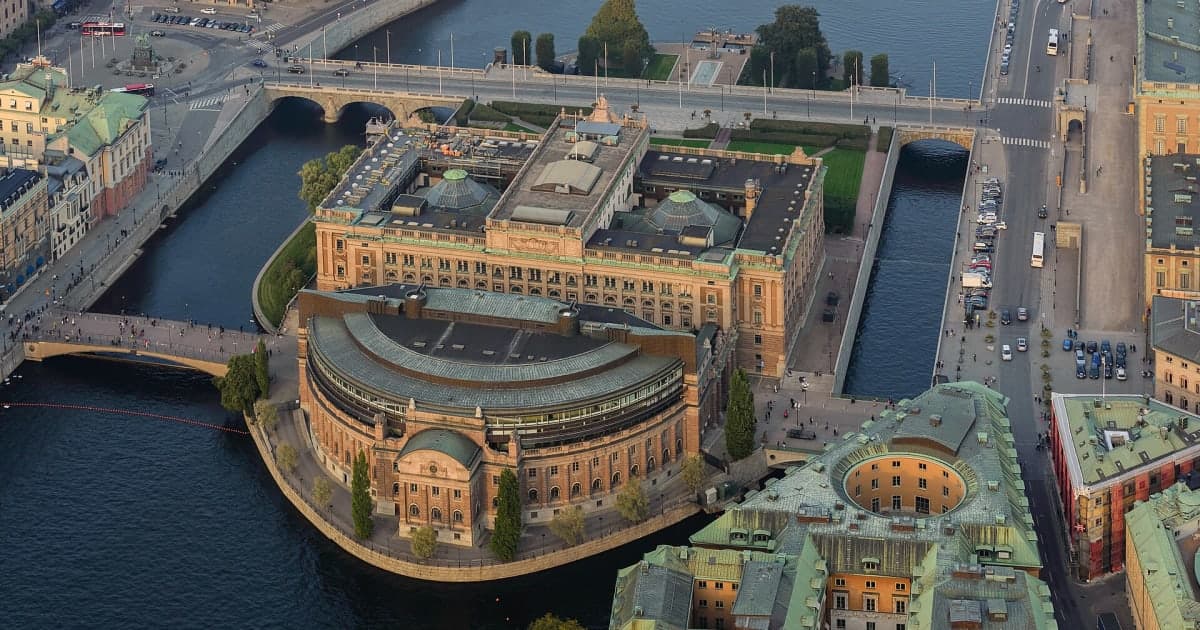
Sweden's national election hung in the balance Sunday night after exit polls gave the center-left opposition a slim lead over Prime Minister Ulf Kristersson's right-wing bloc, but partial returns showed the two sides nearly dead even as counting continued into the night.
Public broadcaster SVT's exit poll put the four opposition parties at 51.3 percent of the vote, against 46.8 percent for the four right-wing parties. A separate election-day survey by TV4 showed a similar picture, giving the opposition 51.3 percent and the right 47.0 percent. With two-thirds of the actual vote counted, however, the two blocs were nearly level, and the mood at opposition gatherings shifted from jubilation to quiet waiting as the results indicated a closer race.
The projections had initially been greeted with cheers at several opposition parties' election-night gatherings, including at the Social Democrats in Stockholm. Election posters for the Sweden Democrats, the Moderate Party and the Social Democrats had lined streets across the country in the campaign's final weeks.
## A Race That Hinges on Majority-Building
Kristersson has led Sweden since 2022 with a three-party center-right coalition that relied on outside support from the Sweden Democrats for a parliamentary majority. The anti-immigration party, which has far-right roots, had been promised Cabinet posts this time if the governing coalition were returned to office.
The center-left Social Democrats have led most Swedish governments since World War II. Party leader Magdalena Andersson served as prime minister from 2021 until she lost power at the last election, and a win for the four left parties would pave the way for her return.
"If this holds up, Magdalena Andersson will become our country's prime minister," Social Democratic Party Secretary Tobias Baudin told SVT after the exit poll results were announced.
Andersson, speaking after casting her ballot, framed the stakes directly. "This is a very important election for Sweden, if we for the first time should have a right-wing extremist party founded by Neo-Nazis in our government or if the government should be led by me," she said.
Kristersson was not expected to concede even if the opposition parties won a majority, according to SVT. His Moderate Party maintained that the outcome could not be settled until it became clear who could secure sufficient parliamentary support to serve as prime minister.
## Sweden Democrats Stung by Poll Showing
The SVT exit poll pointed to a setback for the far-right Sweden Democrats, whose support stood at 17.2 percent, down 3.3 percentage points from the 2022 election.
SD politician Bjorn Soder said he was "quite shocked" by his party's showing, though he said he believed the final result could look different. The party, long excluded from government by established parties because of its far-right roots, has supported Kristersson's government from outside the cabinet since 2022. If the right wins this year, SD could enter government for the first time.
The party was founded in the 1980s by people active in right-wing extremist groups, including neo-Nazis. It toned down its rhetoric and expelled openly racist members under Jimmie Akesson, who has led it since 2005 and overseen its growth from a marginal force.
## What Is Decided, and What Comes Next
Sweden's two major blocs each comprise four parties, so the central question is less about which party wins than which side can form a majority. Individual parties need a minimum of 4 percent of the vote to win parliamentary seats.
More than 8 million people in the nation of about 10.6 million were eligible to vote for the 349-seat parliament, the Riksdag. Voting closed at 8 p.m. (1800 GMT), with counting beginning immediately afterward and the first preliminary results expected later in the evening, followed by further tallies as advance ballots were processed in the days ahead.
There was broad political consensus in Sweden on several major issues, including support for Ukraine and the country's decision to join NATO. That left the potential entry of the hard right into government as the dominant campaign theme — against a backdrop of gains for the populist right elsewhere in Europe, including a first-place finish by the far-right Alternative for Germany party in a German regional election on September 6.
## A Narrow-Ever Result Awaits Final Count
Election officials said preliminary results would continue to firm up overnight, with postal and advance votes added to the tally in the days that follow. Sweden's proportional system and the even split between the blocs mean coalition negotiations, rather than election night, are likely to determine who governs.
Both sides spent the final days of the campaign warning about the other: the left on the precedent of a party with extremist roots entering cabinet, the right on the economic record of the Social Democrats. With the count so close, neither bloc claimed victory as Sunday ended, and officials cautioned that the shape of Sweden's next government may not be known for days.
Discussion
Recommended for you
More world
Europe
European Commission Proposes Innovation Act to Unlock 10.2 Billion Euros in Funding
9/15/2026
Europe
European Union Finalizes Landmark AI Act Enforcement Rules and Penalties
9/2/2026
Europe
Meta Agrees to Pay Up to 16.7 Billion Dollars in Multistate Child Safety Settlement
9/2/2026
Europe