
Business
Indonesia Turns to Veteran Technocrat Suahasil Nazara as Third Finance Minister in Two Years
Indonesia has turned to veteran technocrat Suahasil Nazara as its third finance minister in two years after President Prabowo Subianto fired Purbaya Yudhi Sadewa on Monday and swore in his deputy within hours. The reshuffle, which follows the abrupt resignation of Bank Indonesia Governor Perry Warjiyo in July, puts the spotlight on investor fears over how much control Prabowo wields over fiscal and monetary policy in Southeast Asia's largest economy. The benchmark stock index has lost more than 25 percent this year and the rupiah hit record lows in June before a recent pivot toward fiscal discipline stabilized sentiment. Analysts at the Economist Intelligence Unit, Capital Economics and DBS say the 2027 budget will reveal whether the shift is genuine.

Business
Diesel Hits Record 6.31 Dollars as J.B. Hunt Shares Plunge on Fuel Cost Alarm
Diesel prices in the United States surged to an all-time high of about 6.31 dollars per gallon on Wednesday, up more than 70 percent from a year ago, as analysts attribute the record run to the supply shock from the US war with Iran. The surge sent shares of trucking giant J.B. Hunt down more than 13 percent, one of the stock's worst days since it went public in 1983, after finance chief Brad Delco warned of a 5 to 10 percent earnings drop from the second to third quarter and described some of the most radical fuel-price swings the industry has ever seen. The Dow Jones Transportation Average closed nearly 3 percent lower, with GasBuddy warning the national average could eclipse 6.50 dollars within days and California already above 8 dollars. The transportation sector added 1.9 trillion dollars to the US economy in 2024, and executives warned the fuel squeeze will ultimately become a drag on American consumers.

Business
Bank of England Holds Rates at 3.75 Percent but Warns Middle East War Could Force Future Rises
The Bank of England has kept interest rates on hold at 3.75 percent while warning that a continuation of the Middle East fighting could force it to raise borrowing costs, as war-driven energy inflation threatens to entrench itself in the British economy. In a surprise move, the Bank also announced plans to sell 146 billion pounds of government bonds back to the Treasury at about 20 billion pounds a year until 2034 to complete its quantitative tightening programme without destabilising the gilt market. Governor Andrew Bailey said the longer volatility persists, the more likely the Bank will need to act, with traders now pricing a quarter-point rise as early as November.
Business
Federal Reserve Raises Interest Rates for First Time Since 2023 as Inflation Fight Deepens
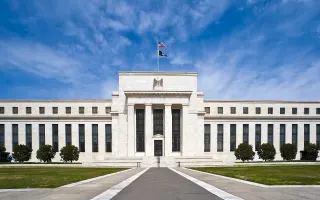
The US Federal Reserve voted unanimously on Wednesday to raise its benchmark interest rate by a quarter-percentage point to a range of 3.75% to 4%, the first increase since July 2023, as Chair Kevin Warsh declared that "inflation is too high and has been for too long." New projections showed a majority of officials expect another hike before year's end, with four predicting a 4.25% to 4.5% range by December, and inflation is not expected to return to the 2% goal until roughly 2029. The decision sets Warsh on a potential collision course with President Donald Trump, who has demanded the lowest rates in the world. The war with Iran has driven gas prices $1 a gallon above last year and pushed diesel to a record $6.31, while the 10-year Treasury yield hit a 19-year high.

Business
Wall Street Slides as Fed Meeting Opens With Markets Pricing 91 Percent Odds of Rate Hike
U.S. stocks opened lower on Tuesday, September 15, 2026, as the Federal Open Market Committee began a two-day meeting that traders expect to end with the first interest rate increase in more than three years. The Nasdaq Composite and Dow Jones Industrial Average each fell more than 0.7 percent and the S&P 500 dropped 0.6 percent, while the 10-year Treasury yield briefly crossed 5 percent overnight, its highest intraday level since 2007. The CME FedWatch tool put the probability of a quarter-point hike, from the current 3.50 to 3.75 percent range, at roughly 91 to 93 percent. Oil pressure is driving the repricing: Brent crude climbed back above 107 dollars after Saudi Arabia shut its 7-million-barrel-per-day East-West pipeline following attacks by Iran-backed forces, disruptions estimated to threaten as much as 4 percent of global oil supply.

Business
US Manufacturing Contracts for Seventh Month as ISM PMI Registers 49.1 Percent in September
American manufacturing activity contracted for the seventh consecutive month in September, with the ISM Manufacturing PMI registering 49.1 percent, a 0.4 percentage point improvement on August's 48.7 percent that analysts called negligible. New orders fell back into contraction at 48.9 percent, down 2.5 points, wiping out August's gain, while the Production Index recovered to 51 percent and the Prices Index remained elevated at 61.9 percent. Survey panelists described tariff-driven price surcharges of up to 20 percent and capital projects on hold, and 64 percent of comments indicated companies are managing headcount rather than hiring. ISM chair Susan Spence said the overall economy continued expanding for a 65th month, with the PMI corresponding to roughly 1.9 percent annualized real GDP growth.

Business
Asian Stock Markets Rally as China Announces Massive Stimulus Package Worth 3.5 Trillion Yuan
China State Council announced on September 2, 2026, an economic stimulus package valued at 3.5 trillion yuan, approximately 480 billion dollars, targeting infrastructure spending, tax cuts for small businesses, and consumer subsidies to counteract slowing economic growth. The announcement sent the Shanghai Composite Index up 4.7 percent, its largest single-day gain since 2020. Hong Kong Hang Seng surged 5.2 percent, while Japan Nikkei 225 rose 2.8 percent on optimism about regional economic recovery. Premier Li Qiang stated that the package aims to boost GDP growth to 5.5 percent for the full year, above the current forecast of 4.8 percent. The People Bank of China simultaneously cut the reserve requirement ratio by 50 basis points.

Business
Oil Prices Surge Past $95 per Barrel as US Strikes on Iran Disrupt Strait of Hormuz Shipping
Brent crude oil jumped 8.3 percent to $95.40 per barrel on September 1 after the United States conducted airstrikes on Iranian naval installations near the Strait of Hormuz, disrupting shipping through the waterway that carries approximately 21 million barrels of oil daily. The attack, which targeted three Iranian fast-attack craft and a coastal radar station, marked the first direct US military action against Iranian assets since January 2024. The S&P 500 fell 2.1 percent at the open before recovering to close down 0.8 percent. Gold rose 3.4 percent to $2,680 per troy ounce as investors sought safe-haven assets.