Federal Reserve Raises Interest Rates for First Time Since 2023 as Inflation Fight Deepens
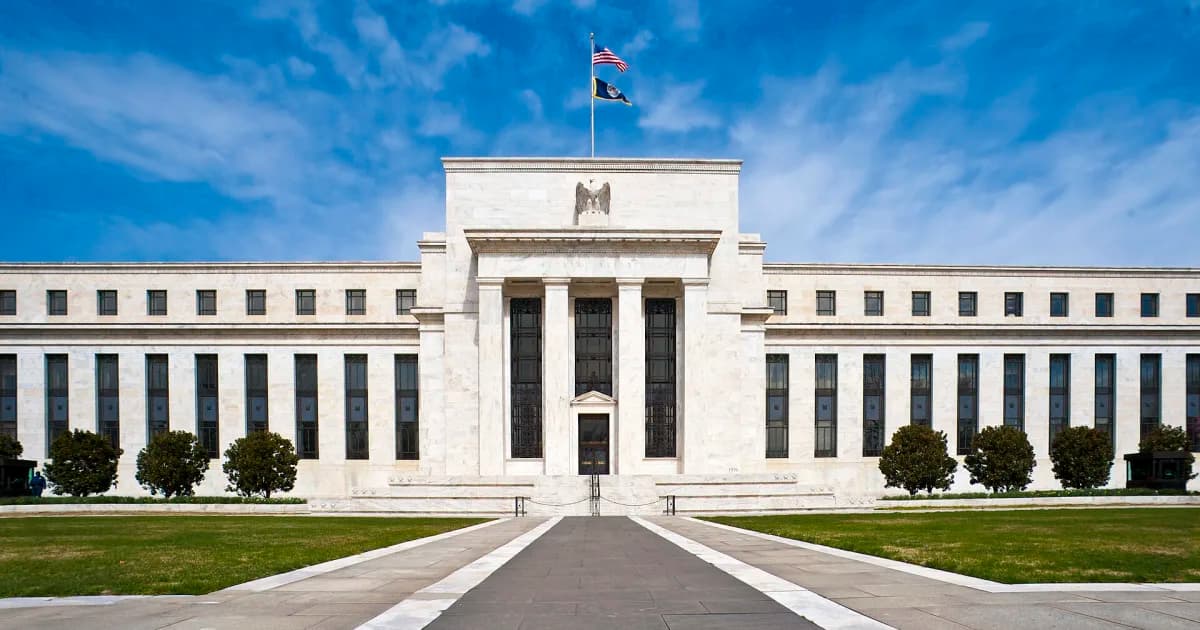
The US Federal Reserve voted to raise interest rates on Wednesday for the first time since 2023 as the central bank continues to fight to tamp down inflation.
The Fed's open market committee voted unanimously to raise its benchmark interest rate by a quarter-percentage point to a range of 3.75% to 4%. It is the first time the Fed has raised rates since July 2023, and the move potentially sets Kevin Warsh, the current Fed chair, on a collision course with Donald Trump.
"The plain fact is that inflation is too high and has been for too long," Warsh said on Wednesday. "This summer's inflation readings do not tell me that underlying trends have meaningfully improved."
The decision came after Trump explicitly said the US should have the "LOWEST RATE of any country in the World" and that he would "stop trading with countries with which we have a deficit" if the central bank does not lower rates. Trump nominated Warsh under the expectation that he would cut rates, though Warsh has said he maintains independence from the White House.
## More Hikes Signaled Before Year's End
Though Warsh acknowledged changing geopolitics, he avoided calling the US-Israel war with Iran by name.
"There's no hiding from hot spots around the world, and our judgment about what is the most likely or least likely of the geopolitical situation has changed," he said.
Warsh also declined to answer questions about how Trump would react but reiterated that Fed independence is "a two-way street."
"We will let people that do trade policy and fiscal policy stay in their lane. That is the way we can stand up here and call them the way we see them," he said. The White House did not immediately respond to a request for comment.
New projections showed a majority of officials penciled in another rate hike before the year's end, with four officials predicting the Fed's benchmark interest rate will reach a range of 4.25% to 4.5% by the end of the year. And though estimates on economic growth and unemployment were upbeat, Fed officials believe it will take roughly until 2029 for inflation to reach its 2% goal.
At its last meeting in late July, the committee voted 9-3 to maintain rates, the first time in 10 years that so many members shared dissent on a policy decision. Since then, the US and Iran have renewed attacks against each other, driving the Brent crude benchmark to its highest levels in months.
## Energy Costs Squeeze Households and Markets
The ongoing war has driven up inflation, especially energy prices. Gas prices have remained on average $1 a gallon more expensive than a year ago. Diesel fuel, which is used for buses, trains and trucks, recently reached an all-time high of $6.31.
Concerns about inflation have induced a sell-off in the US bond market, with the yield on the 10-year Treasury note hitting a 19-year high earlier this week despite efforts from the US Treasury to calm the market. Typically seen as one of the safest investment vehicles, trouble in the US bond market can lead to higher interest rates for consumer and business loans.
The Fed uses interest rates as a tool to cool price increases by slowing activity, and higher rates impact mortgages, car payments, student debt and other loans. After inflation reached a generational high of 9.1% in June 2022, the Fed increased rates 11 times across 2022 and 2023, bringing them to a target range of 5.25% to 5.5% before cutting in 2024 and 2025.
At the beginning of the year, when annualized inflation was a full percentage point lower than current levels, a hike seemed highly unlikely and a majority of officials were predicting a cut. But August inflation remained stubbornly high while unemployment held steady, cementing the case for action.
## Wage Gains Erased Ahead of Midterms
Higher prices have painted a grim economic outlook as voters prepare to head to the polls in November. In August, hourly earnings for employees decreased by 0.1% year-over-year after accounting for inflation and fell 0.3% from the month prior. Consumer sentiment has declined rapidly according to a monthly University of Michigan survey, while inflation expectations have increased.
Candidates on both sides have made cost-of-living concerns central to their campaigns, but voters are split on which party holds the advantage, according to recent Pew Research Center data.
Meanwhile, Trump has implored Republican voters to pretend they are voting for him on their midterm ballots and promised every American a $5,000 "Trump dividend" if Republicans retain control of Congress. Critics have called the move akin to bribery and warned of the financial implications, especially after US government debt reached a record-high $40tn last month.
For now, the unanimous vote signals that the committee that split 9-3 in July has converged on the view that the inflation threat outweighs the growth risks, leaving markets to parse the December projections for the timing of the next move.
Discussion
Recommended for you
More business
Markets
Wall Street Slides as Fed Meeting Opens With Markets Pricing 91 Percent Odds of Rate Hike
9/15/2026
Markets
US Manufacturing Contracts for Seventh Month as ISM PMI Registers 49.1 Percent in September
9/2/2026
Markets
Asian Stock Markets Rally as China Announces Massive Stimulus Package Worth 3.5 Trillion Yuan
9/2/2026
Markets