Texas Senate Race Dead Heat as Talarico Holds One Point Lead Over Paxton in New Poll
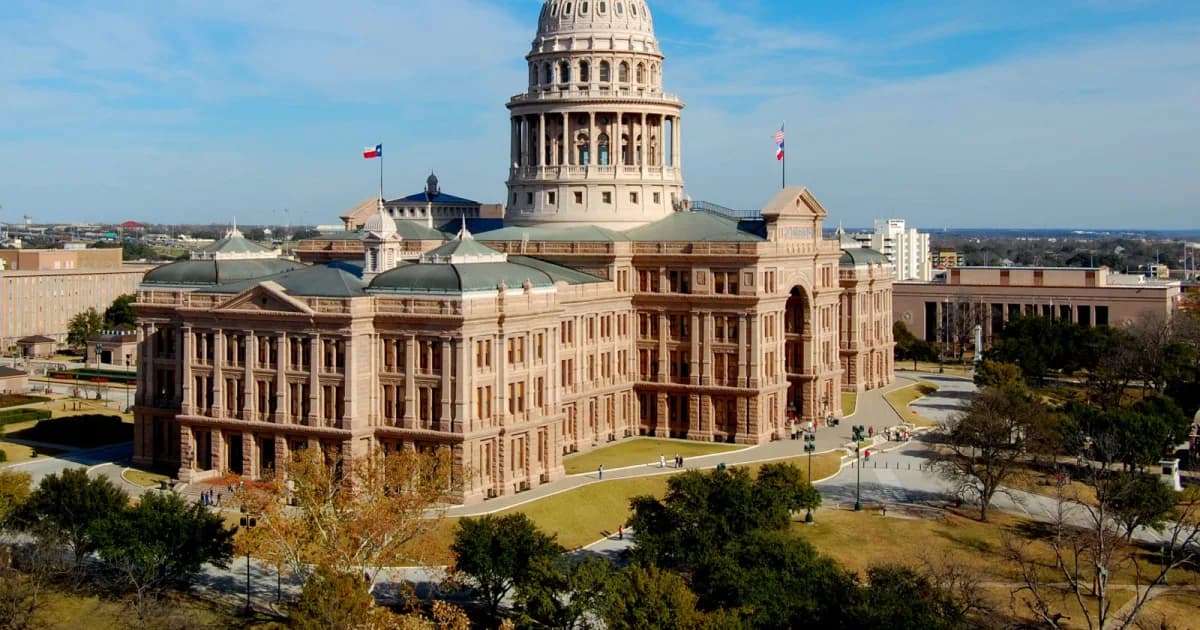
Texas's US Senate race has tightened to a statistical dead heat, with a new Emerson College poll showing Democrat James Talarico leading Republican Attorney General Ken Paxton by a single point, 47 percent to 46 percent, well within the survey's three-point margin of error. The poll of 1,000 likely voters was conducted September 12 to 14, less than seven weeks before Election Day.
Libertarian candidate Ted Brown drew 2 percent support, with 4 percent of voters undecided. The findings land as both parties treat Texas, a state Democrats have long hoped to put in play, as one of the few genuine Senate battlegrounds of the 2026 midterms.
## From Paxton Lead To Talarico Edge
The movement within Emerson's own polling tells the story of a race in motion. The institute's August survey showed Paxton with a 1 percent lead over Talarico. One month later, the positions have reversed.
Other recent polls give the Democrat a wider edge. Recent surveys from AARP Texas and Univision gave Talarico leads of 4 percent and 5 percent respectively, making the Emerson result the closest of the recent releases and one of the closest polls of the cycle.
## The Economy Tops Every List
On the question of what matters most, the poll found rare cross-party agreement. The economy was the top issue facing the state for 38 percent of Republicans and 37 percent of Democrats, with 30 percent of independent voters also citing it first.
Immigration followed at 14 percent, education at 12 percent, healthcare at 11 percent and threats to democracy at 11 percent. That consensus matters for the campaigns: both candidates have built their messaging around economic anxiety, and neither can claim an issue-ownership advantage with voters of the opposing party.
## Convention Bounce, Enthusiasm Gap
The poll also measured the aftermath of the Republican midterm convention. A majority of both parties said the event made them more excited to vote in November, including 59 percent of Republicans and, notably, 53 percent of Democrats.
Among independents, the convention moved almost no one: 68 percent said it made no impact on their excitement, 28 percent said it made them more excited, and 3 percent said it made them less excited. Meanwhile, in the governor's race on the same survey, Democratic nominee Gina Hinojosa's support rose one point to 46 percent, still trailing incumbent Governor Greg Abbott, steady at 49 percent, with Libertarian Pat Dixon at 2 percent.
## A Senate Majority On The Line
Texas's race sits inside a national map on which Democrats need only a small net gain to take the Senate, and Republicans risk losing their slim majority in November. A Talarico victory in a state that has not elected a Democratic senator since 1994 would represent the party's single biggest pickup opportunity, while a Paxton win would likely end Democratic hopes of a majority.
For Talarico, a seminarian and state representative whose grassroots campaign has drawn national attention, the polling consensus marks a milestone: for the first time this cycle, every active pollster shows him at least even with a two-term statewide officeholder. For Paxton, the numbers suggest the race remains winnable on name recognition and party loyalty in a state where Republicans have won every statewide contest for three decades.
With early voting ahead, both campaigns will now fight over the narrow band of undecided and third-party-leaning voters. At one point apart with a three-point margin of error, the Texas Senate race is formally what it has felt like for months: a coin flip with Senate control attached.
## The Undecided Margin That Will Decide It
The poll's fine print matters as much as its topline. With Talarico at 47 percent, Paxton at 46 percent and Libertarian Ted Brown at 2 percent, just 4 percent of likely voters remain undecided in a contest that will be decided by precisely that band. Brown's 2 percent matters too: in a race this close, even a fraction of libertarian-leaning voters returning to the major parties, or staying home, can shift the outcome.
The same pattern holds one race down the ballot. In the governor's contest, Abbott's 49 percent sits just under the majority mark, with Hinojosa at 46 percent, Dixon at 2 percent and 4 percent undecided. Neither incumbent nor challenger can close out their coalition while one in twenty-five likely voters is still unpersuaded.
The survey's timing gives both campaigns a benchmark for the final stretch. Conducted September 12 to 14, it captures the electorate immediately after the Republican midterm convention and before the debate schedule and early voting period that will define the race's final weeks. Any movement in the next Emerson release, and in the other pollsters now tracking the race monthly, will be measured against this 47-46 baseline.
What both parties agree on may prove as consequential as where they differ. The shared focus on the economy, spanning 38 percent of Republicans, 37 percent of Democrats and 30 percent of independents, means the race's air war will concentrate on the same ground, and the candidate who persuades Texans that their cost-of-living anxiety has an answer, rather than a target, may hold the advantage when the undecideds finally break.
Discussion
Recommended for you
More politics
Politics
House Votes to Hold Leon Black in Contempt Over Defiance of Epstein Subpoenas
9/17/2026
Politics
House Passes Lindsey Graham Russia Sanctions Act 262-159 as Trump Gains 100 Percent Tariff Authority
9/17/2026
Politics
Three More Republicans Break Ranks to Back War Powers Resolution as Midterm Fears Grow
9/16/2026
Politics