UN Finds Grounds to Believe US Committed War Crimes in Iran School Strike That Killed 120 Children
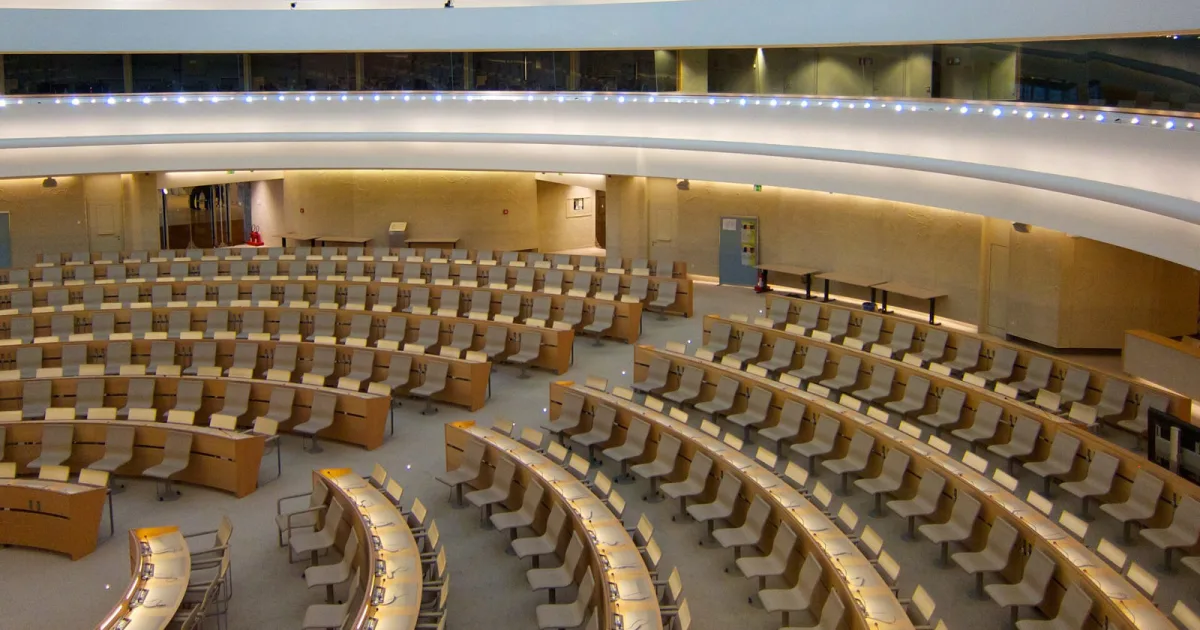
A UN fact-finding mission has determined there are reasonable grounds to believe the United States was behind military strikes on a school and a sports facility in Iran in February that killed 120 children, and that these constituted war crimes.
The school strike, which killed 156 civilians including 120 children, involved a US Tomahawk missile that collapsed the roof of the Shajareh Tayyebeh primary school, which the UN said was "clearly identifiable", in Minab, Hormozgan province, on 28 February. The mission examined targeting records, satellite imagery and witness testimony in reaching its conclusions.
## What the Mission Found
The UN fact-finding team said in a statement: "Following the United States and Israeli attacks on 28 February, the mission found reasonable grounds to believe the United States committed the war crime of launching indiscriminate attacks resulting in the loss of life or injury to civilians or damage to civilian objects."
The second cited strike, on the same date, targeted a "clearly identifiable sports complex and residential area" in the southern city of Lamerd with a weapon that scattered tungsten pellets. The report said the attack damaged nearby residential buildings and a school and killed and injured 22 civilians, concluding it was indiscriminate and therefore a war crime under the same legal standard applied to the Minab strike.
According to the report, the US relied on intelligence suggesting a senior Iranian military commander was present at the school site but failed to adequately verify the information before launching the strike. Investigators said the failure to update targeting intelligence and confirm the building was a military objective amounted to more than mere negligence.
"Rather, the US directed the strikes at the building of the school while being aware of a substantial risk of striking a civilian object and acting recklessly as regards the possibility that this would happen," the experts wrote.
UN experts said the school was a clearly identifiable civilian object and found no evidence it was being used for military purposes.
## Washington's Response So Far
US officials have previously said military operations are conducted in accordance with the law of armed conflict. The Pentagon's own secretive investigation into the incident is understood to have concluded several months ago, but it has not published any preliminary findings. There have been reports that senior US commanders had been warned that targeting data used during the war — including for the Minab strike — was dangerously outdated.
In June the US president, Donald Trump, said "nobody" had purposely attacked a girls' school in Iran in February, citing an investigation into the incident. US Central Command said in a statement in March that US forces had not launched any strikes into the city of Lamerd on that day.
The findings by the independent international fact-finding mission on Iran are to be submitted to the UN human rights council in Geneva. They examined the US's conduct during the Iran war that began in February and the Iranian government's response to nationwide unrest that began in late December.
## Tehran's Crackdown Also Condemned
The mission also found Iranian authorities had committed crimes against humanity during their deadly crackdown on anti-government protests, involving unlawful killings, torture, arbitrary detention, enforced disappearances and severe restrictions on freedom of expression.
The investigation said it could not independently verify the death toll from the crackdown, but believed the number of dead and injured was probably far higher than official figures, which say 3,038 people were killed and 25,000 injured. Tehran blamed "terrorists and rioters" backed by exiled opponents and the US and Israel.
The government's response to the protests, including violence, cutting off the internet and use of the death penalty, marked a significant escalation from previous patterns of suppressing dissent, the report said.
The dual findings place both Washington and Tehran before the Human Rights Council with the war's civilian toll documented in unusually specific terms — and with the Pentagon's own account of the Minab strike still unpublished.
Both governments now face the same forum with sharply different exposures. The United States confronts specific findings on two named strikes and a rebuttable claim that its targeting process was reckless, while Iran faces a systemic account of repression that spans months of nationwide unrest. Neither finding carries direct enforcement power, but both will shape diplomatic encounters at the council session and beyond.
Rights groups say bystanders were among those killed during the protest crackdown, which they describe as the biggest since Shia Muslim clerics took power in the 1979 revolution. The mission's investigators said the government's use of the death penalty, combined with mass detention and internet shutdowns, marked a decisive break from previous waves of repression.
The Pentagon has elevated its inquiry into the school strike, but months after its internal conclusion no findings have been released to the public, leaving the UN's evidence as the most detailed public account of what happened at Minab. Advocates for the victims' families argue that withholding the American review while the UN documents war crimes only deepens the accountability gap between what governments know and what they disclose.
Discussion
Recommended for you
More world
Middle East
Houthis Seize Strategic Red Sea Islands as Fears Grow Over Global Oil Supply Disruption
9/16/2026
Middle East
AWS Confirms Saudi Cloud Region Launch for December 2026 With 50 Megawatts for HUMAIN AI Zone
9/15/2026
Middle East
US Launches Fresh Strikes on Iran as State Media Reports Four Killed at Wedding
9/2/2026
Middle East