Amazon Offers Employees 20 Percent Grocery Discount as SNAP Reliance Data Fuels Wage Scrutiny
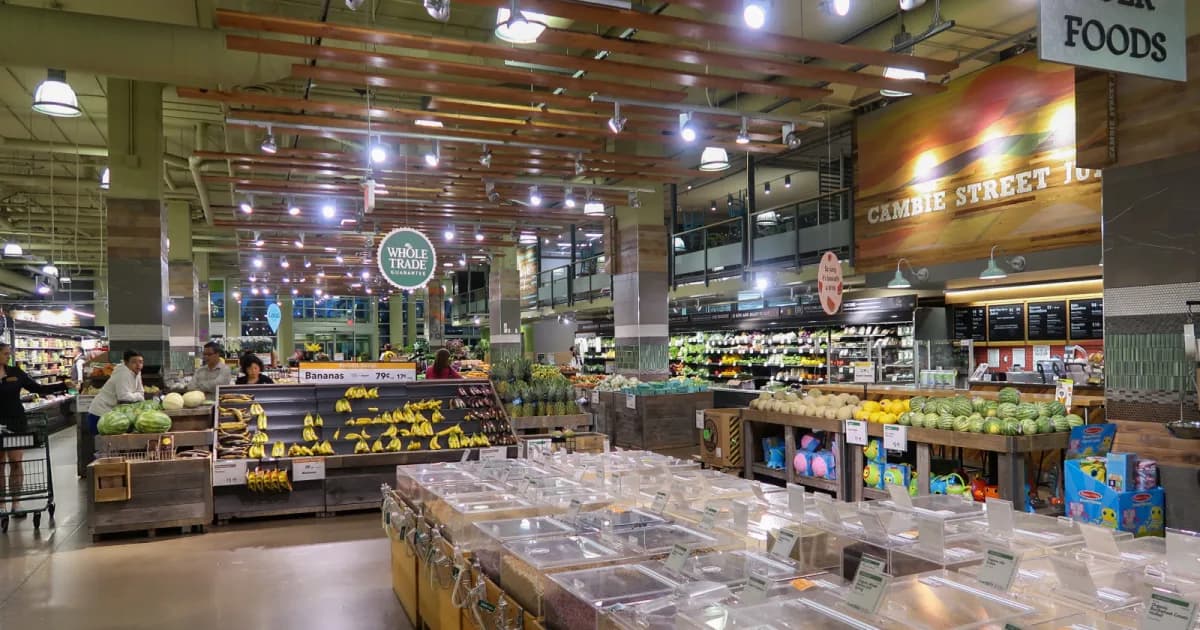
Amazon has started offering its US employees discounts of up to 20 percent on groceries, a new benefit that lands as food prices keep climbing and as the company works to answer one of the most persistent criticisms of its workforce model: that many of its own employees cannot afford to feed their families without government help.
The discount program, reported by The Washington Post and other outlets this week, applies to grocery purchases as households across the country absorb some of the highest food inflation in years. For a company that employs more hourly workers than almost any other in America, the benefit doubles as a response to data that has made the wage question a standing political liability.
## The Numbers Behind The Scrutiny
The pressure traces to a Government Accountability Office report released in July, produced after an investigation requested by Senator Bernie Sanders. Analyzing enrollment data across eleven states representing roughly a fifth of the US population, investigators found 12,346 Amazon workers enrolled in SNAP, the federal food stamp program, and 11,338 covered by Medicaid, a near threefold increase from the agency's previous report in 2020.
Nationally, the GAO estimated 13.8 million working Americans were enrolled in Medicaid, up from 12 million in 2020, alongside 10.6 million receiving SNAP benefits. Walmart led traditional employers in the study, with 16,055 workers on Medicaid, a 55 percent jump, and 15,515 claiming nutrition benefits. Gig platforms including Uber, Lyft, DoorDash, Grubhub and Instacart collectively overtook Walmart as the largest single category of SNAP recipients, underscoring how contract labor now depends most heavily on federal aid.
"American taxpayers should not be forced to subsidise the starvation wages of large corporations like Walmart and Amazon," Sanders said when the report was released. "No one who works for a company making billions in profits should be living in poverty." He added that it was time for the Walton family, worth 485 billion dollars, and Jeff Bezos, worth 257 billion dollars, "to get off of welfare and pay their workers a living wage with good benefits."
## Amazon's Defense And Its Numbers
The company has rejected the framing. Spokeswoman Rachael Lighty told CNN that eligibility for SNAP and Medicaid is calculated on total household income and family size, not wages alone. "Employers that offer part-time options for those who want them, like we do, are likely to have more people who are eligible," she said, pointing to a one billion dollar investment announced in late 2025 to raise pay and lower healthcare costs for fulfillment and transportation staff, pushing average base rates above 23 dollars an hour.
The scrutiny lands amid unprecedented financial results. Amazon posted annual revenues of 716.9 billion dollars for fiscal 2025 with operating income of 79.9 billion dollars, and its annual profit surged from 11.6 billion to 77.7 billion dollars over the period covered by the government study. Chief Executive Andy Jassy told investors the company plans approximately 200 billion dollars of capital spending in 2026, a roughly 60 percent increase, directed primarily at AWS infrastructure to meet surging AI compute demand.
## A Benefit With Politics Attached
The grocery discount is the kind of measure that serves several purposes at once: it eases a real cost-of-living squeeze for hourly staff, it drives usage of the company's own Whole Foods chain, and it gives the company a concrete rebuttal the next time assistance-dependency data surfaces on Capitol Hill.
Whether it moves the underlying numbers is another matter. A 20 percent discount on groceries helps at the register, but eligibility for federal aid turns on wages against rent, healthcare and family size, and the GAO's next study will capture whatever the new benefit and the 2025 pay investment actually change. For now, the company that built its retail empire on price has applied the same logic to its own payroll, and its critics, armed with tripling enrollment figures, will judge the gesture by the next set of government statistics rather than the discount sign in the break room.
## What The Discount Does And Does Not Fix
The arithmetic of the new benefit is worth stating plainly. A 20 percent discount at Whole Foods meaningfully lowers a grocery bill for employees who shop there, and for part-time workers whose eligibility for aid rests on household income, every dollar saved matters. But the GAO study did not measure grocery spending. It measured enrollment in programs whose thresholds are set by wages against rent, healthcare and family size, which is why the company's own rebuttal about part-time flexibility and the counterargument about starvation wages can both be true in the same dataset.
The policy also positions Amazon inside a wider national debate. With 13.8 million working Americans on Medicaid and 10.6 million on SNAP, the question of whether large employers or taxpayers should carry the cost of making low wages livable extends well beyond one retailer, to Walmart, to the gig platforms that now top the SNAP tables, and to every state legislature weighing its own minimum wage.
For Amazon, the discount buys something the 23 dollar average base rate has not yet delivered: a visible, immediate answer to the next news cycle. Whether the government's next report shows the tripled enrollment figure bending back toward 2020 levels will be the verdict that counts, and that data is at least a year away.
Discussion
Recommended for you
More business
Companies
Clearlake Capital Takes Full Control of Chelsea as Walter and Boehly Sell Stakes
9/17/2026
Companies
S&P Global Agrees to Acquire OpenZeppelin in Landmark Deal to Secure the Future of Onchain Finance
9/17/2026
Companies
Amazon's Ring to Launch Neighbours Community App in UK as Privacy Campaigners Raise Concerns
9/16/2026
Companies