United States Denies Visas to Palestinian Officials Ahead of UN General Assembly for Second Year
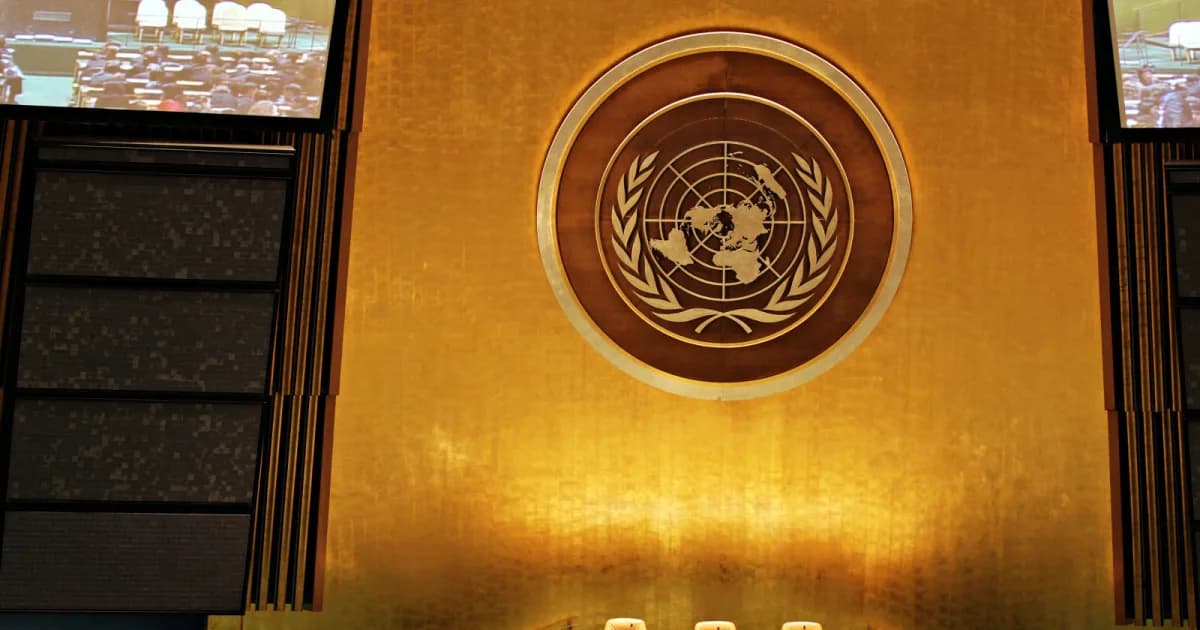
The United States has denied entry visas to Palestinian officials ahead of next week's UN general assembly in New York, extending a sanction that will keep the Palestinian delegation out of the chamber in person for the second year running. The state department announced the decision on Wednesday, days before the general debate opens on 22 September.
In its statement, the department said the Palestinian Authority and the Palestine Liberation Organization had "failed to live up to their commitments". It accused the two bodies of "taking actions to internationalize the Israeli-Palestinian Conflict including through the International Criminal Court (ICC) and International Court of Justice (ICJ)" and of "glorifying terrorism", among other allegations.
"As a consequence of their failure to reform, contrary to their commitments to the United States, and their ongoing activities that undermine the prospects for peace, the United States will extend sanctions that deny visas to PLO members and PA officials," the department said.
## The Allegations And The Rebuttal
The Palestinian foreign ministry rejected the accusations in a statement on Thursday. It described the visa sanctions as an "unjustified measure" that "contradicts the efforts being made to restore trust, develop Palestinian-US relations, and prepare the necessary political climate for implementing the two-state solution and achieving peace and stability in the region".
The wording of the two positions could hardly be further apart. Washington frames the sanctions as the mechanical consequence of unmet commitments, while Ramallah frames them as an obstacle placed in front of diplomacy at the exact moment diplomacy is being attempted. Neither side's statement left room for a negotiated exemption before the debate begins.
The dispute also centers on a legal and diplomatic contradiction at the heart of the UN's host-country arrangements. As the organization's host, the United States is generally expected to admit delegations attending UN meetings, but Washington has now twice used visa authority against the Palestinian mission, arguing its commitments as host do not extend to officials it has sanctioned.
## Abbas Barred, Allowed By Video
Among the officials barred from entering the country is Mahmoud Abbas, the longtime president of the Palestinian Authority, according to reports. The general assembly voted on Thursday to allow Abbas to address the gathering via video, for the second year in a row. The workaround preserves the Palestinian leadership's slot in the debate schedule without requiring any delegation to travel to New York.
The sequence of the three days sketches the diplomatic geometry. Washington announced on Wednesday, Ramallah responded on Thursday morning, and the general assembly voted on Thursday to give Abbas his video slot, all before delegations have boarded their flights. The dispute has therefore been fully litigated in statements before the debate even opens, leaving next week's sessions to stage the disagreement in person, or in the Palestinian case, on screen.
The measure marks the second year in a row that the Trump administration has barred the Palestinian delegation from traveling to attend the general debate, converting what was an unprecedented one-year dispute into a standing policy. For the Palestinian mission, the practical effect is that the most important diplomatic week of its year happens without its leadership in the building.
## What It Means For The General Debate
The timing matters. The general debate beginning 22 September is the year's largest diplomatic gathering, and this year's session opens with the Israeli-Palestinian conflict, recognition debates, and postwar reconstruction planning high on many delegations' agendas. The visa decision removes the Palestinian leadership from the hallways and bilateral meetings where much of the real diplomacy happens, even as their video address guarantees them the symbolic platform of the rostrum.
The Palestinian statement's reference to preparing "the necessary political climate for implementing the two-state solution" is aimed squarely at the recognition wave that has been building among Western governments, and at the reconstruction planning now under way for Gaza. From Ramallah's perspective, the visa ban lands on the week when that diplomatic investment was supposed to pay dividends in New York.
Washington's stated rationale concentrates on two complaints: the Palestinians' pursuit of international legal cases against Israel through the ICC and ICJ, and their alleged failure to reform. For the authority, both tracks are core policy, which suggests the underlying dispute is unlikely to be resolved before the next assembly, and that video appearances may become a fixture of Palestinian participation at the UN.
For the assembly's other members, the vote to accommodate Abbas by video functioned as a quiet signal that the majority will not let access disputes disrupt the debate program. The scene next week will be a familiar one from 2025: an empty Palestinian seat in the hall, a world leader addressing the chamber from Ramallah by screen, and a sanction that has hardened from exception into precedent.
Diplomats watching the exchange describe a broader chill around this assembly, in which host-country access has become an instrument of policy rather than a procedural formality. Whether other member states begin repricing their own participation questions, from security arrangements to headquarters debates, is the quieter story that could outlast this particular dispute.
Discussion
Recommended for you
More world
Middle East
Aoun Joins Macron and Jordan's King in Paris to Plan Lebanon's Post-UNIFIL Security
9/17/2026
Middle East
UN Finds Grounds to Believe US Committed War Crimes in Iran School Strike That Killed 120 Children
9/17/2026
Middle East
Houthis Seize Strategic Red Sea Islands as Fears Grow Over Global Oil Supply Disruption
9/16/2026
Middle East