Aoun Joins Macron and Jordan's King in Paris to Plan Lebanon's Post-UNIFIL Security
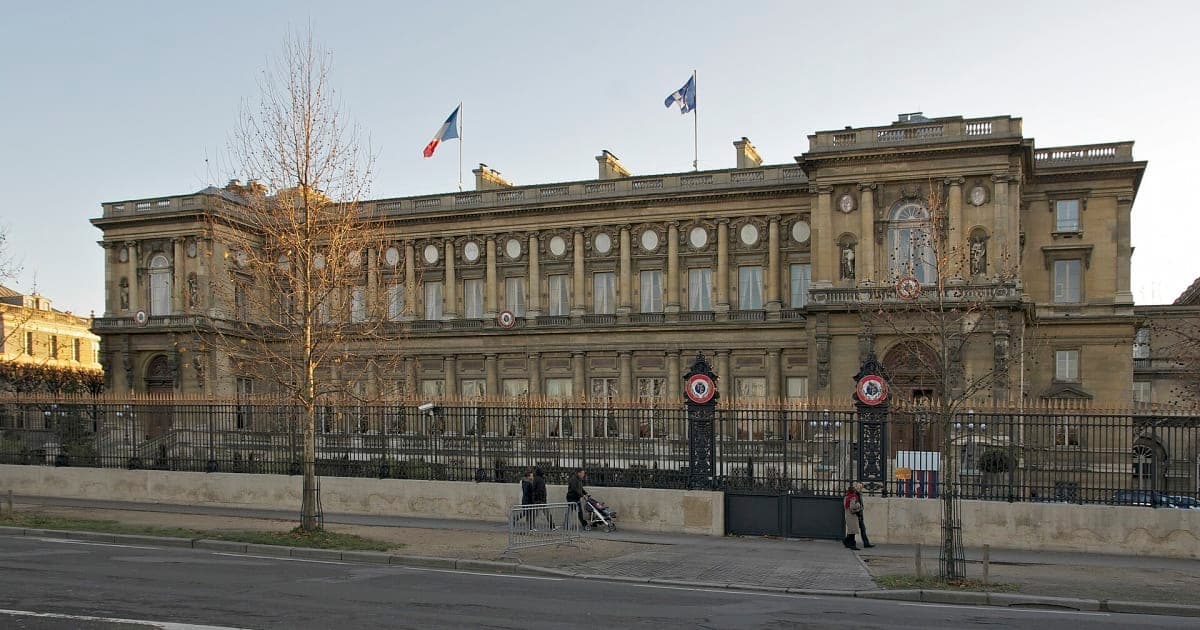
Lebanese President Joseph Aoun held talks with Jordan's King Abdullah II and French President Emmanuel Macron in Paris on Thursday to discuss strengthening international support for the Lebanese army and Internal Security Forces, as the country's security arrangements face a year-end deadline.
The three-way meeting took place at Les Invalides ahead of a preparatory session for an international conference supporting Lebanon's army and security forces, according to the Lebanese presidency. Aoun is in Paris for the preparatory meeting, which the presidency says aims to mobilise international support for the Lebanese army's and Internal Security Forces' equipment, training and capacity-building needs — backing that gains urgency as the mandate of the United Nations peacekeeping force in southern Lebanon counts down to its expiry at the end of the year.
The Paris schedule brought the three leaders together hours after Aoun and Macron met one-on-one, giving Lebanon's partners a sequence of coordinated engagements rather than a single photo opportunity, with the Lebanese presidency framing both meetings around the same objective: a stronger Lebanese state capable of securing its own territory.
## A Coalition Built on the Aqaba Process
The three leaders discussed ways to deepen coordination and cooperation among their countries in areas of mutual interest, and reviewed the importance of France hosting a new round of Aqaba Process meetings focused on supporting the Lebanese army and strengthening its ability to protect the country's security alongside the Internal Security Forces.
The Aqaba Process, launched by King Abdullah in 2015, exists to strengthen coordination, cooperation and the exchange of expertise among regional and international partners in combating terrorism and extremism. Anchoring Lebanon's army support within that framework gives the effort a standing mechanism rather than a one-off pledge, and the presidency statement framed the Paris talks as a step toward building exactly that structure.
## Ending the Attacks, Extending the State
Aoun and Macron met separately at the Elysee Palace ahead of the preparatory meeting, discussing efforts to end Israeli attacks on Lebanon amid Lebanese-US-Israeli negotiations and a framework agreement, according to the presidency.
The US-sponsored negotiating framework between Lebanon and Israel called for a phased Israeli withdrawal, the extension of Lebanese state authority and security arrangements along the border. Aoun thanked Macron for France's support for Lebanon, his continued attention to the situation, and his efforts to strengthen the authority and sovereignty of the Lebanese state and its security and military institutions.
The human cost framing the talks is severe. Israel has carried out attacks on Lebanon since March 2, killing at least 4,381 people, injuring 12,402 and displacing more than 1 million, Lebanese authorities say. The attacks have continued despite a June 26 US-brokered framework providing for a gradual Israeli withdrawal in exchange for the Lebanese army's deployment and the disarmament of armed groups, including Hezbollah.
## The Post-UNIFIL Question
Aoun also welcomed an initiative launched by Macron and Italian Prime Minister Giorgia Meloni concerning the period following the end of the mandate of the UN Interim Force in Lebanon. UNIFIL's mandate expires at the end of the year, amid ongoing discussions about the future of the international presence in southern Lebanon.
In June, France and Italy proposed a European force to assist the Lebanese army once it deploys along the international border, pending agreement on an "appropriate legal framework." That gap is precisely what the Paris preparatory process is designed to close: converting a proposal into a mandate that the Lebanese army can plan around before the UN flag comes down.
## A Regional Strategy Beyond the Border
The three leaders also addressed regional escalation, stressing the need to intensify international efforts toward comprehensive, sustainable de-escalation to restore stability to the region. They discussed developments in Gaza, the occupied West Bank and occupied East Jerusalem, according to the statement.
The West Bank has witnessed escalating attacks by Israeli forces and illegal settlers, while Israel has continued to violate the ceasefire agreement in Gaza reached last October under US President Donald Trump's sponsorship — a backdrop the presidency cited in underlining the urgency of the Lebanon track.
Aoun stressed that security in the region is interconnected and encouraged developing a regional security strategy based on shared energy projects and economic, security and political cooperation. He and Macron also agreed to strengthen cooperation between their two countries, particularly in the economic and energy sectors, including resuming oil and gas exploration in Lebanese offshore blocks.
For Lebanon, the arithmetic is straightforward: an army expected to take responsibility for a border previously patrolled by a UN peacekeeping force needs equipment, training and international commitment on a fixed timeline. The preparatory session's stated aim — mobilising support for the Lebanese army's and Internal Security Forces' needs — now leads to the international conference itself, where the post-UNIFIL map of southern Lebanon will begin to take shape.
Discussion
Recommended for you
More world
Middle East
UN Finds Grounds to Believe US Committed War Crimes in Iran School Strike That Killed 120 Children
9/17/2026
Middle East
Houthis Seize Strategic Red Sea Islands as Fears Grow Over Global Oil Supply Disruption
9/16/2026
Middle East
AWS Confirms Saudi Cloud Region Launch for December 2026 With 50 Megawatts for HUMAIN AI Zone
9/15/2026
Middle East