Camp Snap 110D Turns the 1970s Kodak 110 Film Camera Into a Digital Gadget
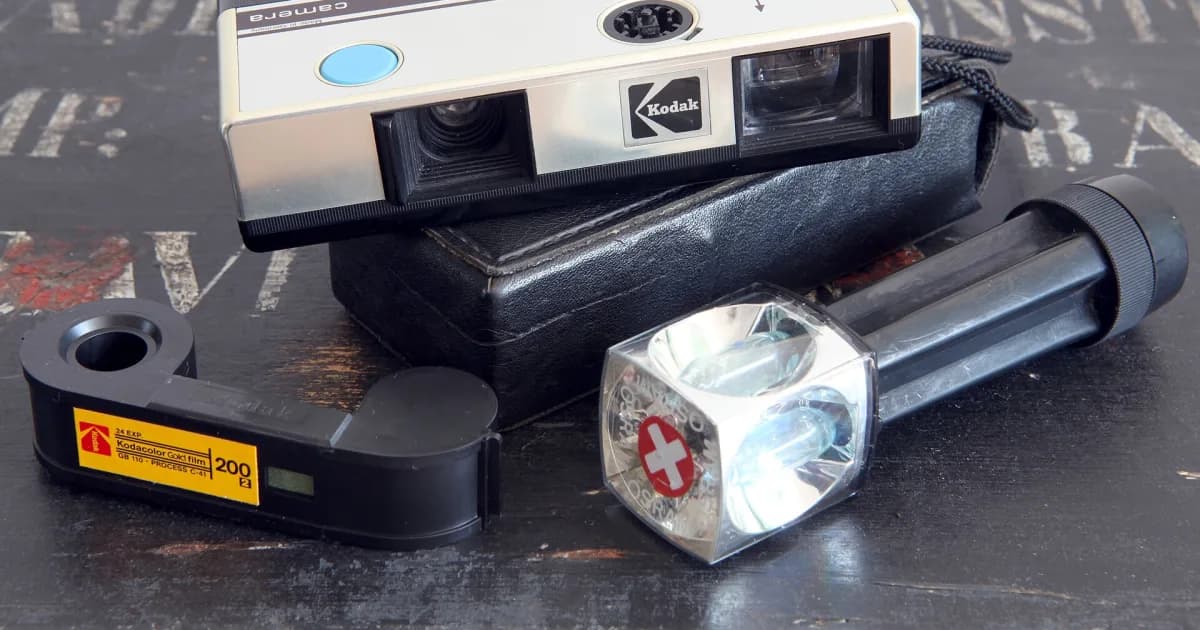
Camp Snap is expanding its small collection of screenless digital point-and-shoot cameras with the new pocket-friendly 110D, a 74.95 dollar camera featuring the thin horizontal design first popularized by Kodak film cameras in the 1970s.
The Camp Snap 110D is available for preorder starting Thursday in two color options — "back in black" (black and gray) and "dreamsicle" (white and orange) — with matching accessories.
The design is inspired by the wave of low-cost cameras from companies like Canon, Minolta and Pentax that used the 110 film cartridges Kodak first introduced in 1972. Those cartridges were easy for even novice photographers to load and could be developed on existing machines already capable of processing 16mm motion picture film, making 110 one of the most accessible film formats of its era. Lomography is now one of the last companies still manufacturing 110 film, but the Camp Snap 110D offers a similar experience with the convenience of digital.
## Retro Body, Digital Guts
Like the Camp Snap 2 that launched last June, the 110D is not a megapixel powerhouse. It uses an 8-megapixel Sony 1/3.2-inch CMOS sensor paired with a 4.2mm, f/2.0 lens that is compatible with 30.5mm screw-on filters for photographers who want to experiment with wide-angle or macro photography.
For a matching retro look, the camera includes five built-in software filters with vintage, analog and black-and-white effects, selectable using a sliding switch on the body — a physical control that mirrors the era the camera imitates.
The 110D relies on an optical viewfinder, and there is no screen to review images: there is no way to see your shots until you have copied them to a computer or phone. The deliberate constraint is the product's identity — the camera is designed to feel like shooting film, including the delay before you learn what you captured.
## Built for Pockets and Kids
The bundled 4GB microSD card can store up to 2,000 photos before they need to be copied off to a mobile device or PC over USB-C. The card sits behind a screw-secured door, a design choice the company says keeps children from finding and removing it — a signal of who Camp Snap expects to hand this camera to.
The 800mAh battery has enough capacity for around 500 shots, and an automatic sleep mode that quickly wakes the camera when the shutter button is pressed helps prevent unwanted battery drain without having to constantly power the device off and on.
Other features include a built-in flash with adjustable color temperature and a basic segmented LCD display on the back showing remaining battery life and the number of photos taken — the only digital readout on the device.
The specification list reads as a deliberate set of trade-offs rather than omissions. Where a smartphone camera competes on image quality, the 110D competes on the experience of taking a photograph: a shutter press, a flash that fires, and no screen tempting a retake. The adjustable color temperature on the flash and the filter compatibility are unexpected extras at this price, giving the camera a small hardware ceiling beyond its toy-adjacent positioning, while the screw-secured memory door quietly acknowledges the reality that many of these cameras will live in backpacks.
## The Screenless Camera Niche Grows
The 110D is the latest evidence that screenless photography has moved from novelty to niche category. Camp Snap's original camera and the Camp Snap 2 that launched last June established the template — no preview screen, fixed focus, instant one-button shooting — and the 110D extends it into a slimmer, more pocketable format aimed squarely at the film-generation aesthetic.
For buyers, the proposition is specific: 74.95 dollars buys the look and restrictions of a 1970s cartridge camera with none of the per-shot film and development costs that made the originals expensive to use. For Camp Snap, the risk is narrower: the category works only as long as the novelty of not knowing what you shot remains a feature rather than a frustration. Preorders opened Thursday with no announced shipping date, and the company's pattern of later expanding color options suggests the two-tone launch lineup may not stay at two for long.
The broader backdrop is a genuine film-format revival. Lomography's continued production of 110 cartridges, the resurgence of instant cameras, and the runaway popularity of retro-styled digital compacts have all demonstrated that a section of the camera market will pay for constraints: fewer controls, no previews and a deliberate slowness that modern smartphones deliberately engineered away. Camp Snap's wager across three product generations is that the same appetite extends to children and casual shooters who never owned the originals — and that a 74.95 dollar camera, cheaper than most film Starter kits once development costs are counted, is the right entry point for them, at a price point low enough to compete with disposable film cameras still sold at tourist shops.
Discussion
Recommended for you
More technology
Gadgets
Apple AirPods 5 Go on Sale September 18 With Noise Cancellation Standard Across the Whole Lineup
9/17/2026
Gadgets
MediaTek Launches Dimensity 9600 Pro as First 2nm Smartphone Chip for Next Flagships
9/16/2026
Gadgets
Apple Debuts iPhone 18 Pro With Variable Aperture Camera and A20 Pro Chip
9/16/2026
Gadgets