MediaTek Launches Dimensity 9600 Pro as First 2nm Smartphone Chip for Next Flagships
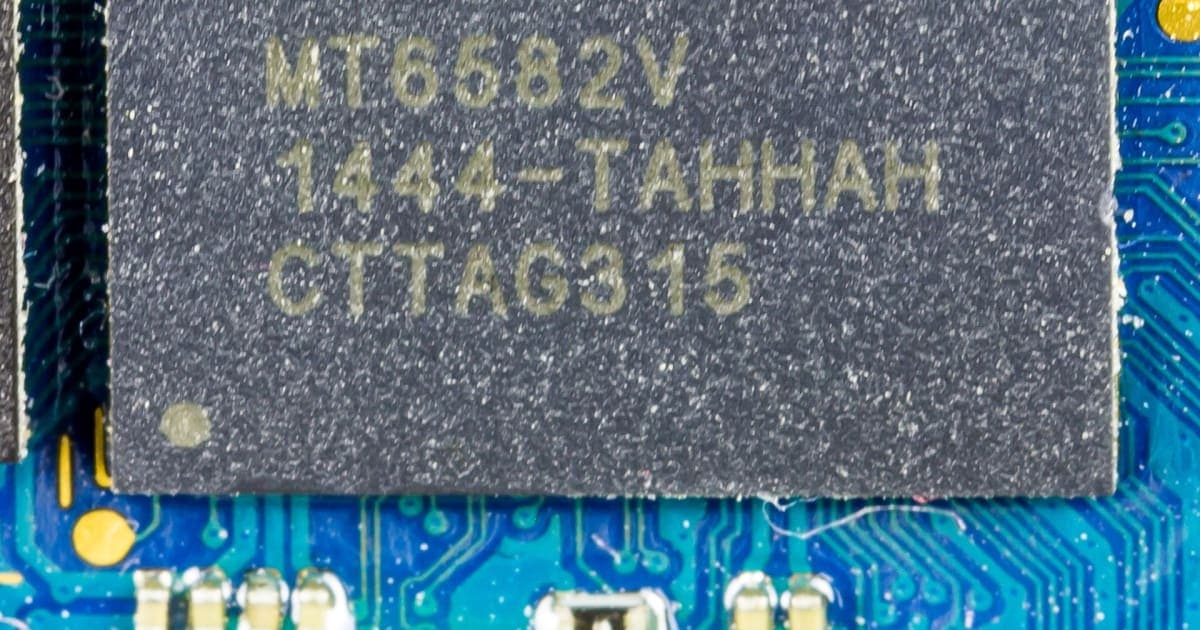
MediaTek, the world's number one provider of mobile chipsets, announced the launch of the Dimensity 9600 Pro on Tuesday, a flagship processor that achieves a significant technological milestone as the industry's first smartphone chip built on a 2nm process node.
The company said the next generation of silicon now available in the Dimensity lineup will enable transformative capabilities, combining flagship performance and power efficiency with advanced agentic AI experiences, in which AI systems perceive, reason and act on a user's behalf.
"AI is central to the smartphone experience, and devices need greater performance, efficiency, and intelligence to keep pace with rapidly evolving user demands," said JC Hsu, corporate senior vice president at MediaTek and general manager of the Wireless Communications Business Unit. "The Dimensity 9600 Pro meets these demands with a Native AI architecture and dual improvement in performance and power efficiency to deliver new agentic AI experiences."
## 17% Faster, 61% More Efficient CPU Design
The Dimensity 9600 Pro features a 2+3+3 all-big-core CPU design consisting of two C2-Ultra cores clocked at up to 4.55 GHz, three C2-Pro big cores at 4.35 GHz and three C2-Pro big cores at 3.1 GHz.
Users can expect up to 17% higher single-core performance and up to 15% higher multicore performance compared with the previous generation, alongside an impressive 61% reduction in multicore power consumption, according to MediaTek.
The chip's dual-NPU architecture and Agentic AI Engine are designed to power the next generation of on-device AI while keeping experiences secure. Its second-generation Super Efficient NPU cuts power consumption by 40% for always-on AI, while the NPU 1090 delivers 51% higher LLM prefill performance and 55% higher token generation per watt, supporting on-device models of up to 30 billion parameters.
MediaTek says this enables new agentic capabilities such as smart analysis of on-device data, proactive assistance and personalised responses that learn user preferences and act like a digital twin.
## LPDDR6 Memory and Console-Grade Gaming
AI Computing Fusion Architecture brings the CPU and NPU together on a foundation supported by a larger 34.5 MB cache and, for the first time in the lineup, LPDDR6 memory and UFS 5.0 storage. An upgraded Dimensity Scheduling Engine coordinates hardware and software to allocate computing, power and memory resources intelligently.
For gaming, the integrated G2-Ultra NX GPU delivers up to 27% higher peak performance, 24% lower power consumption at peak and 18% faster ray tracing, enabling console-grade gaming on-device at up to 185 FPS. The new Dimensity Neural Graphics Architecture combines GPU and AI computing, while MediaTek HyperEngine optimises gameplay for smoother, high-resolution sessions.
On imaging, the chip features the Imagiq 1290 ISP and a new Dimensity AI Imaging Fusion Architecture that combines ISP and NPU capabilities. It supports NPU-powered 60 FPS motion capture and introduces 4K240 native direct-output ultra-slow-motion video, alongside 4K60 AI True Color Tone, 4K120 cinematic log and 17EV imaging.
## Dimensity 9600M Extends Flagship Features Downmarket
Alongside the 9600 Pro, MediaTek is introducing the Dimensity 9600M, an upcoming chipset intended to bring flagship-level performance and power efficiency to more users. It shares the Agentic AI Engine and Dimensity Scheduling Engine, with an NPU capable of always-on perception and real-time AI-enhanced imaging, an ISP supporting professional-quality capture and real-time tracking, and HyperEngine-driven gameplay at up to 185 FPS.
The first smartphones powered by both chips are expected to launch this quarter, with Android flagships expected to lead the rollout as manufacturers race to market the first 2nm devices. MediaTek positions the 9600M as the vehicle for carrying flagship-grade AI, imaging and gaming down through the price tiers, a strategy that extends the reach of its architecture while the Pro variant headlines the technology.
The launch sharpens the contest at the top of the Android market, where chipset choice increasingly defines differentiation in AI features, battery life and gaming performance. With TSMC's 2nm node now in a shipping smartphone platform, MediaTek has moved first on the manufacturing milestone, and the claim that phones built on it will reach shops within months sets up the next round of the flagship chip race with Qualcomm.
For buyers, the practical meaning of the numbers is straightforward: 2nm production promises more transistors in the same space, which translates into the dual promise MediaTek is making of higher peak performance and dramatically lower power draw, a combination that matters most for the always-on AI features the company is building its marketing around.
The scale of the efficiency claims, a 61% cut in multicore power consumption and 40% less power for always-on AI, would, if borne out in shipping phones, address the most common complaints about agentic AI features, which have so far tended to drain batteries quickly enough that many users switch them off. Real-world battery tests once devices arrive will show whether the silicon delivers on the promises made in the specification sheet.
Discussion
Recommended for you
More technology
Gadgets
Apple Debuts iPhone 18 Pro With Variable Aperture Camera and A20 Pro Chip
9/16/2026
Gadgets
Apple Sends Media Invites for Major Hardware Event Scheduled for September 9
9/2/2026
Gadgets
Nintendo Switch 2 Sells Over 3.5 Million Units in First Four Days to Set Company Record
9/2/2026
Gadgets