Iran War Bill Reaches 1,760 Dollars per US Household as Savings Rate Craters
Consumers are facing a double-whammy of jumping oil prices and Treasury yields amid the US war with Iran that is leaving them increasingly cash-strapped, with the total bill per household since the conflict began reaching around 1,760 dollars, according to an analysis from Moody's Analytics as of September 11.
Zandi's breakdown shows 930 dollars — more than half of the total — comes from higher costs for energy, a category that includes rising prices for gasoline, diesel and jet fuel. Another 425 dollars stems from higher interest rates since the war broke out, and the final 405 dollars comes from higher military spending, which consumers will ultimately foot the bill for through either national debt expansion or increased taxes. Cumulatively, Moody's found US consumers have spent more than 121 billion dollars extra on energy since the war began.
"Consumers are under a lot of financial pressure," said Mark Zandi, chief economist at Moody's Analytics.
## Pain at the Pump Accelerates
US crude oil prices topped 105 dollars per barrel on Tuesday, their highest closing level since mid-May, a jump that came despite Energy Secretary Chris Wright's assurance to CNBC that the closure of a Saudi Arabian pipeline would only last a few days.
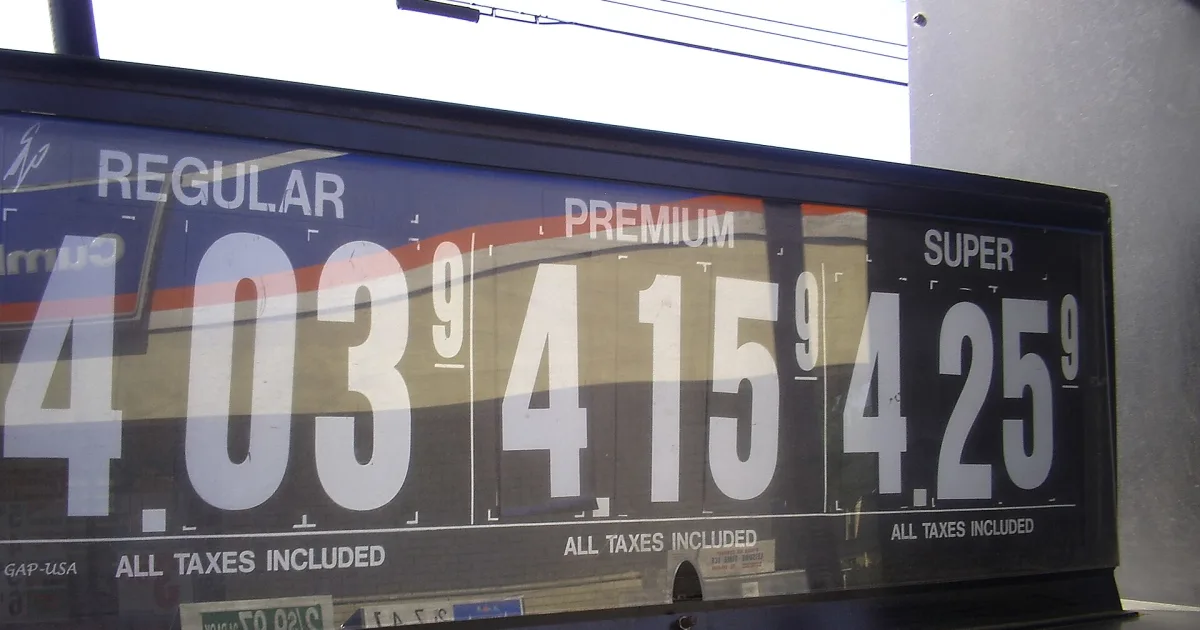
The average gallon of gasoline in the US exceeded 4.32 dollars on Tuesday, up 6 percent month over month and 36 percent from a year ago, according to AAA. Labor Day travelers earlier this month faced their highest prices at the pump for the holiday on record. Per-gallon diesel prices hit all-time highs above 6 dollars in recent days, roughly 70 percent higher than the same day a year prior.
The public is noticing: slightly over 29 percent of respondents to the University of Michigan's closely followed consumer sentiment survey mentioned gas prices in September, up from around 12 percent and 6 percent in the same month of 2024 and 2025 respectively. Airfare has been one of the fastest-accelerating categories in the consumer price index since the war began, jumping more than 23 percent in August from a year before, per Bureau of Labor Statistics data.
## Borrowing Costs at 19-Year Highs
The 10-year US Treasury yield climbed to its highest level since 2007 on Tuesday, a benchmark for consumer loans and corporate funding that now sits roughly a full percentage point higher than a year ago. The surge is driven in large part by bond investors' concerns about the war's impact on inflation and the US government's ability to cover its growing debt pile.
The average rate on the 30-year fixed mortgage, which broadly tracks the 10-year yield, this month topped 7 percent for the first time in more than a year. Michigan's consumer survey found 44 percent of respondents expect borrowing costs to rise in the next year, up 10 percentage points compared with a year prior.
"People experience higher interest rates much like they experience inflation," said Diane Swonk, chief economist at consulting firm KPMG. "It makes things less affordable."
Total credit card debt in the US rose to 1.26 trillion dollars in the second quarter, sitting near a record high, according to the New York Fed. CNBC's Fed Survey found the majority of respondents expect the Federal Reserve to raise rates at least twice in the next year, with futures pricing a more than 92 percent likelihood of the hike delivered this week.
## "Something Has Got to Give"
Several economists have said higher energy costs from the war have more than erased boosts from loftier tax refunds, and lower-income consumers — who spend a larger share of income on energy — have felt the pain more acutely, deepening the "K"-shaped economy. Inflation is once again rising faster than incomes, leaving US consumers with negative real earnings growth.
With returns exhausted, Luke Tilley, chief economist at M&T Bank and Wilmington Trust, said consumers are drawing on savings. The personal savings rate in 2026 has fallen to levels rarely seen since the Global Financial Crisis. Consumer spending rose just 0.2 percent in July, a modest slowdown, and Tilley warned that spending — which accounts for the majority of gross domestic product — may soon pull back.
"It's reflecting the times," Tilley said. "Costs have gone up and income growth has gone down, so something has got to give."
For now, the drain continues on every front at once: fuel records resetting weekly, mortgage costs above 7 percent, and credit card balances near their peak. The Moody's arithmetic converts that slow squeeze into a single number — 1,760 dollars per household — that is climbing with every week the war and its market shockwaves persist.
Deloitte's research adds a multiplier warning: a 20 percent gain in crude prices translates to an estimated three-tenths of a percentage point of extra inflation, excluding knock-on impacts to airfare or food that can push the overall effect higher. For households already drawing down savings at rates unseen since the financial crisis, the compounding arithmetic leaves little room to absorb another record at the pump.
Discussion
Recommended for you
More business
Economy
Thousands of Barclays Staff Revolt Over Return-to-Office Mandate as Union Demands Travel Compensation
9/17/2026
Economy
UK Inflation Climbs Above 3% as Iran War Energy Shock Fuels Household Cost Squeeze
9/16/2026
Economy
US Diesel Hits Record 5.85 Dollars per Gallon as Iran War Strangles Global Fuel Supply
9/15/2026
Economy