Thousands of Barclays Staff Revolt Over Return-to-Office Mandate as Union Demands Travel Compensation
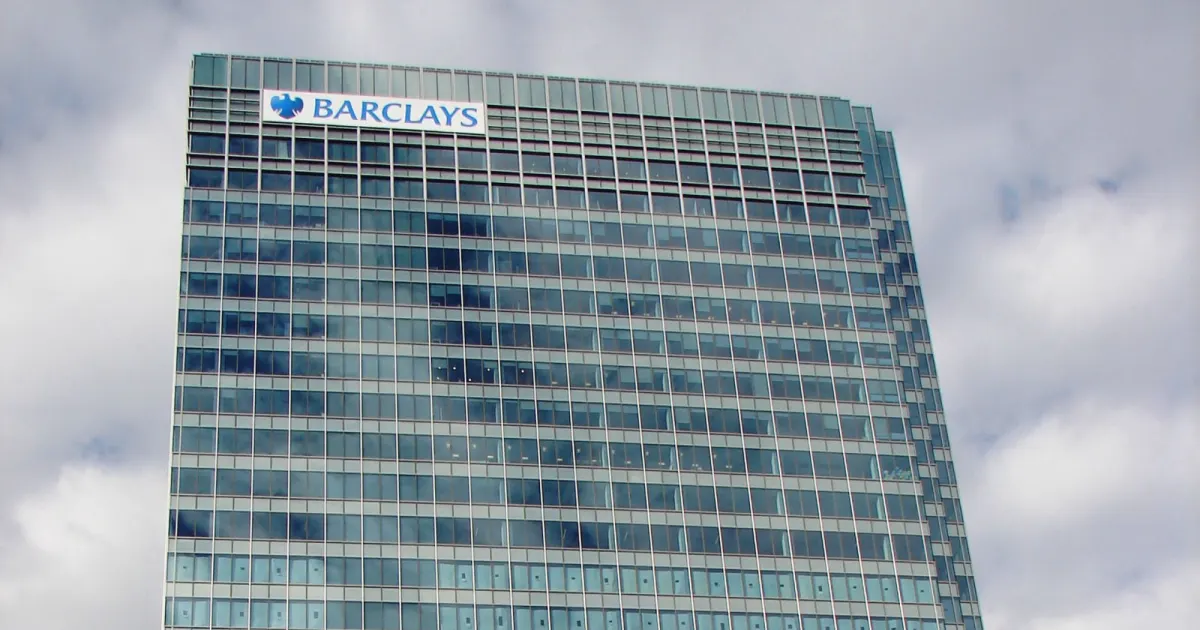
Barclays is facing a growing backlash over return-to-office plans, with thousands of staff calling for payouts to help cover travel costs and an exemption for those living more than 40 minutes from work.
Unionised staff represented by Unite are pushing back against plans announced by the bank earlier this summer to get staff back into the office at least three days a week from October, with more senior employees expected to come in at least four days a week. The current policy requires full-time Barclays staff to be in at least two days a week.
## The Revolt in Numbers
Unite, which represents nearly 80 percent of Barclays' 45,000 UK staff, says thousands of employees have now signed an open letter, first reported by the Financial Times, that has been sent to the bank's bosses and widely circulated across its UK offices.
The union plans to speak to Barclays about staff concerns in the coming days, the first formal step in what could become one of the City's most closely watched workplace disputes since the pandemic reshaped office life.
A Unite national officer, Rick Coyle, said: "One of the issues that has caused consternation is that most employers in banking and financial services are generally embracing greater flexibility. Our members think that Barclays is trying to fix a problem that doesn't exist."
"Thousands of employees have signed the letter and the figure continues to rise. Unite will be speaking to Barclays about the strength of feeling in the days ahead," he said.
The letter demands two concrete concessions: payouts to help cover travel costs for mandated office days, and an exemption for employees who live more than 40 minutes from their workplace. Both would blunt the financial and personal cost of the October change, which for staff commuting long distances converts a hybrid arrangement into a materially more expensive working week. Unite argues the bank should share that cost rather than simply shifting it onto household budgets.
## Barclays Defends the Mandate
A Barclays spokesperson said the bank recognised the benefits of balancing flexibility for colleagues with the importance of working together in its physical locations.
"Our minimum time-in-office requirements vary by business area, reflecting the nature of the work and the needs of the business," the spokesperson said. "This means that most of our colleagues who are not already working in the office three days per week will align with our broader approach across the bank."
"Alongside this, our most senior leaders will spend an additional day in the office to support collaboration, decision-making and leadership visibility," the statement added.
The dispute lands at a delicate moment for banking staff, with October's stricter threshold approaching and no sign the bank intends to soften it before implementation. Unite has not ruled out further escalation should talks fail, though its immediate focus is on persuading management to meet and negotiate rather than impose. The bank, for its part, has already begun communicating the change through internal channels, telling teams to plan around the new minimum from the start of October.
## An Industry-Wide Hardening
Barclays' return-to-office order echoes those imposed by other large banks, which tightened their work-from-home policies after the Covid pandemic, particularly for younger staff.
That includes JP Morgan, whose chief executive, Jamie Dimon, told Bloomberg last year: "It is an apprenticeship system ... you can't learn working from your basement."
The banking sector's retreat from remote work has become one of the most consequential labour-market shifts since the pandemic, with mandates steadily rising from two days to three, four and in some cases full weeks. Staff resistance has largely taken the form of individual grumbling rather than organised action, making the scale of the Barclays letter unusual for a UK-headquartered bank.
The sequence matters too: Barclays announced the tighter expectations earlier this summer, giving staff months of notice, yet the letter suggests the approach has hardened opposition rather than absorbed it. Banks across the City have raised attendance requirements at different speeds, but Barclays now stands as the first UK-headquartered global bank to face an organised, union-backed letter campaign of this scale — a distinction rivals will note when sequencing their own mandates.
Hybrid work has also become a recruitment battleground. The union's central claim, that most banking employers are moving toward flexibility rather than away from it, frames the dispute as a competitive question as much as a cultural one: if rivals hold two-day norms while Barclays demands three and four, staff with portable skills can vote with their feet. The bank's statement suggests it judges the collaboration benefits worth that risk.
Whether Barclays negotiates or holds firm, the outcome will be watched across the City of London, where banks that tightened mandates this year have so far faced little collective pushback — and where 45,000 employees just changed that calculation.
Discussion
Recommended for you
More business
Economy
UK Inflation Climbs Above 3% as Iran War Energy Shock Fuels Household Cost Squeeze
9/16/2026
Economy
US Diesel Hits Record 5.85 Dollars per Gallon as Iran War Strangles Global Fuel Supply
9/15/2026
Economy
Congress Moves Closer to Avoiding Government Shutdown With Continuing Resolution
9/2/2026
Economy