Lando Norris Calls VSC Rule Unfair After Costly Timing Robs Him of Spanish Grand Prix Win
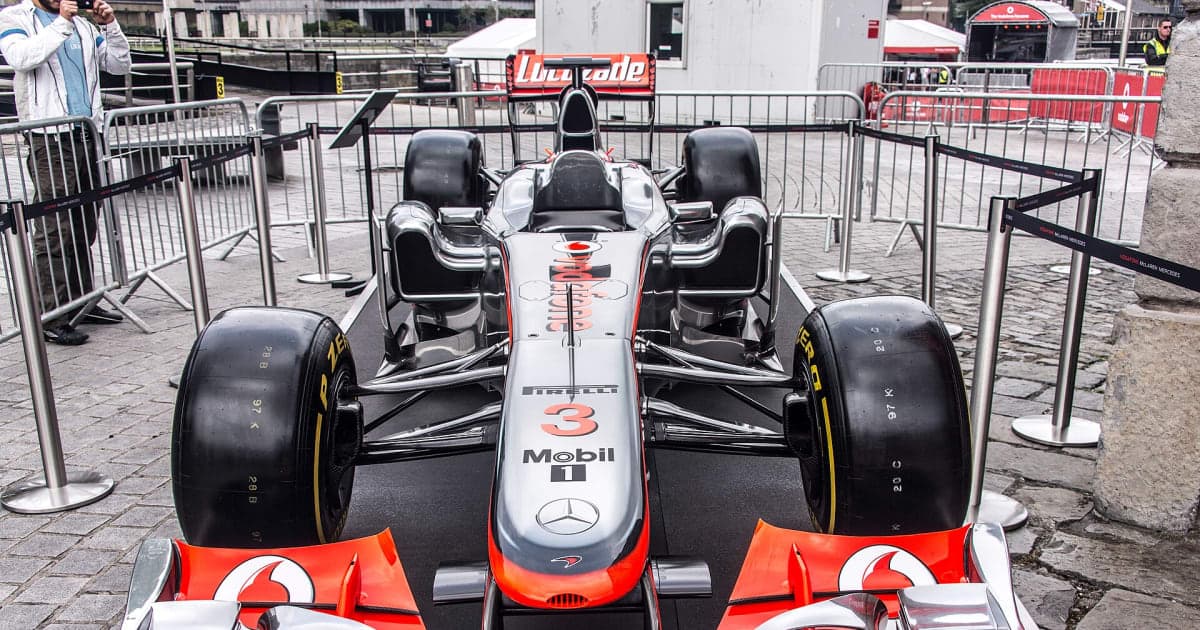
Lando Norris lost what seemed like a certain victory at the Spanish Grand Prix because of the timing of a virtual safety car, and the McLaren driver says the rule "should not define a whole race."
Norris was leading comfortably when the VSC was called, seconds after he had passed the pit lane entry at the Madring circuit. That allowed Mercedes' Kimi Antonelli and Red Bull's Max Verstappen to pit under the caution, saving time, while the period ended before Norris could make it around to the pits again.
"I was the only one on the whole grid that didn't get the chance to do the pit stop," Norris said. "There's been plenty of times where I've gained from it in the past and times where I've lost from it, and it's racing, but never when fighting for a win. So, it's probably one of the first times a win has been lost simply because of it."
## How the Win Slipped Away
After taking pole position with a lap his team principal Andrea Stella described as "a masterpiece," Norris led Antonelli by more than six seconds after 13 laps in Madrid.
He had just passed the pit entry at the end of lap 14 when the VSC was called because Lance Stroll's Aston Martin had stopped in the run-off area at Turn 20, while Antonelli and Verstappen were far enough behind to pit. The VSC ended shortly before Norris completed the next lap, at the end of which he pitted.
Because a stop under the VSC costs 11 seconds less race time than one under green-flag conditions, Norris lost sufficient time that Antonelli and Verstappen were able to pass him. He lost a further five seconds because of problems with his two right-hand side tyres at the stop and emerged more than 15 seconds behind Antonelli and more than nine adrift of Verstappen.
He caught the Red Bull before the end, but overtaking was virtually impossible on the new street circuit, leaving him stuck in third. The pace advantage that should have decided the race instead became an accounting exercise: the gap fell lap by lap, but the Madring's tight walls offered nowhere to convert speed into position, and the checkered flag arrived with Norris still in the Mercedes driver's wake. Norris was withering about the layout, saying: "I don't know how someone looks at this design and goes, 'Mint.'"
Race-winner Antonelli, who extended his championship lead to 81 points, acknowledged the fortune involved. "If I have to be realistic and honest, today we didn't deserve to win," he said. "Lando deserved to win, and so I think our result was probably P2 or even P3."
## Could McLaren Have Done Anything Differently?
McLaren considered keeping Norris out rather than pitting a lap later. "We considered staying out, but you have to accept the fact that now you are on relatively used medium tyres. And the people behind you will be on new hard. So you're never going to open a gap on people on new hard," Stella said.
Anticipating the VSC with an earlier stop would have carried its own risk: the Madring has the longest pit lane on the calendar, and an unnecessary stop from the lead would have been equally costly. Stella argued that the correct principle is to respond to facts rather than hunches, but confirmed McLaren will review whether the VSC call was foreseeable, acknowledging that in hindsight an earlier stop would have been the winning play. "It's 27 seconds if you don't pit under a virtual safety car. So if you get it wrong, it would be extremely penalising," Stella said.
The episode has reignited a rules debate. Norris and Verstappen said the scenario has been discussed by drivers with the FIA many times. "We'll probably talk about it in the next briefing and see if there is anything that can be done," Verstappen said.
Stella argued the Formula 1 community should reflect on whether the system is fair, asking whether the VSC should last at least one full lap so every driver faces the same conditions. Any change would need to pass through the Strategy Advisory Committee, the F1 Commission and the sporting regulations, a process he envisaged as relatively lengthy unless governing bodies push hard for reform.
For Norris, the mathematics were simple and bitter: on a day when he said "there's literally nothing I could do as a driver today to do a better job," the timing of a caution period decided the outcome of a race he had dominated from pole. The championship arithmetic adds a further layer of regret: with Antonelli extending his lead to 81 points, races squandered in this fashion are luxuries McLaren can ill afford, and the team's engineers now face a review of decision protocols before the next round.
Discussion
Recommended for you
More sports
Formula 1
Formula 1 Expands Sprint Races to 10 for 2027 as Portugal and Turkey Return
9/16/2026
Formula 1
2026 Formula 1 Season Enters Final Stretch With Verstappen Leading Championship
9/2/2026
Formula 1
Lewis Hamilton Confirms Move to Ferrari for 2027 Season in Historic Driver Market Shift
9/2/2026
Formula 1