Anneli Maley Earns Standard Liberty Contract After Seven WNBA Waivers and Snub
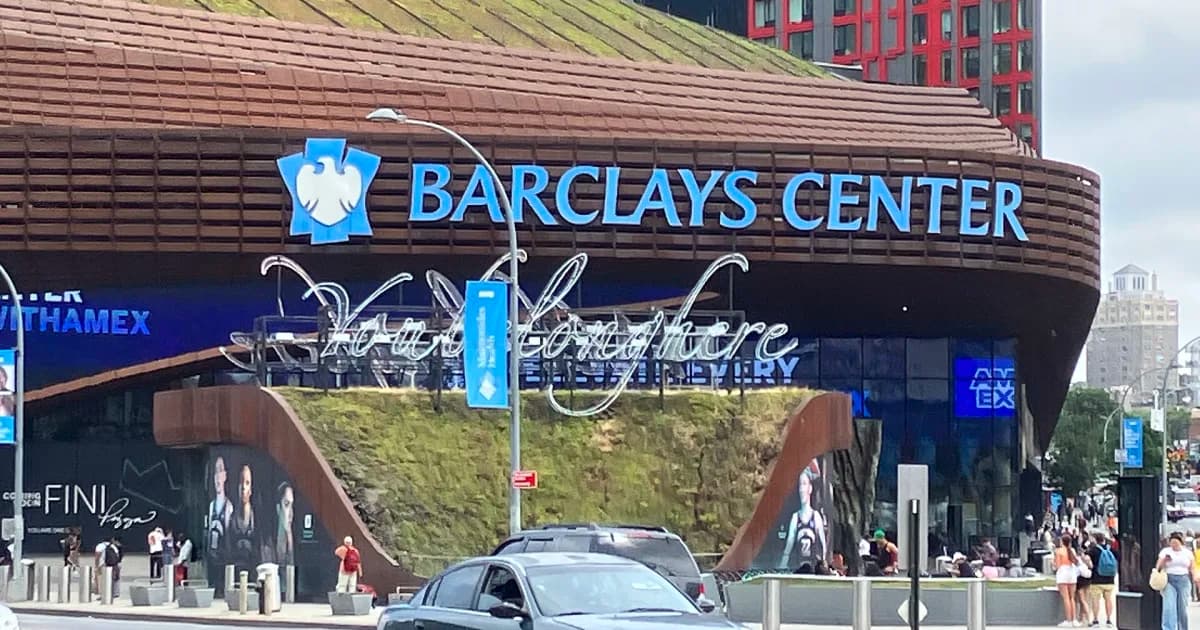
Australian forward Anneli Maley has earned a standard WNBA contract with the New York Liberty, converting from a developmental deal that had capped her at just 12 activated games this season, the team announced.
The 28-year-old's upgrade was confirmed on September 4 (AEST) — and it landed on the same day the Australian Opals opened their World Cup in Berlin without her, a tournament for which she was left out of Sandy Brondello's 12-player squad despite being the WNBL's rebounding champion.
"Do you want the diplomatic answer or the brutally honest one? I'll get fired if I give the brutal one," Perth Lynx coach Ryan Petrik said the day the squad was named, describing himself as "shell-shocked" at the omission. "I think all of us are a little bit shell-shocked that she wasn't in that Opals squad, because her form has been elite. If you're picking on form, with how she's playing, I'm not sure what else she's meant to do."
## A Season of Constant Movement
The national team door closed on Maley nine months ago, when Brondello left her out of the 19-player squad for the World Cup qualifiers in Istanbul, named on December 20, 2025, at a point when Maley was leading the WNBL in rebounding.
Her response was a run of production: she posted WNBL26's first triple-double, finished the season as the league's leading rebounder at 14.4 a game with a double-double in each of her last nine games, and scored 65 points for the Perth Redbacks against Willetton on April 10 — breaking Elijah Pepper's NBL1 record of 59 with 17 rebounds and 85 per cent true shooting.
The WNBA season that followed was almost entirely movement. Maley earned a training camp contract with the Liberty in early May, was waived at final cuts, was picked up by the Phoenix Mercury on a one-year deal worth 270,000 dollars, scored a point in six minutes against the defending champion Las Vegas Aces on opening night and was waived again. New York brought her back on May 23.
## What the Standard Contract Changes
Across the two clubs, Maley has played nine games for six points, scoreless in seven of them. Her season high is the five she scored at Indiana on July 18, when she took three rebounds and played 13 minutes and 38 seconds in a 20-point loss.
The contract change matters because of the WNBA's 2026 collective bargaining agreement: a development player can be activated for a maximum of 12 games in a season, and WNBA.com reported in August that Maley would sit out while the Liberty managed that allowance. She had already used seven of her 12. A standard contract removes the limit entirely.
The financial gap is substantial. Development players earn a 750-dollar weekly stipend that does not count against the salary cap, plus 6,136 dollars for each game they are activated for. The standard minimum under the 2026 agreement is 270,000 dollars for a player with no years of service, and 277,500 dollars above that, prorated for the remainder of the season. The Liberty have not disclosed Maley's figure.
## Opportunity Born of Injury
The upgrade comes as New York Liberty star Satou Sabally is out for the season with a head injury, opening minutes at Maley's forward position. On August 24 the Liberty were carrying 12 players with no open roster slots and both of their development player places filled — by Maley and Elizabeth Balogun — making the conversion the only path to a fuller role.
Maley is the second Australian on the New York roster alongside veteran Rebecca Allen. She won bronze with the Opals at the 2022 World Cup in Sydney and represented Australia in 3x3 at the Paris Olympics.
For a player waived seven times across one professional year, the arithmetic of the standard deal is the least of what it represents: it converts Maley from a managed allowance into a full roster member for a championship-contending franchise, on the day the national team that excluded her began its World Cup campaign. Her response to the Opals' 12 has now been written in contract form — and Liberty coach Sandy Brondello's rotation decisions over the remaining games will determine whether the promotion becomes a platform.
The broader backdrop is the WNBA's expanding economics: the 2026 collective bargaining agreement's higher minimums — 270,000 dollars for a standard rookie-scale deal, a 750-dollar weekly developmental stipend plus per-game activation pay — illustrate precisely the gap Maley spent a season living on the wrong side of. Under the old structure she earned 6,136 dollars for each of her seven activations, roughly 43,000 dollars of game pay for the season; the same games at the standard minimum would have earned nearly five times as much. That arithmetic, more than any locker-room speech, explains why developmental players across the league track their activation count as closely as their stats — and why Maley's conversion, after seven waivers, reads as both a professional breakthrough and a payday.
Discussion
Recommended for you
More sports
Basketball
Jalen Duren Feels Disrespected by Pistons as Contract Rift Casts Cloud Over Camp
9/17/2026
Basketball
NBA Explores Majority Stake in EuroLeague as Adam Silver Confirms Ongoing Negotiations for Unified Europe
9/16/2026
Basketball
USA Overcome 14-Point Deficit to Beat France for Fifth Straight Basketball World Cup Gold
9/16/2026
Basketball