Max Verstappen Overtakes 100 Amateur Karters in Just 14 Laps at Silverstone Exhibition Race
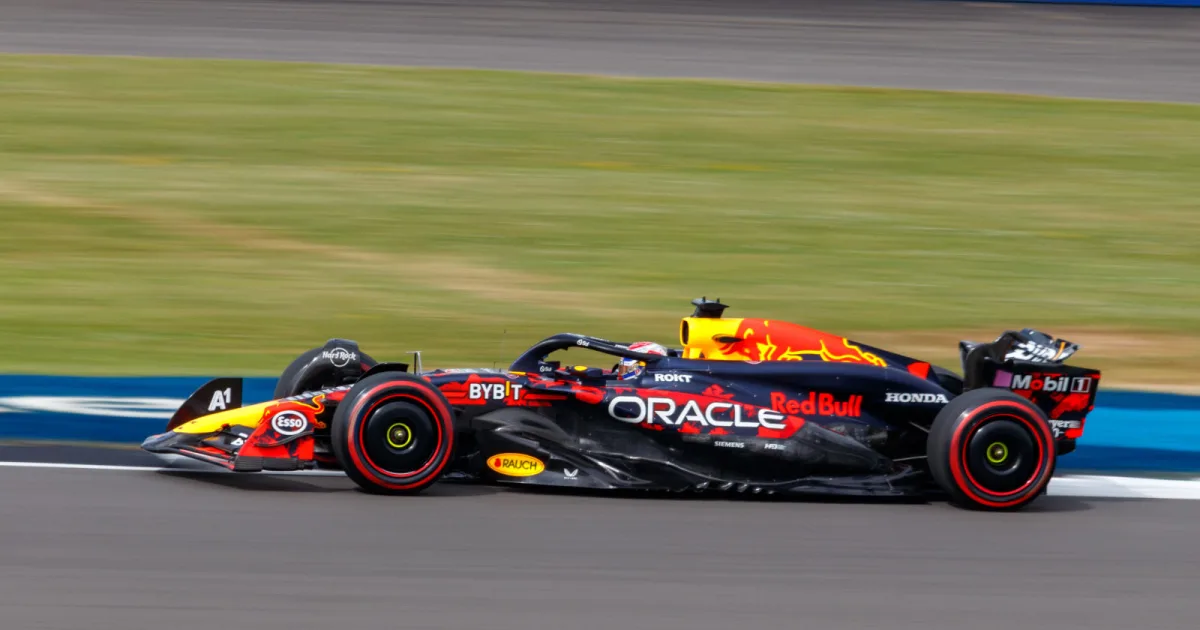
Max Verstappen needed just 14 laps and 35 minutes to overtake 100 amateur drivers in an exhibition go-kart race at Silverstone, completing the challenge with 40 minutes and 21 laps to spare. The four-time Formula 1 world champion had been given a maximum of 35 laps and 75 minutes to pass everyone from the back of the grid on an adapted track at the Northamptonshire circuit.
The format turned the mathematics of overtaking into the spectacle itself. Every driver Verstappen passed had to retire immediately, so the field shrank as he advanced, and the clock became the only opponent that mattered once the grid began to thin out.
The scale of the task was visible immediately. Verstappen, 28, was only up to 37th by the end of a chaotic first lap in which many drivers crashed or spun out, resulting in racing being briefly suspended. From that point, the Red Bull driver settled into pursuit and cleared the remaining field at a rate that left the outcome in little doubt.
## How The Challenge Unfolded
Verstappen admitted the starting grid gave him pause. "When I went to the grid and I saw where I had to start, with 100 karts in front of me, I was a little bit worried," he said.
That concern did not last long. "After my first lap with all the carnage, I did think 'OK, we have got this under control'. From there on, I could really have a lot of fun trying to hunt them all down," he added.
The Dutchman, who warned participants on race radio that "it's not a charity event," moved up to 10th by the start of lap six and was fourth by lap 10. By that stage only three racers remained: Dutch F1 journalist Jacky Martens, Red Bull engine builder Lewis Osler and YouTuber Zac Alsop.
All three were handed an extra fast lap in which they could cut a corner of the track to try to hold off the champion for longer, but Verstappen reeled them in regardless. Martens, who had started from pole position after qualifying, was the final driver to be passed.
"Once I started getting into a rhythm and was able to overtake them one by one and saw the gap closing, that was really exciting," Verstappen said.
The grid was made up of television, sport and social media personalities, with no professional racing drivers among them. Among the final holdouts was Osler, an engine builder from Verstappen's own Red Bull team, whose knowledge of the machinery behind the champion's F1 titles counted for little once the karts began to fly.
The event was also recorded for broadcast, with a Chequered Flag special following the challenge at Silverstone, giving listeners a radio account of a grid unlike anything else staged at the circuit this season.
## Back To Basics For Verstappen
The challenge carried personal resonance for a driver who began his racing career in karting as a junior, starting at the age of four and competing in championships from seven, before reaching Formula 1 and winning four consecutive titles between 2021 and 2024.
"It was great to just be back in a go-kart again and go back to basics, it reminded me of racing back in the day," Verstappen said. "It's a really beautiful track and well designed. I had a great day and it was good to come out with the win."
The exhibition came during a gap in the Formula 1 calendar, with the sport preparing for the Azerbaijan Grand Prix on 24-26 September. Verstappen arrives at that stretch with 71 grand prix victories to his name and a reputation built in part on the racecraft on display at Silverstone, where passing 100 cars in 14 laps required roughly seven overtakes per lap once the field strung out.
The adapted layout used part of the grand prix circuit, and the retirement rule kept the traffic manageable as the champion sliced through. Even so, the opening-lap collisions showed how quickly 100 machines at mixed speeds can create chaos on a single line, and the brief suspension of racing underlined the risk the amateurs took simply sharing a circuit with him.
For the amateurs, the day produced stories of its own: a journalist on pole, a Red Bull engine builder among the final three, and a YouTuber given a head start by a shortcut that delayed the inevitable by a single lap.
For Verstappen, it was a return to the discipline where his career began, run at the circuit where he has raced at the highest level, and a reminder that the basics he learned in a kart at the age of four remain untouched. Four titles, 71 wins, and 100 overtakes in 14 laps later, the hunt is still the part he enjoys most.
Discussion
Recommended for you
More sports
Formula 1
Former Mercedes Design Chief Mike Elliott Joins Alpine as Chief Technical Officer
9/17/2026
Formula 1
Lando Norris Calls VSC Rule Unfair After Costly Timing Robs Him of Spanish Grand Prix Win
9/16/2026
Formula 1
Formula 1 Expands Sprint Races to 10 for 2027 as Portugal and Turkey Return
9/16/2026
Formula 1