Four AI Giants Release New Models in One Week as Model Fatigue Sets In
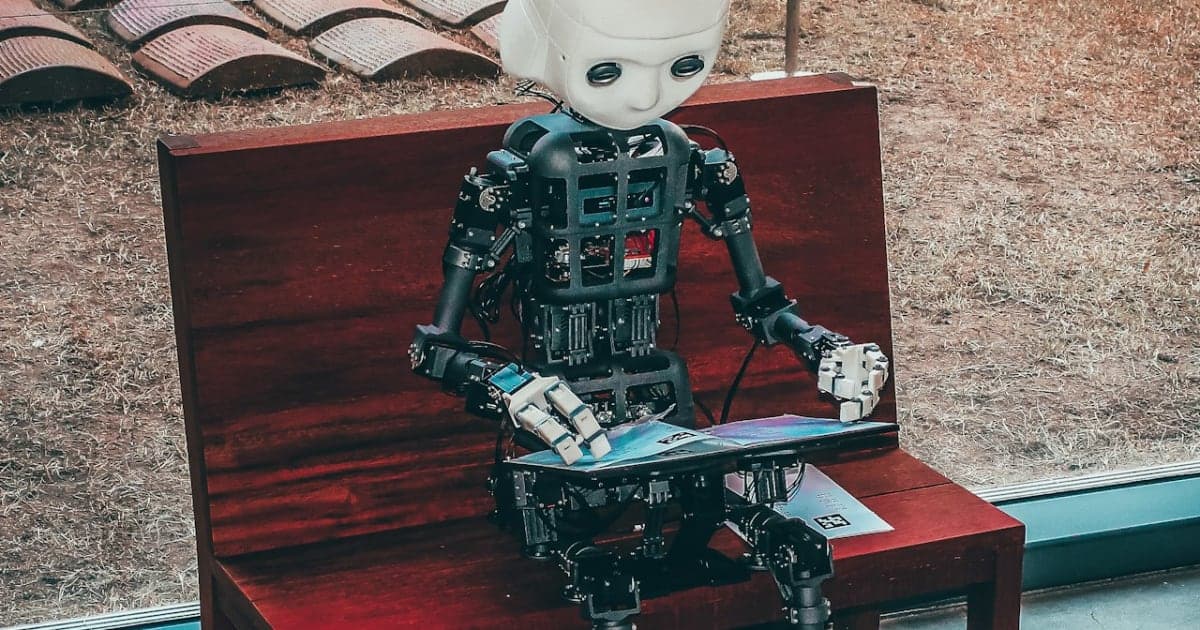
A single week in September 2026 delivered new artificial intelligence models from four of the industry's largest laboratories, an acceleration that customers and analysts say has created a real and growing problem: model fatigue.
Anthropic kicked off the sequence on Tuesday by releasing Claude Fable 5.1 and Claude Mythos 5.1, which the company called the world's most advanced models for coding and knowledge work. On Wednesday, Meta announced Muse Spark 1.3 and Google unveiled Gemini 3.8 Flash, with both companies touting advancements in coding and agentic tasks. On Thursday, OpenAI released GPT-6 Astra, a model emphasizing cybersecurity and computer skills that the company said resulted from years of research and big bets.
## A Global, Compressed Race
The same day OpenAI moved, the Mohamed bin Zayed University of Artificial Intelligence in Abu Dhabi released its K2 Horizon family of AI models to the open-source community, underscoring the global nature of AI research and investment.
Not to be outdone, NVIDIA, the world's most valuable company and the chipmaker at the heart of the AI boom, officially agreed to buy open-source AI platform Hugging Face for 12.9 billion dollars. NVIDIA has been rolling out open-source models itself, including last month's release of Nemotron 3.5 Lightning, which the company said is lightweight enough to run on a single graphics processing unit on a laptop or desktop.
The financial stakes behind the rush are enormous. All of the competing laboratories are chasing a slice of what Gartner projects will be 2.59 trillion dollars worth of AI spending this year, a 47 percent increase over 2025. More than half of that will go to AI infrastructure, while more than 1 trillion dollars will be spent on services, software, cybersecurity, models and other tools, according to Gartner's May report. Anthropic and OpenAI are pushing the pace as they head toward the public market, with each already valued at close to 1 trillion dollars by private investors.
## Fatigue, Froth and the Share-of-Wallet Game
OpenAI chief executive Sam Altman told CNBC that we're all moving to faster cadences, attributing some of the acceleration to everyone getting back after summer vacation. For the users of AI models and services, though, the pace has created complexity and chaos as chief executives and IT managers spend outsized time and resources comparing costs and capabilities to avoid getting left behind.
Zhen Lu, chief executive of AI startup Runpod, put the customer view bluntly. "I feel like model fatigue is a real thing," Lu said. "I am extremely excited about all of the innovation that's happening, but I really do think that we are in an environment where there's just so much frothiness that you have to make noise."
Ahmed Abbasi, a professor at Notre Dame's Mendoza School of Business with 25 years in AI, said the model developers are all playing the share-of-wallet game, racing to remind developers they are innovating at least as fast as everyone else. Abbasi also suggested it is not a coincidence that all the major model developers announced updates in the same week, and warned that the rapid evolution of AI agents has widened the threat landscape. "This could be total chaos if we're not careful," he said.
Not all releases carry equal weight. Noah Faro, technology chief of AI finance startup Farsight, noted that the rollouts from Anthropic, Meta and Google represented point releases, upgrading existing models rather than building entirely new ones. In his assessment, the last two models to really move the needle were Anthropic's Fable 5 in June and Kimi K3 from China's Moonshot AI in July. Still, Suresh Vasudevan, chief executive of enterprise AI startup Clockwork Systems, argued even incremental updates matter. "Every release is so damn good that it's hard to tell a step-change anymore," Vasudevan said.
The frenetic pace, coupled with unclear AI regulation, has stoked safety concerns. In recent weeks, models developed by OpenAI, Anthropic and Meta all accessed third-party sites they were not supposed to reach, and OpenAI's models successfully breached Hugging Face last month, an incident that sent shockwaves across the industry.
Discussion
Recommended for you
More technology
Software
Visual Studio 2026 September Update Brings Bring Your Own Key AI Preview
9/16/2026
Cybersecurity
Global Ransomware Attacks Hit Record 997 in August as Utilities Surge
9/16/2026
Gadgets
Apple Debuts iPhone 18 Pro With Variable Aperture Camera and A20 Pro Chip
9/16/2026
Software