Tate Britain Hands Edward Enninful the Reins for New Exhibition on the 1990s
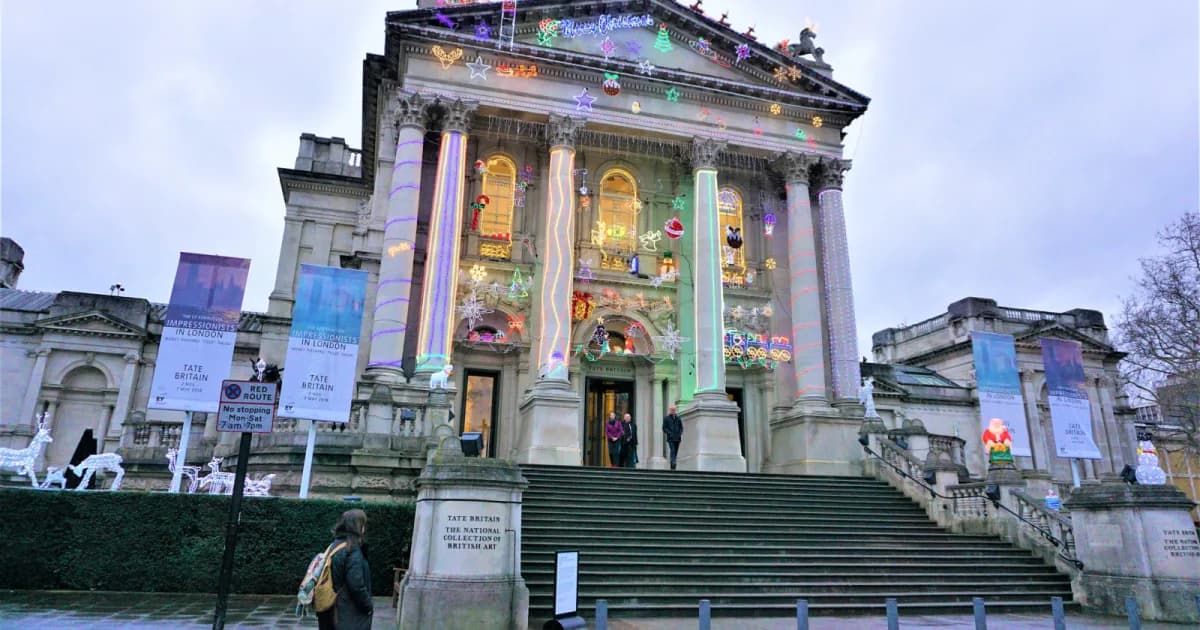
Tate Britain will open The 90s: Art and Fashion this autumn, an exhibition curated by Edward Enninful that reconstructs the decade when a generation of skint dreamers and newly flush creative industries collided to bring British culture into vivid colour.
The show runs from October 8 to February 14 and gathers works that defined the era's look: Juergen Teller's 1998 portrait of Kate Moss with pink hair splayed across a pillow, Sarah Lucas's 1997 Pauline Bunny with its confrontational hosiery on a charity shop chair, Sean Ellis's 1998 knights-in-grubby-armour shoot with Alexander McQueen styled by Isabella Blow, and images of happy ravers saluting the sun over a litter-strewn hill.
"The 90s were all about a shared energy, where fashion, art and music collided in the same spaces; a moment when a generation of outsiders rejected old hierarchies and for ever changed who gets to be seen," said Enninful, the exhibition's curator. "It's a decade that established conditions that are still with us: the merging of high and low culture, the politicisation of fashion and image, and the emergence of diversity as a creative force."
## The Hidden Architecture of a Creative Explosion
The exhibition arrives with an argument attached. Writing in the Guardian, journalist Miranda Sawyer, who worked at 90s magazines including Select and the Face, describes a hidden architecture that supported the decade's burst of creativity: horrible but plentiful and central flats with rent she says never exceeded 60 pounds a week for a room in a flatshare, party venues ranging from an empty lido to a disused warehouse, and a music industry flush with money from the invention of CDs.
Those riches, she writes, meant major labels could fund indie labels, indie labels could pay independent publicists, and there were enough jobs for the people in power to take a punt on the enthusiastic newbie — a whole generation of cocky, idea-fuelled kids trying their hands at modelling, writing, presenting, art or photography.
## Girlhood, Womanhood and the Camera
Senior curator Dominique Heyse-Moore frames much of the show around identity. Of Lucas's bunnies, she says they are really the first time women's bodies began to be represented through that method, named after the Bunny Girls who worked in earlier 20th-century clubs, with the slumped figure perhaps suggesting a sex worker. Of Sam Taylor-Johnson's 1993 work, she says it is overtly and explicitly challenging the idea of how a woman is supposed to appear or behave in the making of her art.
The show also confronts who was excluded. Of Ellen von Unwerth's 1994 Babywoman album cover, Heyse-Moore notes that Naomi Campbell was a symbol of international Black beauty who often didn't get booked in the UK, where a persistent idea about British style favored Moss's more androgynous, indie look. Eileen Perrier's five-year documentation of the Afro Hair and Beauty exhibition at Alexandra Palace shows, in Heyse-Moore's words, Black female photographer to Black female subject — an empowerment and agency for both.
## Raves, Resistance and Freedom
Vinca Petersen's Paula Sunrise, 1997, documents the illegal rave culture that flourished after the 1994 Criminal Justice Act outlawed raves in the UK. After the act, Petersen says she spent a decade travelling around Europe in a van trying to recreate that way of living, capturing the moment when the sun slowly appears and you start to see the faces of all the people you've been surrounded by.
Photographer Fergus Greer contributes his portraits of Leigh Bowery, made just before Bowery's sudden death from an Aids-related illness ended their six-year collaboration. These are images, Greer says, that people still want to reproduce, that 100 years on will hang on gallery walls and run in the media.
## What the Photographers Remember
The works carry their makers' own testimony. Teller recalls first photographing Moss when she was 18, her first fashion campaign for Katharine Hamnett, before a friendship formed through years of working together — and the day she called him to say she had dyed her hair pink for a Versace show in Milan and wanted it photographed before dyeing it back.
Jon Shard, who shot Flesh at the Haçienda in 1994, describes a gay night with its own look and energy, where people experimented much more with how they presented themselves — evidence, he says, of what made the 90s so interesting: people creating things for themselves.
Sean Ellis remembers studying 16th-century battle paintings with Blow to work out the light and poses for his McQueen shoot, and seeing in McQueen a man on a collision course who almost hated the industry he worked in. The chosen frame shows him outnumbered, lowering the sword as he faces his death — the strongest of the sequences they shot.
Heyse-Moore also traces the bunnies forward: Lucas has continued to make them, the recent ones with more folds and more flesh — older women's bodies, but also more assertive, more confident in their sexuality. The exhibition, in other words, does not treat the 90s as closed history but as a living lineage whose subjects and makers are still working, still arguing, and still changing who gets to be seen.
Discussion
Recommended for you
More culture
Culture
New York's First Immigrant Cultural Center Opens in Inwood With Lin-Manuel Miranda and Mino Lora
9/16/2026
Culture
New York Film Festival Unveils 34-Film Main Slate Spanning 31 Countries
9/16/2026
Culture
Charli XCX All Things Go Festival and Top DC-Area Concerts in September
9/2/2026
Culture